
On 20 May 2026, Elon Musk’s SpaceX filed the prospectus for what is expected to be the largest initial public offering in history, with a target valuation of $1.75trn (£1.30trn). Buried in the document’s glossary is a definition of “Kardashev Type II civilisation” – a society that harnesses the full energy output of its star, as proposed by the Soviet astronomer Nikolai Kardashev in 1964. Musk’s pay is tied, in part, to establishing a human colony of at least one million people on Mars. The ambition, to be fair, is not in question. But in Q1 2026, the company lost $4.27bn.
Within weeks, IPOs for OpenAI and Anthropic are expected to follow, targeting valuations of $1trn and $900bn, respectively. Three companies with combined implied value approaching $3.5trn – all of it contingent on a future the present numbers have not yet confirmed.
Philosopher Søren Kierkegaard called it the leap of faith: a commitment that evidence alone cannot complete, made in full awareness of the void below. He was writing about religious belief, but the structure and sentiment translate. To buy SpaceX at $1.75trn, believing a company burning $4bn a quarter will generate returns that justify that price, is exactly that leap. The prospectus does not disguise this. It simply asks you to make it.
What Kierkegaard did not anticipate is a financial architecture capable of making that leap on behalf of millions who never chose to make it. The consequences – gains if the bet lands vis à vis losses if it does not – remain real and personal. However, the decision has been abstracted away.
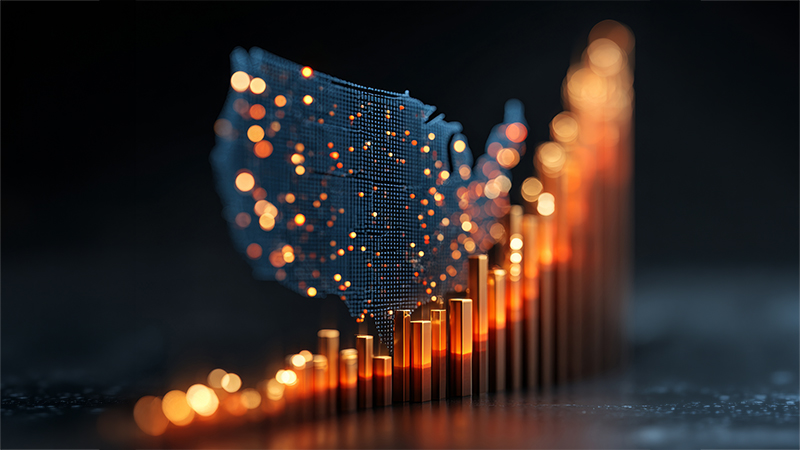
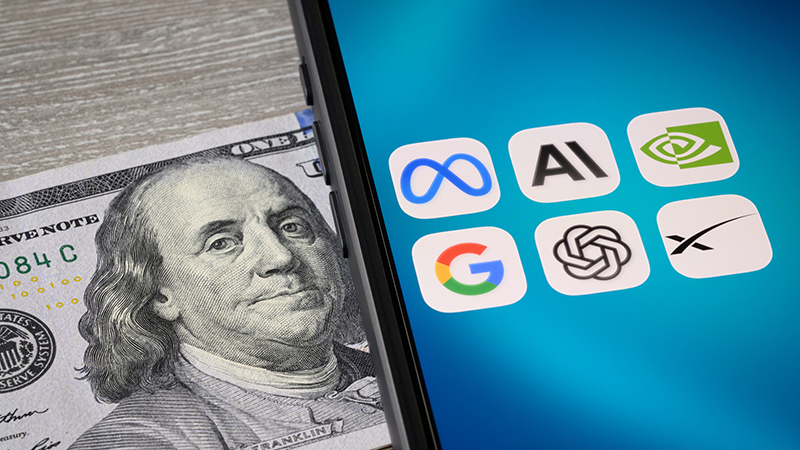
The bet rests on a specific arithmetic. The AI sector generated around $25bn in revenue in 2025 against more than $250bn in infrastructure spending, amounting to 10¢ of return for every dollar. SpaceX’s own xAI division lost $6.36bn last year on $3.20bn in revenue. That gap is not narrowing.
The five largest AI infrastructure providers have collectively committed $660-690bn in capital expenditure for 2026 alone. Goldman Sachs estimates that closing the gap between infrastructure cost and viable return requires over $1trn in annual AI-derived profit, against a current market consensus of $450bn. A valuation of $1.75trn is not a bet on what these companies are, but on what they must become.
Automatic for the people
This is where the architecture matters. Both the Nasdaq and the S&P 500 have moved to fast-track index inclusion for large new entrants, with Nasdaq cutting its seasoning period to 15 trading days and removing its minimum free float requirement, and the S&P consulting on halving its threshold to six months .The rules were not changed in the abstract, but to accommodate companies of this scale.
When SpaceX enters, every tracker fund holding the Nasdaq 100 or S&P 500 buys it automatically. The fund follows the index, which in its turn follows the weight. The mechanics run in both directions. JPMorgan estimates that SpaceX alone, listing at $2trn with a 50% free float, would force passive investors to sell $95bn of existing large-cap technology stocks – Nvidia, Apple, Microsoft, Amazon among them – simply to maintain index weights . The portfolio is restructured at both ends, without one active instruction being required.
Consider the chain along which information travels and stops. The S-1 filing discloses the risk in detail, while the tracker fund discloses only what it tracks. A multi-asset solution promises diversification to the end investor, who bought it on a professional recommendation, on the reasonable assumption the diversification would mean not putting all eggs in one basket, but ends up holding the bet without having chosen it.
The DIY investor has it worse: building their own portfolio from low-cost trackers, relying on the conviction that passive means prudent. Their portfolio statement will show them a global equity tracker. It will not show them that nearly half of that tracker is a wager on whether $690bn a year in AI infrastructure spending eventually earns its keep.
The bull case deserves a hearing. OpenAI crossed $25bn in annualised revenue in early 2026; Anthropic is expected to generate $10.9bn in Q2, its first profitable period, having more than doubled its revenue in three months. The technology works, with enterprises ready to pay for it at scale.
This is not 1999, when trillion-dollar valuations rested on little more than a domain name. So, the question is not whether these companies will generate value. It is whether a price tag of $1.75trn already assumes that value has arrived, with a precision the underlying trajectory does not yet support.
In the dark
Kierkegaard insisted the leap be made in fear and trembling – his phrase a description of what authentic commitment feels like. The passive investment revolution is sold, not unreasonably, as a gift to ordinary savers: low-cost, diversified, efficient. It democratises access to markets that were once the preserve of institutional capital. What it cannot offer, especially at this particular moment in market history, is the one thing Kierkegaard considered non-negotiable: the knowledge that you have jumped.
The AI infrastructure bet is being distributed across millions of retail portfolios at a speed and scale the original investors could not have imagined. The technology may yet vindicate every projection in every glossy prospectus. Whether it plays out favourably is unknowable – but whether most of the people now holding it chose to is not.