





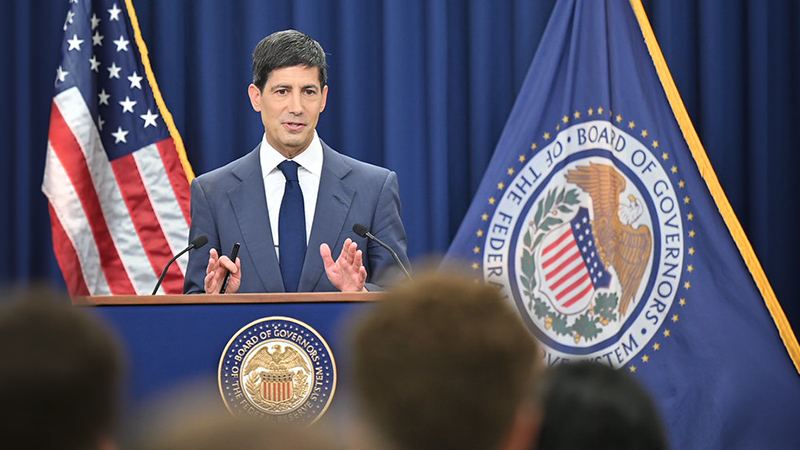

The Federal Reserve is widely expected to hold US interest rates at 3.75-4% due to softening in the data generated by the American economy.
With the oil price stubbornly anchored in the $100 per barrel area because of the US-Iran conflict, energy costs continue to create inflationary pressure.
This is not likely to be enough to tip the balance towards another hike by Chair Kevin Warsh and his colleagues though, following the quarter point rise in September.
The US generated just 29,000 jobs in September, a paltry figure relative to earlier in the year.
Stephen Jones, global CIO, Aegon Asset Management, said: “The Federal Reserve decides on US interest rates hours after the chancellor sits down, and gilts remain hostage to the larger US Treasury market.
“The US hiked interest rates in September to 3.75–4%, and September inflation then printed at 3.7% for the consumer price index.
“The recent rally in US bond yields has been driven by AI-related risk aversion and short covering; the inflation data and the direction of travel on short term interest rates have both been politely ignored.
“We expect no move in the US tomorrow, but a committee that tightened last time is unlikely to stay silent on hot CPI and other inflation prints.
“Chair Warsh may remind markets that fundamentals have not gone on holiday and we have trimmed duration in our strategic bond funds accordingly.”
Tom Stevenson, investment director at Fidelity International, said: “The most important interest rate decision will come within a few hours of the chancellor getting to his feet in parliament.
“The Federal Reserve is thought very unlikely to raise interest rates again on Wednesday, with futures markets pricing in just a 9% chance of a hike.
“In part that reflects the fact that inflation is being driven by an energy shock, over which interest rates have no influence,” he continued.
“Although inflation is running ahead of target, at 3.7% in September, the primary cause is oil, which last week spiked as high as $117 a barrel and looks like staying above $100 until there is progress towards ending the war in the Gulf, which looks unlikely this side of November’s mid-term elections.”
Michael Field, chief European equity strategist at Morningstar, added: “With the Federal Reserve having just raised interest rates last month, all expectations are for a hold.
“On balance, this seems like the right move, allowing the bank time to assess the effects of last month’s hike. Should the decision be different, however, then equity markets are likely to move on the announcement.
“The Fed’s decision comes the day before the European Central Bank’s announcement on rates, making this a crucial week for macroeconomics. Language is everything, and for equity markets it will be important to hear that central banks believe they can still get inflation under control.”
See also: Artemis’s Pugh: AI risk looks tilted to the downside – where is the reverse true?