

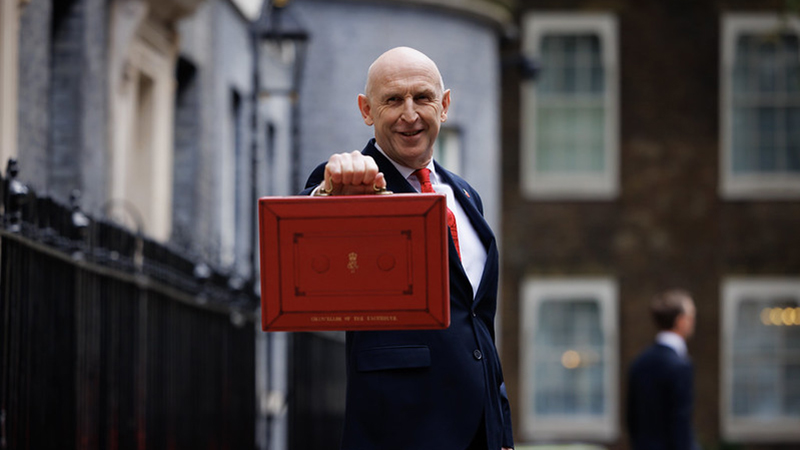







Chancellor John Healey has announced a new relief in Capital Gains Tax (CGT) for business founders.
Named ‘Founders’ Relief’, the 10% CGT rate will apply to lifetime gains of up to £10m, in a bid to support “the founders of our most successful firms”.
Addressing the House of Commons today (28 October), Healey said: “I know that starting a company means taking risk. Leaving a secure job to build something with no guarantee that it will work.
“And I believe that when business founders take that risk, build an exceptional company and create wealth for Britain, we should recognise that success and keep those people here to invest again.”
See also: Autumn Budget 2026: Banks surcharge up by 3% to provide ‘breathing space’
Elsewhere, the chancellor will triple the tax-free trading allowance for entrepreneurs from £1,000 to £3,000.
He will also launch a new allowance for young entrepreneurs, which will cover the first year of their living costs as they found their business.
Female founders will benefit from a new scale-up programme, whereby the UK Government will double its contributions to £200m for women-led businesses.
On the other hand, Healey halved the threshold for business asset disposal relief (BADR) in CGT to £500m from £1m, a move which he told the House of Commons will will mean “no changes for three in four claimants”.
Commenting on the policy changes, Michael Carter, partner and head of incentives at Osborne Clarke, said the chancellor has “delivered something of a mixed message” for entrepreneurs.
“On the one hand, Business Asset Disposal Relief has been cut back again, with the lifetime limit reduced from £1m to £500,000. That leaves qualifying business owners able to save a maximum of just £30,000 in CGT over their lifetime under the existing relief.
“On the other hand, the introduction of a new Founders’ Relief could be much more significant. Offering a 10% tax rate on up to £10m of lifetime gains, it appears to restore a substantial incentive for entrepreneurs to build and sell businesses in the UK.
“The key question is who will qualify and how the new relief will work in practice. If it is sufficiently accessible, this could be welcome news for entrepreneurs and help encourage further investment. But as ever with tax changes, the devil will be in the detail.”
General CGT policy left alone
CGT policy more generally was left untouched, despite strong speculation from commentators in the run-up to the Budget.
Commenting on Healey’s decision “against tinkering with rates”, Michael Edwards, MD of FSL, said: “Whatever view you take on the debate around CGT policy, mid-tax year changes to rates create significant practical challenges for the industry.
See also: Autumn Budget 2026: Treasury’s fiscal headroom falls by £8.6bn
“Tax reporting is already a notoriously tricky process, particularly where investors have large, complex portfolios Introducing new rates part-way through a tax year adds another layer of complexity.”
He added: “Our industry will always adapt to legislative change, but frequent or unexpected adjustments to tax policy increase operational costs and create additional complexity for wealth managers, investors and tech providers alike.
“From a reporting perspective, stability and certainty are valuable because they allow businesses to focus on helping clients meet their obligations accurately and efficiently, rather than continually re-engineering systems and processes.”
Isabella Galliers-Pratt, senior investment director, at Rathbones, added: “A potential increase in CGT has been one of the primary concerns we’ve heard from clients ahead of this year’s Budget, so keeping rates unchanged provides some welcome certainty. That matters because uncertainty around CGT can influence behaviour even when the rules ultimately stay the same. Investors may bring forward disposals, delay selling assets or rethink how they realise gains because they fear a future increase.
“For now, the tax goalposts haven’t moved, which should allow investors to focus on the fundamentals rather than second-guessing the chancellor. Tax is an important part of financial planning, but it shouldn’t be the tail that wags the investment dog. Decisions about when to sell should ultimately be driven by long-term objectives, diversification and risk, rather than Budget speculation.”