

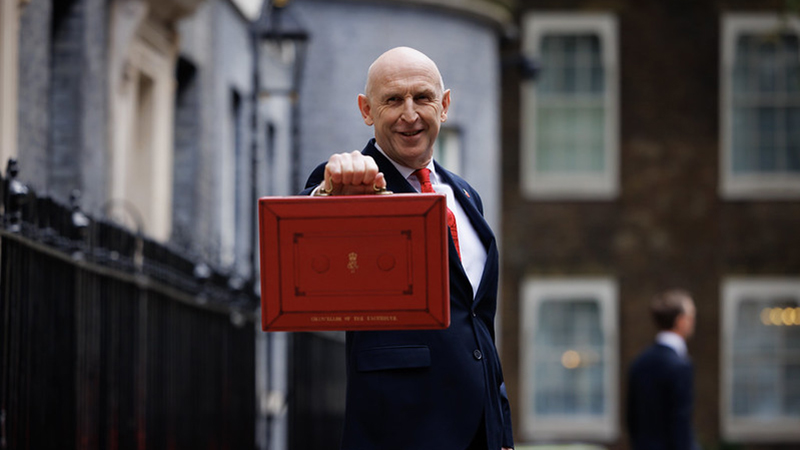









After much debate, Chancellor and (former Defence Secretary) John Healey has reaffirmed his commitment to defence spending.
First, he confirmed that at the spending review next year, he will set out details of how to meet 3.5% of GDP on defence by 2035 and 3% by 2030. As part of this, he will set up the defence finance taskforce to lead efforts on defence spending ahead of the review.
In June, the Budget statement added that £15bn was committed to the Defence Investment Plan by 2030: £10.3bn of this was funded by reprioritising public spending, while today’s Budget confirmed the remaining £4.7bn would come through reprioritising capital budgets, such as cutting departmental capital budgets by 1%.
On top of this, Healey confirmed negotiation with Finland, Poland and the Netherlands on a new defence mechanism or bank to boost investment procurement across NATO.
See also: Autumn Budget 2026: Banks surcharge up by 3% to provide ‘breathing space’
“As an immediate step, I can tell the house that the National Wealth Fund and the British Business Bank will launch a new focus on defence, dual use technology and sovereign capability, deploying up to £5bn of investment and lending over the next four years,” he said.
On top of this, he pledged to further expand the amount of private investment into defence, through public private partnerships.
Healey and Burnham also reaffirmed roughly £10bn of economic and military support for Ukraine.
On the back of these announcements, Rolls-Royce and BAE Systems’ share prices were roughly flat, according to Google Finance, although the former has ticked up slightly compared to the latter.
As part of this, the government has also agreed to a 10-year, £2.5bn programme for civil and defence aerospace gas turbines with Rolls-Royce, to support more than 3,000 jobs in the firm.
Sue Noffke, manager of Schroder Income Growth fund, said: “After two years in which businesses absorbed significant increases in costs and taxation, avoiding another broad increase in the corporate burden is welcome.
“Action to reduce energy costs should help households facing continued cost pressures, while investment in infrastructure, defence, AI and energy could create opportunities for UK-listed companies, particularly if it succeeds in crowding in private capital.”