





UK inflation has fallen faster than expected, coming in at 2.6% for the year to June 2026, a slight tick down from 2.8% the previous month.
Transport, food and non-alcoholic beverages made the largest downward contributions to the monthly change in CPI. Prices in the transport sector fell by 0.3% in June, compared with last year, when they rose 0.7% in the same period.
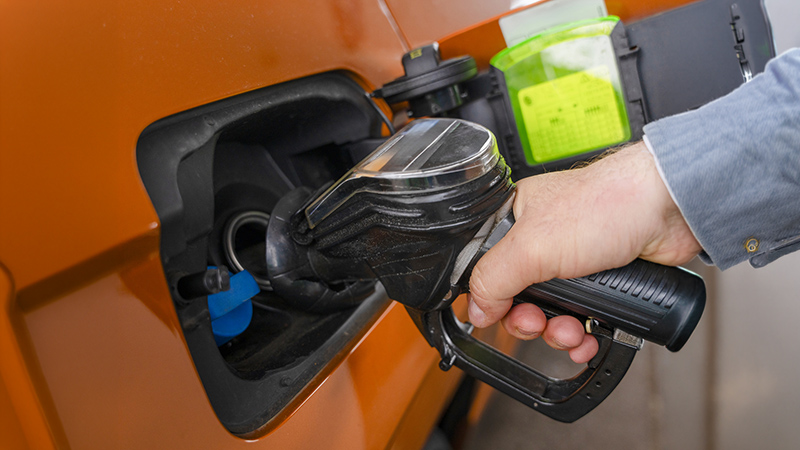
This was mostly driven by a fall in diesel and petrol prices, the first time fuel prices have eased since the start of the Iran conflict.
Meanwhile, food and non-alcoholic beverage prices declined by 0.2% in June, versus a rise of 0.3% this time last year. Foodstuffs such as sugar, chocolate, oils and fats, meat, dairy and vegetables were primarily responsible.
This news will almost certainly be welcomed by new Prime Minister Andy Burnham, who has styled himself as a ‘cost of living’ government with his first measures.
See also: UK unemployment stays at 4.9% but ‘huge challenges’ remain for Burnham
Malvee Vaja, chartered financial planner at Rathbones, said: “Inflation slowed by more than expected last month, offering a welcome boost to new Prime Minister Burnham and a potential launchpad for his agenda to support households struggling with the cost-of-living squeeze.”
Danni Hewson, head of financial analysis at AJ Bell, added: “For Burnham it’s a tantalising glimpse of what might have been if geopolitics hadn’t thrown a spanner in the works, with UK inflation in June below that of the EU – although it was above that of both France and Germany.”
That said, Rathbones’ Vaja argued the good news may be “short-lived”, as the recent resumption of hostilities in the Middle East has pushed oil back above $90 a barrel.
Susannah Streeter, chief investment strategist at the Wealth Club, said: “Transport costs were the biggest downward driver of the headline rate of inflation, with prices of motor fuel coming down markedly, but with oil prices becoming painfully hot again, it’ll soon show up at the pumps and filter through to other consumer prices via higher freight and energy costs.”
If conflicts in the Red and Black Sea continue to drag on, this could even prove to be the “low point for inflation” before price pressures kick back in, Streeter said.
“In many ways policymakers are in a race against forces beyond their control,” she added. “If conflict in the Middle East keeps oil prices simmering near recent highs, the relief offered by cheaper electricity and transport could quickly be eroded by rising fuel, freight and wider consumer costs”
Zara Nokes, global market analyst at JP Morgan Asset Management, noted Burnham removing VAT on domestic electricity bills is unlikely to do much to push down cost of living pressures, particularly as the Ofgem price cap is expected to jump again in October.
All eyes will be on the Bank of England, which experts now expect to hold rates rather than raise them.
Nokes said: “Even with energy inflation picking up, this is not an environment in which the Bank of England should be raising rates.
“Further tightening would also risk unnecessarily weighing on activity at a time when domestic policy uncertainty is high.”
Richard Carter, head of fixed income research at Quilter Cheviot, agreed the Bank of England is likely to continue holding until the impact of the conflict becomes clearer.
Nevertheless, he warned: “One rate rise is still expected by the market, and should we see a further spike in gilt yields or inflation then more than that may be required.”
AJ Bell’s Hewson concluded the real test for the Bank of England will be later this year, likely in September. “The vote split and updated forecast will be closely watched for clues about how many hikes may be required to keep the economy in check.”
See also: ‘A safe pair of hands’ as Healey is appointed chancellor