









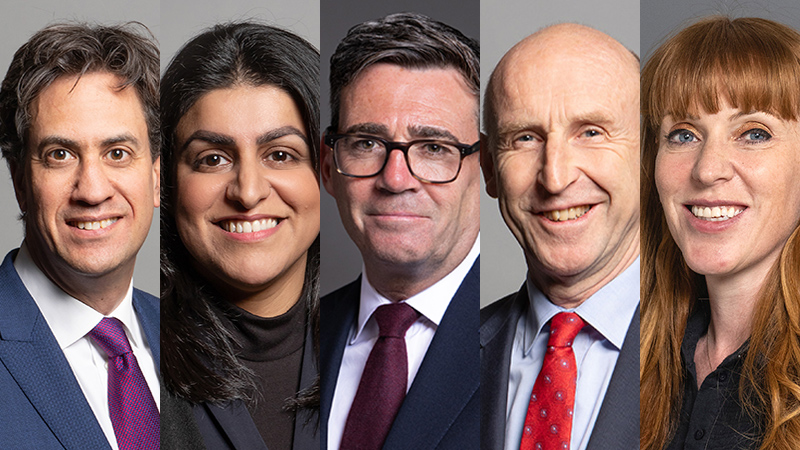

New Prime Minister Andy Burnham has finished appointing his cabinet, with the most surprising appointment being John Healey, the former defence minister, as the new chancellor.
This came as a surprise to markets, who had been pricing in either Shabana Mahmood (now home secretary) or Ed Miliband (now foreign secretary) for the role.
Meanwhile, Wes Streeting, another potential candidate for the role, has inherited Healey’s old brief as defence secretary and Angela Rayner has returned to her role as housing secretary.
Other appointments include Yvette Cooper as health secretary and Pat McFadden keeping his position as work and pensions secretary.
Anna MacDonald, investment strategy director at Hargreaves Lansdown, said: “John Healey’s appointment as chancellor brings valuable experience and a degree of continuity at an important moment.
“Having served in the Treasury before, he will be seen as a relatively safe pair of hands, but both markets and households will now be looking for greater detail in the days ahead and, ultimately, at the budget.”
See also: Burnham axes Reeves as he vows to tackle cost of living
Richard Carter, head of fixed interest research at Quilter Cheviot, added Healey’s appointment serves as a sign that Burnham is willing to respect the bond market, instead of ploughing ahead with a radical agenda that could be unsettling.
“Healey’s previous Treasury experience should keep bond markets calm for now, while the spectre of Liz Truss and the lettuce continue to play in the minds of politicians terrified of a repeat,” he added.
Susannah Streeter, chief investment strategist at Wealth Club, noted Healey taking the role has implications for defence stocks.
“Having spent months making the case for higher military spending, Healey has a detailed understanding of the capability gaps facing the armed forces and the demands of a far more dangerous geopolitical environment.
“Shares in military contractors BAE Systems, Rolls Royce, QinetiQ and Melrose were all higher in early trade, indicating investors expect the chancellor will be a bigger backer of defence than his predecessor.” According to data from Interactive Investor, Babcock rose by as much as 6%, nearing the top of the FTSE 100, while BAE Systems also rose 3%.
Moving forward, Burnham and Healey will need to focus on growth, according to Quilter’s Carter, but options to achieve this remain limited.
“Spending cuts are unlikely to feature in a Burnham premiership, which means tax rises will be back on the table when the Budget comes along in the autumn.
“We have seen the damage such speculation and policy can have on business confidence and thus the UK economy, so that period will need to be carefully managed.”
Anthony Willis, senior economist at Columbia Threadneedle, continued that while Burnham’s commitment to the existing fiscal framework has reassured the gilt market, it also leaves little room for broad fiscal stimulus.
“For investors, the key question is whether the government can improve the UK’s medium-term growth profile without undermining fiscal credibility.
Charlene Young, senior pensions and savings expert at AJ Bell, added the new chancellor must be aware of the uncertain international backdrop.
“The conflict in the Middle East has seen fresh strikes from both the US and Iran which could reignite inflationary pressures and spike borrowing costs.”
Similarly, Charlotte Kennedy, chartered financial planner at Rathbones, said that while Burnham has started by scrapping VAT on energy bills as of October, there’s still plenty of questions about funding ahead.
“Burnham has inherited a difficult economic backdrop: subdued growth, stubbornly high borrowing, a sizeable national debt and rising debt-servicing costs, alongside unresolved questions over how to fund higher defence spending.
“Higher taxes, spending cuts, more borrowing – or some combination of the three – could all be on the table.”
That said, experts warned investors not to make sudden moves in their portfolios based on cabinet appointments or tax changes.
Wealth Club’s Streeter said: “History shows us that rashly switching and ditching assets based on speculation can lead to unnecessary transaction costs, trigger premature tax liabilities and, crucially, miss out on the power of long-term compounding.”
HL’s MacDonald agreed, arguing that staying invested and focusing on long-term goals remains sensible.
“Changing a long-term investment strategy in response to a change of Chancellor can easily do more harm than good.”
See also: Oil up again as Iran hits back and bond market seeks clues from Burnham