







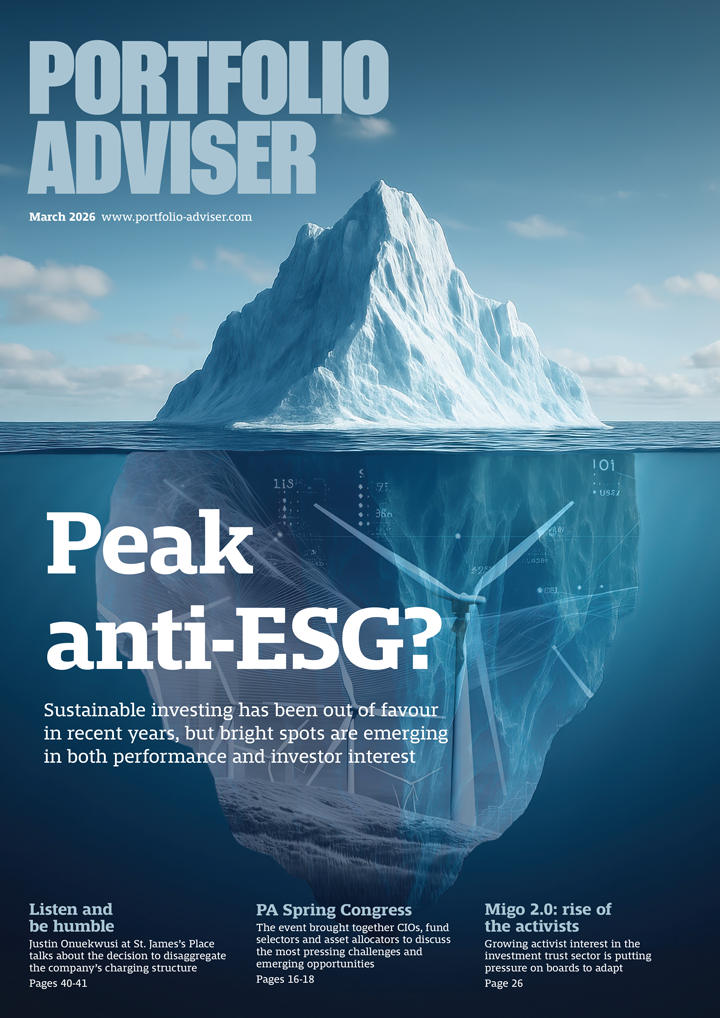
Sustainable investing has been out of favour in recent years, but bright spots are emerging in both performance and investor interest.
The public narrative around investing using an ‘ESG’ lens over the past few years has been grim.
From ‘backlash’ to ‘woke’, from ‘burn, baby, burn’ to ‘ESG is dead’, the negativity has been strong and consistent, driven by hostility, politicisation, greenwashing – and then label scepticism – and has led to some hefty outflows.
But underneath the surface, fund selectors report the asset managers they are engaging with are taking a ‘business as usual’ approach to sustainability as they increasingly see it as part of their fiduciary duty – it isn’t a ‘nice-to-have’, it is a risk-mitigation tool.
Have we reached peak anti-ESG sentiment? Portfolio Adviser explores.
Rewinding the clock
It is important to rewind to pre-Covid 19 and remind ourselves how we got here.
The period from 2020-2022 marked peak ESG fund launches. As a journalist, it was not unusual to receive as many as eight fund launch or rebrand press releases in a single day.
Amid the sense of community during lockdown – when workers stopped commuting, holidaymakers stopped flying and factories shut down – the message in the sustainable investment space became something akin to ‘save the world and outperform’. Many now agree this was over-promising.
“We had this concept of sustainability, and then it got to a point where the narrative got ahead of what we could provide,” says Dan Babington, head of responsible investment at TAM Asset Management. “The narrative buzzing around was that we can outperform all the time, make money and change the world. But, in reality, we were never at a point where, as an industry, we could deliver on that.”
He points to the lack of stable assets and mix of products needed to build genuinely balanced portfolios, as well as structural biases within some sustainable funds and indices – skewed towards quality mid caps – as reasons why it was too early for the industry to go ‘all in’.

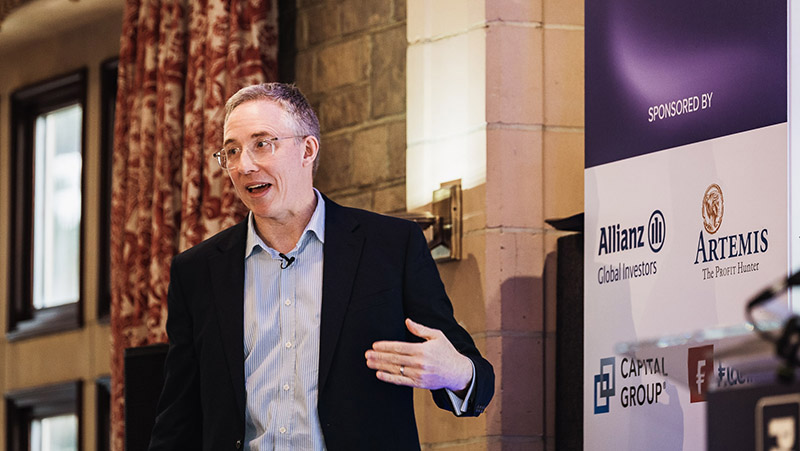
Ashley Hamilton Claxton, head of responsible investment, Royal London Asset Management
‘Greenhushing is certainly an issue but what is happening right now may be a little different – it’s more like reframing. The reality is we live on a finite planet with a growing population. None of this stuff is going away’
“It was unlikely that the positive momentum could continue unbridled,” he says.
Greenwashing was also a major issue, driven by both misunderstanding and, arguably, some groups jumping on the bandwagon and overstating their sustainability credentials. Regulators stepped in and fines followed.
As trust wavered, the pendulum swung sharply in the opposite direction. ESG was banned from certain US pension funds, and asset managers grew wary amid threats of litigation and political scrutiny.
“We saw the narrative move to ‘ESG is dead’, ‘everyone in sustainability is going to lose their jobs’, ‘we are never going to reach net zero’,” reflects Babington. Flows followed sentiment. Morningstar recorded the first quarter of outflows from global sustainable funds in Q4 2023 and the momentum for the nearest exit continued. In 2025, European sustainable funds reported their first annual outflows since Morningstar began tracking the data in 2018, with redemptions reaching $61bn (£45.9bn). The previous year saw $54bn in inflows.
At the time, Hortense Bioy, head of sustainable investing research at Morningstar Sustainalytics, commented: “The wider environment remains challenging, as persistent headwinds, including geopolitical tensions, the ESG backlash, regulatory backpedalling, and mixed performance, continue to weigh on investor appetite.”
The story in the US has been particularly pronounced, with anti-ESG sentiment heightened under Donald Trump’s US presidency.
Nuance behind the numbers
Yet the headline numbers do not tell the whole story. Morningstar data also showed a substantial share of outflows in the third and fourth quarters of 2025 came from large UK institutional clients – including BlackRock, Scottish Widows and Northern Trust – redeeming from pooled ESG funds and reallocating assets into bespoke ESG mandates. Those segregated mandates are not captured in the Morningstar database.
“It is worth noting these are visible public fund flows which are more easily scrutinised,” says Paris Jordan, head of responsible investing at Charles Stanley. “There are plenty of investments occurring which are not visible, including segregated mandates as mentioned in the report, alongside private equity investments.” Money isn’t leaving sustainability altogether, but it is moving structure.
“Are people now less interested? No, they are not,” said Julia Dreblow at the Fund EcoMarket conference during last year’s Good Money Week. She also emphasises appetite has not gone away – but perhaps trust has. “What we saw around the 2021–22 period was this massive bubble. That hype was damaging trust horribly.” In her view, what has been lost is the peak, not the base. Interest levels may have normalised, but they remain above where they were pre-pandemic.
NZAM retreat
Another consequence of the backlash was several large US asset managers – including BlackRock, Vanguard and State Street – leaving the Net Zero Asset Managers’ initiative (NZAM), ultimately leading to its suspension in January 2025.
However, in what some see as a sign of renewed commitment – or at least a more realistic framing of what can be achieved – NZAM has relaunched with a revised commitment statement for signatories.
References to 2050 and the 1.5C target have been removed. NZAM said the updated text reflected feedback for a “globally inclusive” statement that “continues to be practical within the evolving landscape” – a clear nod to diverging regional attitudes.

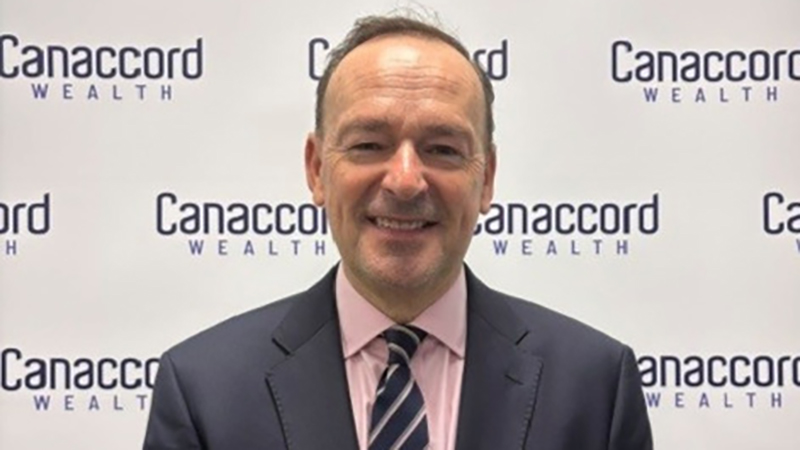
Louisiana Salge, head of sustainability, EQ Investors
‘I think we have reached peak-lethargy. Now, all of a sudden, groups are starting to do things, like voting and engaging on ESG matters again. Corporates also aren’t backpedalling as much’
Royal London Asset Management was among the first to recommit, alongside Amundi, Aberdeen Investments, Impax, Sarasin & Partners, Storebrand AM and Sumitomo Mitsui Trust Asset Management.
For some critics, the changes represent dilution. For others, they reflect pragmatism – accommodating different fiduciary and regulatory contexts while maintaining direction of travel.
From backlash to recalibration
So what now? The boom years are definitely over. However, as we move into 2026, the narrative appears to be shifting again. Yes, anti-ESG sentiment clearly remains, especially in parts of the US, but we are also seeing increased segmentation, adapting language and a quiet continuation. In parts, greenhushing has become the norm – though not necessarily in a negative sense.
“I think we have reached peak lethargy,” comments Louisiana Salge, head of sustainability at EQ Investors. “Lots of stuff stopped as groups were worrying about how the narrative was progressing. We could see it in voting records and other ways but now, all of a sudden, groups are starting to do things, like the voting again and engaging on ESG matters again. Corporates also aren’t backpedalling as much.”
She adds while the ideal scenario would be for the whole asset management industry to subscribe consistently to proactive voting and engagement, at least firms are no longer broadly stepping back or voting against ESG-related proposals.
Babington agrees the industry has moved into a more grounded phase. “I think anti-ESG is behind us,” he says. “We went through the hype phase, and it invited a backlash because we went too far, too fast.
“Now is the sensible compounding phase.”
Less grand promise, more steady integration, it seems.
Performance and positioning
There are also tentative performance bright spots. Renewable energy indices rebounded in 2025, outperforming broader markets, prompting some investors to revisit themes that had been heavily de-rated.
“It feels to us as if the trough for sustainable funds occurred in early 2025,” says Jamie Melrose, co-manager of the newly launched Guinness Global Environment fund.
“At the start of 2025, many of these names were simply too cheap.”
“Performance in sustainable value and energy transition was strong in 2025 with both areas outperforming the S&P 500,” adds Jordan. “Opportunities very much remain and it would be a shame for investors to sit on the sidelines and not benefit due to ESG-backlash.”

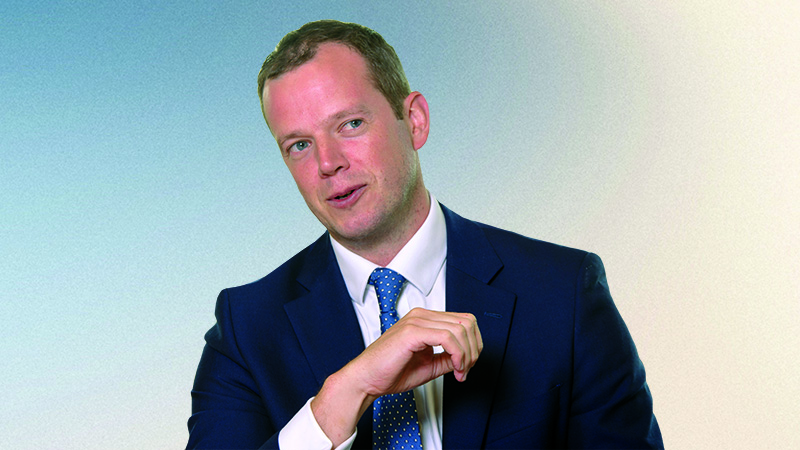
Dan Babington, head of responsible investment, TAM Asset Management
‘I think anti-ESG is behind us. We went through the hype phase, and it invited a backlash because we went too far, too fast. Now is the sensible compounding phase’
Its true flows have not yet turned decisively positive, but the pace of outflows has slowed, and fixed-income sustainable strategies have attracted inflows, according to Morningstar.
At the same time, the product landscape has rationalised. The flood of ESG rebrands and launches has subsided, and fund ranges are leaner.
TAM’s Babington describes it as “survival of the fittest”, as the managers that remain are those serious about delivering both financial returns and credible sustainability outcomes.
Ashley Hamilton Claxton, head of responsible investment at Royal London Asset Management, adds: “For those of us who believe in it to the core, it’s wrong to be shouting it from the rooftops but it’s also wrong to pull away from it – that is our strong view. Greenhushing is certainly an issue but I think what is happening right now may be a little different to greenhushing – it’s more like reframing.”
‘None of this is going away’
So, have we reached peak anti-ESG? The answer depends on geography and perspective.
In parts of the US, politicisation remains high and is unlikely to disappear quickly. Litigation risks and state-level bans still weigh heavily on behaviour.
But globally, the sentiment feels less negative than it did 12 months ago. The dramatic language has softened, engagement is resuming, corporate capital expenditure continues, and disclosure regimes are improving data quality.
“ESG is never going to be dead,” says Babington. “These are crises that are never going to go away.” Hamilton Claxton agrees: “The reality is we live on a finite planet with a growing population. None of this stuff is going away.”
The boom years are definitely over, but that does not necessarily mean sustainable investing is. If anything, it appears to be entering a quieter, more integrated phase – less about marketing and labels, and more about risk and processes. For many fund selectors, that is a healthier place for it to sit.
Language shift
It is important to continue to be clear and distinguish between rhetoric and reality and, in this phase, Louisiana Salge of EQ Investors highlights corporate sustainability efforts have not collapsed in the way headlines might suggest.
“If you’re focused on the investable universe and the tailwinds, that is less challenged than what asset managers might tell you about litigation,” she says.
Research she references suggests roughly half of corporates have kept sustainability investment unchanged, a significant proportion have increased it but are communicating less about it, and only a small minority have cut back. Transparency has improved.
“If they are issuing a green bond to finance solar panels, we know they’re doing it,” she adds.
RLAM’s Ashley Hamilton Claxton says language has evolved, particularly across the pond.
“I think what’s happening in the US is people are changing their language. It’s not about sustainability… It’s about efficiency or cost saving or energy security.”
The framing may be different, but the substance remains, she adds.
“The reality is we live on a finite planet with a growing population. None of this stuff is going away.” Increasingly, sustainability is being discussed not as an ideological overlay, but as part of fiduciary responsibility and risk management. It is being emphasised that climate risk, supply chain resilience, human capital and governance structures remain financially material to business success.