








Systematic investing has begun to regain favour following the 2018-20 quant winter, taking market share from more traditional discretionary approaches.
According to recent Morningstar data, systematic equity ETFs have accumulated about €12bn this year in Europe, compared with around €6.7bn in discretionary equities. Meanwhile, new players such as Keyridge and Allspring have joined established quant managers such as Goldman Sachs or Fidelity.
However, even as issuance has risen and the approach has started regaining momentum, investors have developed misperceptions about how it works, according to Wai Lee, portfolio manager at Allspring Global Investments.
“[People think] it means putting the portfolio on autopilot or relying on a black box”, he said. “Models are tools for processing information consistently and at scale, not as substitutes for investment judgement.”
So what role do these funds play for investors, and how do they differentiate themselves from competitors?
The role of systematic funds
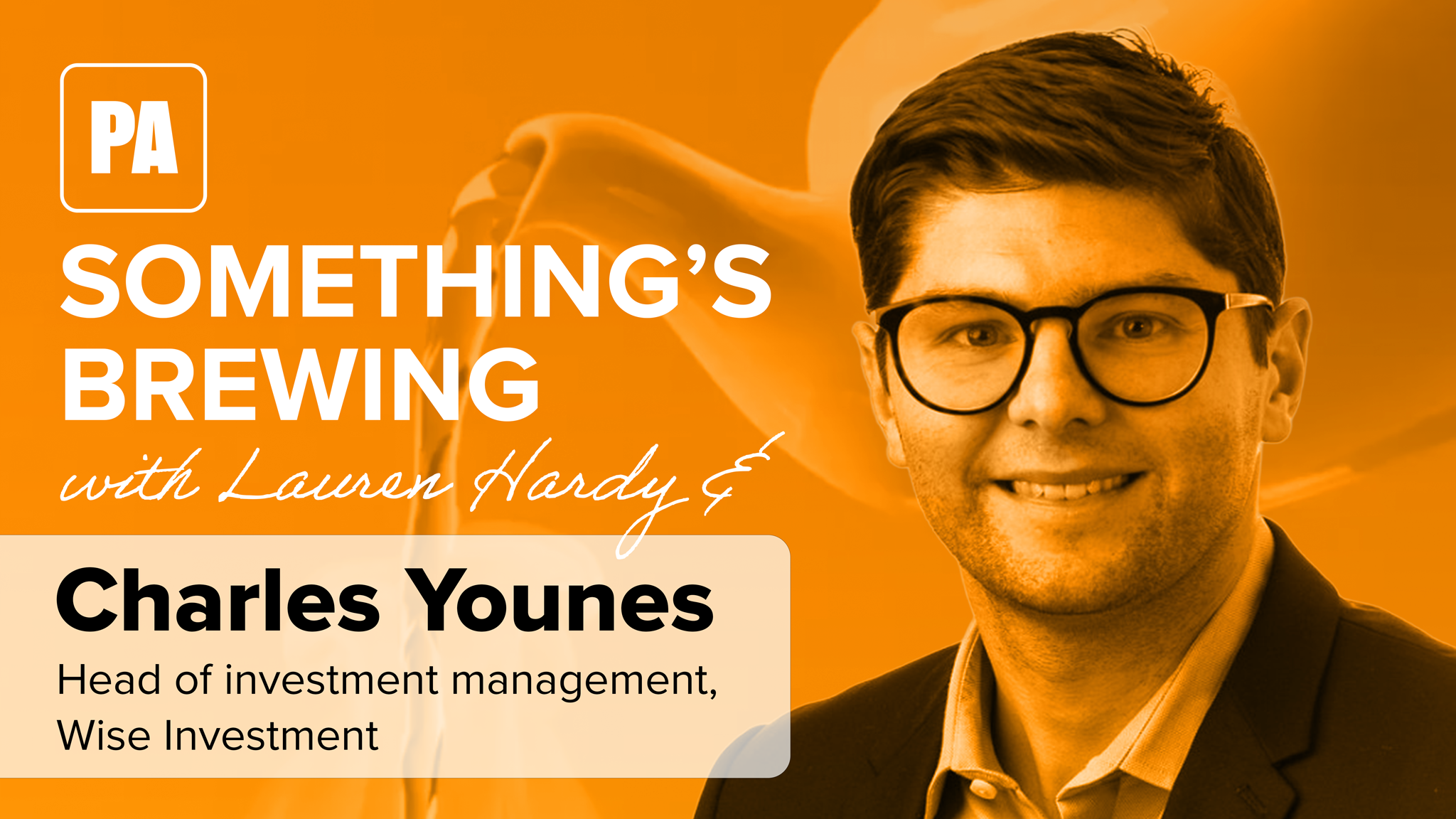
Charles Younes, head of investment management at Wise Investment, told Portfolio Adviser: “I’ve never really been a fan of splitting the world of investing into active and passive; I’ve always seen it as better described as systematic or discretionary.”
See also: Something’s brewing: Lauren Hardy in conversation with Charles Younes, Wise Investment
Systematic investing is more of a “portfolio construction decision or optimisation technique”, based on approaches to risk budgeting and benchmark awareness. It is about applying a set of rules to remove human biases and deliver a consistent process.
Younes added: “The big difference is whether you think data and tech give you a complete view of a company, whereas discretionary managers think they have better visibility.”
Tarek Abou Zeid, head of client portfolio management, systematic at Man Group, noted: “Discretionary PMs are groups of people deeply knowledgeable about a handful of stocks, while systematic managers are on thousands of stocks as machines scale.
“Will you have the same level of depth on individual names in a systematic fund? Probably not,” he conceded. But systematic managers make up for it with the variety, he said.
Nick Millington, head of systematic index solutions – enhanced index at Aberdeen Investments, added that while systematic investing is hardly a new development, it has gained ground as a “best of both worlds” approach.
“They’re well diversified, with more stocks than your standard stockpicking fund. But because it’s systematic, there’s a good degree of discipline in how the portfolios are built and how risk is managed.”
Price competition, regulatory pressure for advisers to deliver value for money, and advisers trying to add expensive top-down diversifying assets at reduced costs have contributed to this.
“The other thing advisers are looking for is consistency and controlled outcomes,” Millington said. If a stock becomes more expensive, it becomes a bigger position and has more risk, so managers need to rebalance portfolios constantly to maintain carefully decided risk budgets.
In this sense, the models need a dynamic approach to risk management to maintain controlled outcomes as the market changes around them.
Man Group’s Zeid explained: “Step one as a systematic manager is to evaluate your model and see if the alpha has decayed away.

Charles Younes, head of investment management, Wise Investment
‘There are essentially two lenses as a systematic manager: Do you believe in factor exposure or are you more focused on the bottom up supplemented by tech’
“The typical data set driven models tend to have a shelf life,” he continued. “So, you look at the models and decide which ones you have to bin, which is why you employ a large number of researchers to keep uncovering new premia.”
For example, managers who rely on data sets such as credit card payments will need to constantly refresh their models to ensure they’re not losing their edge as the information changes.
See also: Aberdeen Investments launches EM enhanced index fund
‘It’s not one entity’
However, experts stress that systematic investing is not a singular approach and involves significant dispersion and variety.
Terry McGivern, lead research analyst of index and systematic funds at AJ Bell, explained the team essentially segments or “buckets” the space: traditional factor-based strategies that closely follow a benchmark, analyst-led ranges such as Fidelity or JP Morgan where research analysts make judgement calls on prices for companies that guide the portfolio tilts, or the more machine learning, unusual data-driven strategies such as Goldman Sachs.
Wise Investment’s Younes noted that as systematic investing has evolved, managers have iterated on the process several times to reflect changing market dynamics. As a result, the big difference between systematic managers tends to be which part of the rules-based process they prioritise, he said.
“There are essentially two lenses as a systematic manager: Do you believe in factor exposure or are you more focused on the bottom up supplemented by tech,” Younes continued. “The second is the amount of tracking error you want to have, how much you’re want your position sizing deviate from the benchmark.”
For an example of a more traditional factor-based investor, Younes pointed to the Aberdeen Investments team.
Aberdeen’s Millington noted: “So many investment managers have their own style, value managers, growth, quality, and so on, and that can absolutely add value through time.
“But we think there’s more than one generator of future outperformance, so we use quality, value and momentum, and by mixing those things, we can smooth out the journey.”
Relying on just one factor, such as value or quality, can be challenging, he explains, because they may struggle in certain market environments, or markets do not always agree on company valuations.
Millington also noted that the team generally favours lower tracking error, with the team’s largest active positions being about 0.5% overweight or underweight at base.

Nick Millington, head of systematic index solutions – enhanced index, Aberdeen Investments
‘We think there’s more than one generator of future outperformance, so we use quality, value and momentum, and by mixing those things, we can smooth out the journey’
“We see our alpha in the spread of returns of companies that are similar to each other – we look for companies that are good relative to their peers, eg within IT or utilities or so on,” he explained.
See also: Keyridge launches systematic global equity fund
The challenge of a machine-driven market
Perhaps unsurprisingly, experts remained broadly positive on systematic investing to eliminate human biases and bring consistency to the market, with Wise Investment’s Younes noting it remained massively underutilised.
However, he acknowledged that systematic investing does have real challenges. “At best,” the data gives a sense of what is happening now or a few months in the future, while a discretionary manager can meet the team and invest because they have conviction in the long-term goals, he noted.
Additionally, the rise of systematic has arguably contributed to heightened volatility, according to Younes.
“It comes with the pitfall that when market liquidity is driven by machines and tech, every movement, announcement, etc. is picked up at the same time,” he conceded to Portfolio Adviser.
In the past, Younes said bad earnings calls took longer to be reflected as discretionary managers digested the results. In a more quant-based market, where all these developments can be picked up instantly, movements are now much faster and more exaggerated, arguably contributing to some of the heightened volatility.
“People say the reason share price moves are so dramatic is hedge funds, but it’s not just hedge funds; systematic investing also plays a role in that.”
AJ Bell’s McGivern, meanwhile, took a more neutral stance.
“Now that everyone’s aware of factors, you do get a bit more herding, more people crowding into the same bets, so the door is too small when you want to get out,” he said.
This is a problem for systematic funds, but it’s also a problem for more traditional passive funds who buy and sell without any regard for prices, he said.
“This coincides with active funds, who have seen their share of the pie shrinking, so they just don’t have the firepower to catch falling knives.” Traditional active managers used to be able to almost “create price discovery” by deciding when to initiate a position, the AJ Bell analyst said.
“They just don’t have that power anymore,” when their AUM is shrinking, and they are having to absorb outflows.
In this sense, while systematic funds contribute to some exaggerated price moves, the market is too nuanced for it to be blamed on systematic funds, the AJ Bell analyst said.
“Systematic funds aren’t necessarily the cause of this volatility, but they’re definitely not the cure either,” McGivern said.
See also: Investing beyond market direction.
Man Group’s Zeid, however, was more critical of this assumption.
“Sometimes you see in the press that, oh, systematic traders push the market up or movements in the S&P were exacerbated by trend followers, etc,” he said. “These are facts that have yet to be proven.”
Systematic managers risk constraints, he argued, means as volatility rises in markets, managers tend to reduce their positions rather than driving more extreme moves.
“The participation of systematic funds is still smaller than the whole market.”