








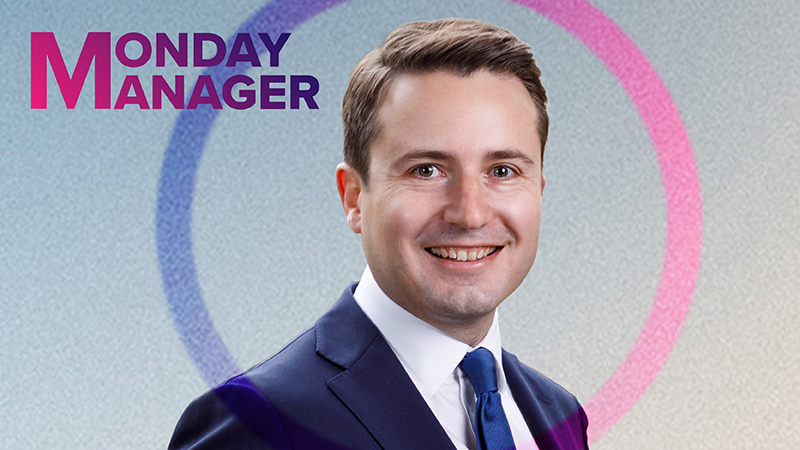

Unicorn Asset Management fund manager Fraser Mackersie discusses valuation opportunities in UK small and mid caps, paying close attention to dividends and how the FTSE 250 is finally offering a yield comparable to, and at times above, the FTSE 100.
The Monday Manager series covers fund managers that have worked on their fund for over three years, and where fund assets are over £100m.
Can you explain Unicorn’s approach to investment and what is Unicorn UK Income trying to achieve for investors?
Unicorn is a UK equity specialist with a fundamental bias towards the opportunities in small and mid-cap companies including those listed on the Alternative Investment Market (AIM). We manage a range of strategies including the Unicorn UK Income fund which aims to provide investors with an attractive and growing dividend yield, sourced primarily from UK small- and mid-cap companies.
This is a meaningful point of difference from most UK income funds, which tend to concentrate in the large-cap sectors that dominate the FTSE 100, such as banks, oil & gas and miners. We deliberately look elsewhere.
Our approach is to invest in up to 50 companies that meet strict criteria. And hold them for the long term. We look for businesses with strong balance sheets and attractive cash generation, where the dividend is funded organically rather than by debt or asset disposals.
The strength of a company’s product or service, the defensibility of its market position, and the quality and depth of its management team are all central to our assessment. We also pay close attention to the end market a business operates in: a genuinely good company in a structurally growing or resilient market is a much more attractive long-term holding than a potential value trap in one facing secular headwinds’
The UK stockmarket has faced uncertainty over the years, although the FTSE 100 has begun to rebound. What is the picture looking like for companies further down the cap spectrum?
The recent strength of the FTSE 100 reflects its particular composition rather than any broad improvement in UK economic sentiment. The index is heavily weighted towards global businesses in sectors such as energy, mining, pharmaceuticals and financials, many of which have benefitted from elevated commodity prices, higher interest rates and a greater proportion of overseas earnings. That is a very different picture from the more domestically exposed mid- and smaller-cap universe.
Further down the market-cap spectrum, we believe the opportunity is increasingly compelling. For the first time in around 20 years, the FTSE 250 has offered a higher dividend yield than the FTSE 100, underlining how unusual current conditions are. Many high-quality mid and smaller companies continue to grow revenues, profits, dividends and market share, yet share prices remain depressed by cautious sentiment and persistent outflows from UK equity funds rather than any widespread deterioration in fundamentals.
Historically, periods where valuations and fundamentals diverge so markedly have created attractive entry points for patient, selective investors. As inflation moderates, interest rates begin to normalise and confidence returns, we believe well-run UK smaller companies are well placed to outperform over the medium term.
Which areas of the market are you most excited about right now, and which are you avoiding?
We are most excited about the valuation opportunity currently available in UK small and mid caps. Many of the high quality businesses we hold have continued to grow revenues, protect margins and generate strong cashflow through a difficult few years, yet their share prices have not reflected that. The result is a pronounced disconnect between operational performance and market valuation we believe is historically unusual, and unlikely to persist.
What we avoid is determined by our investment criteria rather than any macro view. A strong preference for small and mid caps (alongside a hard limit on the fund large cap holdings) does have an impact on sector over and under weights when compared with the FTSE All Share. We also continue to avoid businesses that rely on leverage to sustain returns, lack pricing power, or have no clear path to self-funded cash generation. That discipline has been consistent throughout, and remains so.
What drew you to investing specifically in UK companies beyond the blue-chip names?
The simple answer is smaller companies are where genuine analytical edge is most likely to exist. Typically, a FTSE 100 business is heavily researched, widely owned and more efficiently priced. By contrast, many small- and mid-sized companies are less well covered, less widely held and more prone to mispricing, particularly when sentiment is weak and liquidity is thin. That creates opportunities for active investors willing to do detailed fundamental work.
Investing further down the market-cap spectrum also allows you to back businesses at an earlier stage of their development, when the market may not yet fully appreciate the quality of the franchise, the scale of the opportunity or the ability of management to compound value over time. Those are often the most rewarding long-term investments.
Unicorn’s scale is well suited to this part of the market. We are large enough to build meaningful positions and engage directly with management teams, but small enough to remain genuinely nimble in less liquid stocks. Many larger asset managers are increasingly constrained from investing meaningfully in this area, whether through size, liquidity limits or benchmark considerations. As a specialist small- and mid-cap investor, we believe that leaves us better positioned to uncover opportunities in parts of the market where inefficiencies remain greatest.
What’s the best piece of advice you have received about investing?
Pay close attention to the dividend. Not simply because income is the objective, but because the dividend is one of the most reliable indicators of a business’s true financial health. A company that consistently funds and grows its dividend from genuine free cashflow is demonstrating capital discipline and financial strength in a way that is difficult to fabricate.
Conversely, a dividend that is sustained through borrowing rather than earnings, is almost always an early warning of problems that have yet to show up elsewhere in the numbers. That principle sits at the heart of how we assess every company in the fund. We are not simply looking for yield; we are using the dividend as a lens through which to judge the quality and sustainability of the underlying business.
Unicorn UK Income has struggled relative to its average peer over recent years. Why is this, and how is performance being managed?
The key point is the recent underperformance has predominantly been driven by our focus on small and mid caps. Other funds in the UK equity income peer group have tended to perform well due to the strong relative performance of large caps – which have been major contributors to returns during a period marked by higher interest rates, elevated commodity prices and a preference for large-cap value stocks.
At the same time, the portfolio has maintained meaningful exposure to more domestically focused small- and mid-sized companies, many of which have continued to perform operationally but have seen valuations contract due to weak sentiment, higher discount rates and sustained outflows from UK equity funds. That combination created a difficult relative backdrop, particularly against peers with substantial exposure to the largest index constituents.
In terms of how performance is being managed, the process remains disciplined and long term in nature. We are not seeking to chase short-term market leadership or dilute the fund’s philosophy simply to mirror the peer group. Instead, the focus is on owning financially strong, cash-generative businesses with resilient dividends, sensible valuations and the capacity to grow distributions over time. Where opportunities arise, positions are actively reviewed and capital is recycled into ideas offering the most attractive risk-adjusted return potential.
Looking ahead, many of the factors that created the headwind are already moderating, though we are mindful that ongoing conflict in the Middle East remains a meaningful source of uncertainty, with the potential to keep energy prices elevated and inflation stickier than central banks would like, which in turn could delay the interest rate normalisation that domestic smaller companies would benefit from.
Nonetheless, the structural picture is compelling: the FTSE 250 now offers a yield comparable to, and at times above, the FTSE 100; something not seen for two decades. Valuation discounts between smaller and larger companies remain unusually wide, and the portfolio companies themselves, judged on cash generation, balance sheet strength and dividend coverage, are in good shape.
The characteristics that have weighed on relative performance in recent years are, in our view, precisely those that should drive recovery as market conditions normalise.