
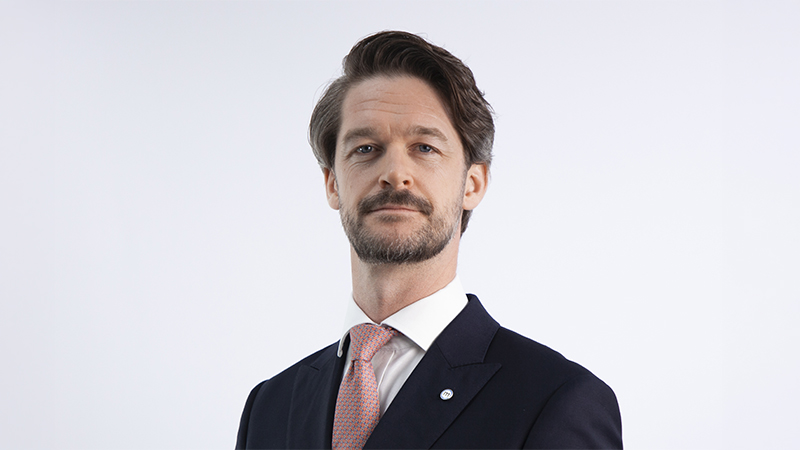



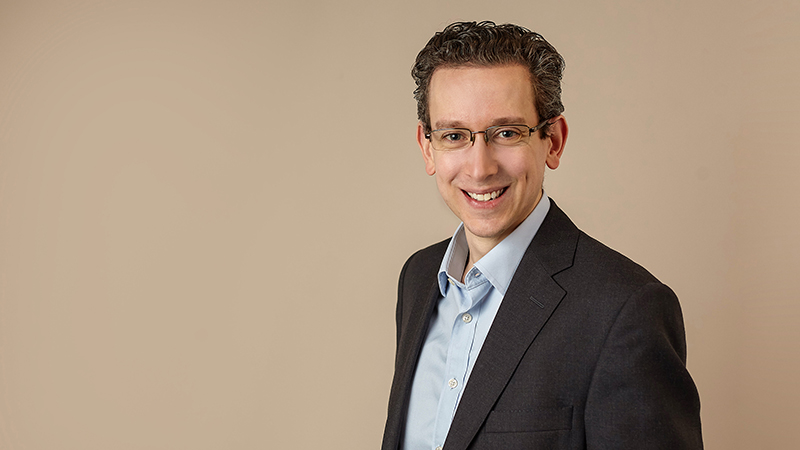

Giles Parkinson, managing director and head of equities at TrinityBridge, answers questions on the biggest changes he has seen in the industry, investment topics at the forefront of investors’ minds, regulation and the single change he would make to improve the wealth management industry.
What is the biggest change you have seen in the industry since you joined?
It’s only just unfolding, but the adoption of artificial intelligence on the investment floor feels like a watershed moment. For years, we’ve relied on human judgment supported by data, but AI is changing the rhythm of decision-making. It’s not just about faster analytics — it is about pattern recognition at a scale we could not imagine before.
The interesting part is that it’s not replacing the human element; it’s augmenting it. Fund managers still need to interpret, challenge and apply judgment. But AI is helping us cut through noise, spot anomalies, and gather information at speeds that were previously impractical.
Of course, this comes with its own set of questions — how do we ensure transparency? How do we avoid over-reliance on algorithms? These are conversations we’re having daily. It feels like the early days of the internet: exciting, a little uncertain, but full of potential.
What is the investment topic most often brought up by clients/investors?
By some distance, it’s the performance gap between US equities and the UK. This theme has been a recurring one ever since the financial crisis, and it’s particularly topical today. Clients often ask: ‘why does the US keep powering ahead while the UK seems stuck in second gear?’
It’s a fair question. The steadily widening gap between these indices has been striking. The US has benefitted from structural advantages — tech dominance, deep capital markets and a culture of innovation. Meanwhile, the UK has faced headwinds from Brexit uncertainty, sector composition and a lack of high-growth names.
But here’s the thing: financial history teaches us that valuations mean-revert — eventually. Every cycle has its darlings, and every cycle ends. The phrase “this time it’s different” is one of the most dangerous in investing. Against this, the structural gap of relative earnings and cashflow growth has allowed the indices to diverge for much longer than most would have expected.
We have started to see glimmers of this over the past year, with the FTSE 100 ahead of the S&P 500 at several points, although it’s early and hasn’t altered the longer-term picture yet.
What piece of regulation has the biggest impact on you day-to-day role?
Most recently, the FCA’s Sustainability Disclosure Requirements (SDR) have been front and centre. It’s ushered in a period of revolutionary change for sustainable funds — how they’re managed, marketed, and measured.
For years, ESG was a bit of a Wild West. Labels were fuzzy, and definitions varied wildly. SDR has brought clarity and accountability. It challenges managers to be explicit about what they do, what they don’t, and why. That’s healthy for the industry and for clients.
It’s not without complexity — data gathering, reporting, and classification all take time. But ultimately, it’s a positive step. It forces us to move beyond slogans and into substance, which is exactly what investors deserve. I’ve been supported by fantastic teams from across the business.
What single change would you make to the wealth management industry?
I’d love to see more household participation in investing. Compared to the US, the UK still feels cautious — almost reluctant — when it comes to equity ownership. Too often, investing is seen as something for “other people” or the very wealthy.
That needs to change. We need less mystification and more education. Investing isn’t about gambling — it’s about long-term planning and empowerment. The earlier people start, the more options they have later in life.
Imagine if financial literacy was taught as rigorously as maths in schools. Imagine if saving and investing were seen as normal, not niche. That cultural shift would do more for financial wellbeing than any single product innovation. Happily, the government has recently announced a shakeup to the national curriculum, with financial education to become compulsory for all primary and secondary school pupils in England from 2028. I see this as an enormously positive development, especially as the burden of providing financial security is increasingly likely to move from the state to the individual.
What advice would you give to somebody starting out in the industry?
Stay curious. This is an industry built on continuous learning. Markets evolve, economies shift, and technology reshapes the playing field. If you’re not curious, you’ll fall behind, with AI making this ever more evident.
Each day, the economy looks mostly like it did yesterday — but beneath the surface, profound changes are happening. AI, sustainability, geopolitics — these aren’t side stories; they’re central themes.
And stay close to your clients. Ultimately, we’re here to serve them, not ourselves. Understand their goals, their fears, their aspirations. Technical skill matters, but empathy matters more. If you can combine both, you’ll thrive.