





The Federal Reserve stuck to the script last night, raising the US base rate range by a quarter point to 3.75-4% as expected.
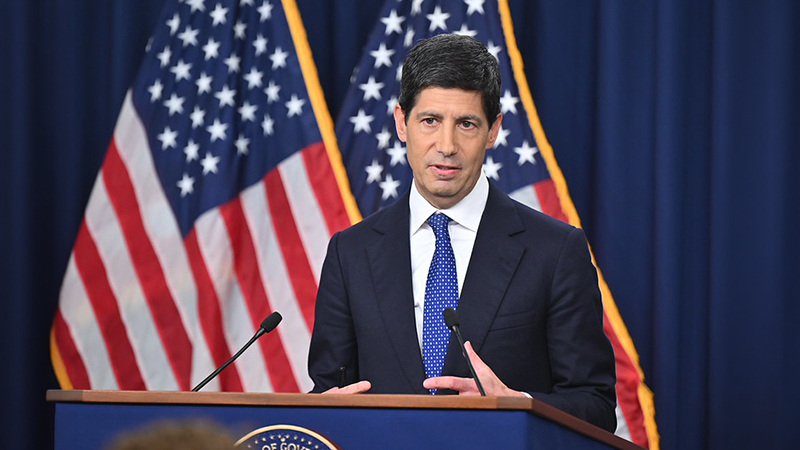
As usual, it was the comments made by recently installed Chair Kevin Warsh that were more enlightening than the decision itself.
Warsh struck a hawkish tone as he talked about the strength the US economy is showing despite higher fuel costs and the risk of inflation rising. He indicated a further hike will follow before the end of the year.
The decision came despite the background of considerable political pressure from President Donald Trump, who has been calling for lower rates since he returned to the White House.
Markets did not react strongly, which suggests nothing Warsh said deviated greatly from consensus expectations. Investors have been further reassured the Fed will not set policy based on Trump’s wishes.
Robert Sockin, chief US economist at PGIM, said: “This was a hawkish hike. The Fed raised rates by 25 bp and signalled one additional rate hike this year. But by the end of 2027, eight officials signalled three hikes in this cycle.
“Our assessment is that Chairman Warsh is the most hawkish person on the FOMC, or at least tied for that ranking – and would likely be in this three-hike camp as well. The long-run neutral median dot also ticked up slightly.
“On the economic forecasts, participants continue to look bullish on the real-side of the economy and show a long path back to 2% inflation. The distribution of risks shows almost no concern about activity, and ongoing elevated concerns about inflation – suggesting that risks remain tilted to the Fed doing more if inflation continues to run high.
“This was also an easy press conference for Chairman Warsh. It was Jackson Hole 2.0 with action to back it up,” he continued.
“Warsh highlighted many of the same issues that he did a few weeks ago in Wyoming – that recent data do not show that the underlying inflation trend is meaningfully improving, that he would be hard pressed to describe financial conditions as restrictive, and that an elevated number of items are showing inflation rates of 3% or higher.”
See also: Stockmarket shaken by stark AI warnings and rolling oil crisis
Jonathan Pryor, co-head of FX dealing and head of private markets at Marex, said: “With the US Federal Reserve increasing rates, inflation remains unsettling, particularly with the supply-side pressures we’re seeing from oil and commodity prices, while bond markets and elevated yields add another layer of complexity.
“It feels like we’ve moved into a new phase of monetary policy, when only earlier this year markets were talking about an extended cutting cycle.
“From an FX perspective, higher yields, the dollar’s safe-haven characteristics and oil remaining at elevated levels for a sustained period should all provide a degree of support for the dollar.”
Salman Ahmed, global head of macro and strategic asset allocation at Fidelity International, added: “The Federal Reserve’s 25-basis-point interest rate increase was widely expected. The more important message was that the policy reaction function is becoming clearer.
“The decision was unanimous. That matters because it gives Chair Warsh institutional cover at a time when the administration has been pushing for easier policy.
“This was not a narrow or contested move. The committee as a whole judged that inflation and the resilience of activity justified tighter policy. The projections reinforced that message. The median dot points to one further increase in 2026 and no cuts in 2027.
“More strikingly, inflation is not expected to return to the 2% target until 2029.That is the key macro signal from the meeting.”