








Equity markets soared into the green today (8 April) after a two-week ceasefire in the Middle East was agreed late last night.
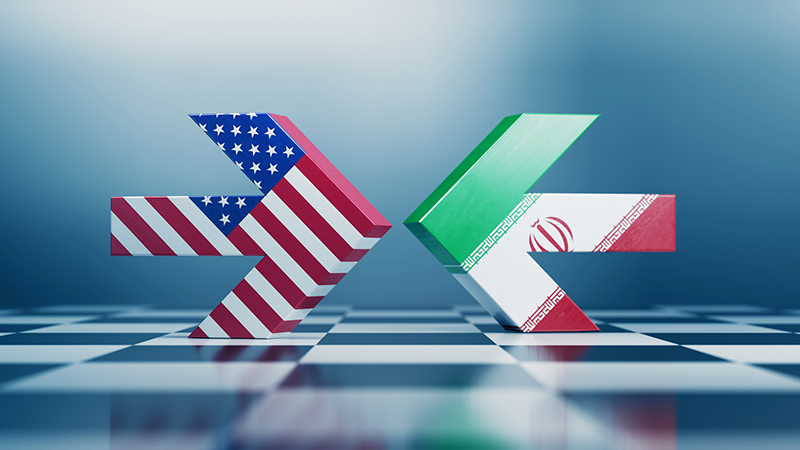
The accord between US President Donald Trump’s administration and Iran brokered by Pakistan is accompanied by further peace talks aimed at a permanent end to hostilities.
A central component of the ceasefire terms is the re-opening of shipping routes through the Strait of Hormuz, ending a blockade that has threatened to derail the global economy.
The FTSE 100 was up 2.6% by mid-morning to 10,610 points, while the Stoxx Europe 600 was up 3.8% to 612 points. Similar gains are expected for the S&P 500 and Nasdaq when US markets open for business this afternoon.
The other side of the equation is the oil price, with WTI crashing 16% to $95 a barrel, and Brent sliding by 14% to $94.
Attention will now focus on the likelihood of the ceasefire holding and a permanent peace deal being achieved before it expires.
The episode offers another lesson for investors in not over-reacting to Trump’s rhetoric, which is generally at its most extreme and inflammatory when he is trying to strike a deal.
See also: Richard de Lisle: What I have learned from 45 years of investing in US equities
Chris Beauchamp, chief analyst at IG said: “Both sides will spin this as a win, but for investors the important thing now is whether the negotiations that begin this week will lead to a durable deal.
“There are some pretty steep hurdles to clear, on uranium, missiles and who controls the Straits of Hormuz, so we could be poised to repeat Tuesday’s drama some time in the second half of April.
“But for now stocks have the bit between their teeth and oil prices have fallen back below the totemic $100 level.
“Disruptions are bound to follow across the globe but progress on a sustainable deal might mean that markets continue to look past these, just as they did with tariff uncertainty.”
Lindsay James, investment strategist at Quilter, said: “Markets are breathing a sigh of relief this morning as news of a temporary ceasefire coming alongside a two-week reopening of the Straits of Hormuz has seen oil plunge nearly 15% to $93 a barrel overnight.
“Europe, Japan and emerging markets were staring down the barrel of a sustained inflationary shock due to their heavy reliance on Gulf partners for energy imports. This was evidenced in the recent performance of the domestic facing index of mid-sized UK companies, falling around 8% since the outbreak of war.
“We are already seeing a swift bounce back, with that index already up more than 4% this morning, while the main UK index, home to the energy giants, is seeing more modest relative gains given its ability to be a port in a storm of late.
“While the ceasefire remains temporary, investors will be taking encouragement from the latest words of Donald Trump that the 10-point plan received from Iran is considered to be ‘a workable basis on which to negotiate’.
See also: A year on from ‘Liberation Day’: Where do we stand now?
“Investors’ wish for a ceasefire has been granted, triggering a rally across financial markets and pulling down the oil price,” added Dan Coatsworth, head of markets at AJ Bell.
“The positive market reaction is understandable as a two-week ceasefire raises hope for a complete end to the conflict. Markets have been clouded by multiple kinds of uncertainty, from fears of higher inflation and rising interest rates to general unease over geopolitical relations.
“The ceasefire gives the world a moment to breathe and take stock of events. Unfortunately, there is no guarantee that everything will return to normal,” he continued.
“The 14% decline in the Brent Crude oil price to $94 a barrel puts energy prices in the right direction as far as businesses and consumers are concerned.
“However, it’s impossible to assume they will quickly return to the sub-$70 a barrel level seen before the Iran crisis began in March.
“There has already been considerable disruption to the flow of supplies and that might remain the case for some time, even if the Strait of Hormuz becomes fully functional again.”