








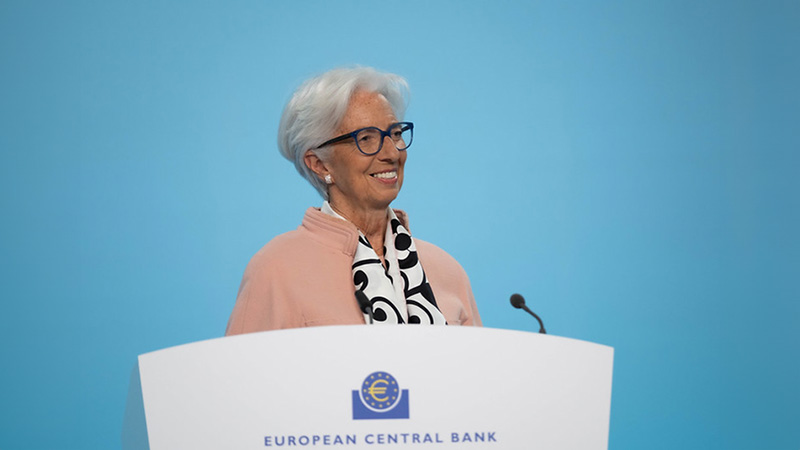

The European Central Bank (ECB) has opted to raise its three key policy rates by 25 basis points, pushing the key deposit rate from 2.0% to 2.25%, a move that had been mostly priced in by the market.
Along with the rate hike, the ECB published its updated macroeconomic projections showing inflation climbing significantly higher than previously expected.
Richard Carter, head of fixed interest research at Quilter Cheviot, said: “Forecasts for 2026 and 2027 have been revised sharply upwards to 3.0% and 2.3% respectively, from 2.3% and 2.2% previously, reinforcing the case for having a tighter policy stance for longer.”
Filippo Alloatti, head of financials (Credit) at Federated Hermes, said: “The ECB remains caught between a rock and a hard place.
“Even in the event of a US-Iran resolution, inflationary pressures are unlikely to ease quickly, particularly as oil and gas prices could continue edging higher amid structurally low inventories.”
Persistently high energy costs still threaten consumer demand in Europe and banks are still dealing with the legacy of keeping rates too low post-pandemic, Alloatti said.
Felix Feather, economist at Aberdeen Investments, opted to take a more dovish tone, noting that because the ECB has described itself as “well-positioned”, it could be hinting that it will not be doing any further tightening.
“We find nothing in this statement to shake our prior conviction: we are sticking with our call for this hike to be a one-and-done affair.”
Quilter’s Carter said: “The attention will now shift to whether the other major central banks will follow the ECB’s lead, but for now that looks unlikely.”
The Federal Reserve is set to meet for the first-rate decision under Kevin Warsh and a rate hold is priced in, even following inflation data earlier this week, Carter said.
See also: US inflation spike wobbles markets and puts Fed rate rise on the table
Meanwhile, experts generally expect the Bank of England to hold rates at the next meeting.
Danni Hewson, head of financial analysis at AJ Bell, said: “Even if next Wednesday’s inflation data shows the anticipated uptick in prices, a sluggish economy, a weak labour market and a boatload of uncertainty are expected to persuade all but the most hawkish members that the best move is no move at all – despite the ECB’s decision to take early action.”
Hugh Gimber, global market strategist at JP Morgan Asset Management, added: “I think in March central banks were keen to demonstrate they were not asleep at the wheel and the market translated that as needing to price in immediate rate hikes.
“We think that’s overdone and, in the US and UK, you’re more likely to see no rate changes this year.”
Even the ECB could be done for the year, Gimber argued, as they will be forced to think more about the potential consequences from hiking rates during this period of growth and inflation shocks.
See also: Inflation fears rattle markets as war resumes and US jobs data surprises