







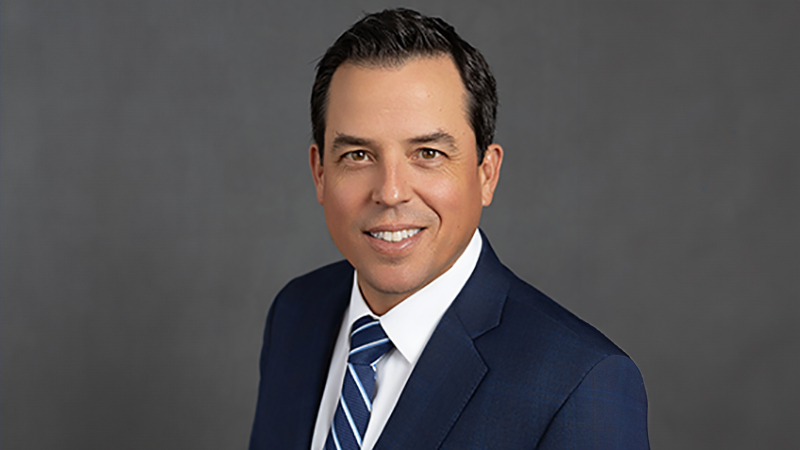

Daniel Johnson, portfolio manager of the River Road US Large Cap Value Select fund, discusses his Absolute Value approach, avoiding software companies and why investing in the US involves continuous evolution.
Can you explain the portfolio’s approach to investment and what it is trying to achieve for investors? How do you define “value”?
We practice a highly disciplined, proprietary approach to value investing known as Absolute Value. Our objective is to generate attractive, sustainable returns over the long term while actively managing downside risk. Over a full market cycle, we seek to outperform the Russell 1000 Value Index by 200 to 400 basis points annualised, gross of fees.
How we seek to achieve that really comes down to four main principles.
First, we insist on quality at a compelling price. We seek well-managed, financially strong businesses with predictable cashflows and deliberately avoid challenged companies at deep discounts and stocks that only appear cheap relative to expensive peers.
Second, we construct the portfolio strictly from the bottom up. As a result, the portfolio will look distinctly different from the benchmark.
Third, we focus on less efficient segments of the market. Because the large-cap universe is generally more efficient, we maintain a concentrated portfolio of 20 to 30 holdings and search the full opportunity set down to approximately $3bn in market capitalisation.
Finally, risk aversion is embedded in our process. We employ a strict sell discipline designed to protect against permanent capital loss; a defining feature of that discipline is that we do not average down.
We define value in a straightforward manner: a minimum 20% discount to our assessed valuation. Intrinsic value is estimated by projecting a company’s forward EBITDA 12-to -18 months ahead, applying an appropriate multiple informed by market comparables, historical trading ranges, and transaction benchmarks, and adjusting for balance sheet items.
Which areas of the market are you most excited about and which areas are you avoiding?
We believe outperforming over a full market cycle requires looking different from the benchmark. We are currently avoiding software companies facing emerging AI disruption risk and semiconductor businesses with limited visibility into the sustainability of earnings.
Our highest conviction opportunities lie in the physical infrastructure supporting the AI buildout – particularly construction materials and logistics leaders- as well as select hyperscalers trading at multi-year valuation lows. We are also finding attractive value in aerospace and defence, certain financials, and high-quality compounders trading at meaningful discounts.
Could you talk through a couple of examples of high-conviction stocks in your portfolio?
Let’s look at two recent additions: StandardAero and Meta.
StandardAero is North America’s leading independent provider of aerospace engine maintenance, repair, and overhaul (MRO) services and sits at the centre of a structural aerospace super-cycle. Engines are entering the shop faster than anticipated, causing repair demand to significantly outpace available capacity.
Approximately 77% of revenue is generated under long-term agreements, and the company is one of only six providers licensed for the CFM LEAP engine family – a multi-decade growth opportunity.
We also initiated a position in Meta Platforms. While we continue to avoid speculative AI narratives, Meta’s elevated capital expenditures reflect a deliberate balance between frontier model development and investment in its core Family of Apps.
Shared AI infrastructure is already enhancing ad ranking, personalisation, and conversion across its more than 3.5 billion users. We believe the company remains an irreplaceable digital utility supported by a fortress balance sheet.
How positive are you in terms of finding new positions for the portfolio, compared to previous years?
We remain very constructive. As extreme concentration in AI equities moderates and market breadth widens, we expect investors to refocus on fundamental attributes. That rotation should leave our portfolio well positioned.
We believe the portfolio currently offers a compelling combination of value, quality, and growth characteristics. It trades at 12.4x EV/EBITDA versus 14.0x for the benchmark while generating a higher return on equity.
What are some of the key themes affecting US value managers over the long term, and how are you positioned for these?
The long-term challenges facing US value equity managers have shifted from simply identifying undervalued businesses to adapting to structural changes in how markets function. We believe maintaining an investment edge today requires continuous evolution across our research process, technology, valuation discipline, and risk management.
First, adaptability. We believe successful value investing requires continual refinement as market structures evolve. We embed continuous innovation into our culture, regularly enhancing both our investment tools and our core research process while remaining disciplined in our philosophy.
Second, technology. Advances in data, analytics and artificial intelligence are reshaping the investment landscape. Our unique CIO/CTO hybrid leadership model allows us to integrate advanced analytics and dedicated AI capabilities directly into fundamental research, helping our analysts make more informed investment decisions.
Third, non-fundamental market dynamics. The growth of passive investing and systematic trading can create prolonged disconnects between price and intrinsic value. Our Absolute Value philosophy and discipline to avoid averaging down are designed to help us avoid value traps while preserving capital during extended market dislocations.
Fourth, intangible assets. Traditional valuation approaches can understate the worth of businesses built on software, data and intellectual property. We have enhanced our valuation frameworks to better assess these assets while remaining grounded in our intrinsic value discipline.
Finally, risk management. We believe exceptional value investing has always depended on effective risk management, but today’s market presents new challenges, including benchmark concentration, passive flows and extended departures from fundamental value. In our view, successfully navigating these dynamics requires increasingly sophisticated analytical tools and a disciplined investment process that seeks to balance opportunity with downside protection.
What is the best piece of investment advice you have been given?
The best investment advice I have received is that losers make big mistakes, while winners make small mistakes. In today’s elevated market, we believe risk management must be the priority, and it’s deeply embedded in River Road’s process.
Industry discussions suggest that long-term hit rates for skilled managers often fall in roughly the mid 50% range.
Because mistakes are inevitable, outperformance depends on limiting their impact. We seek to contain errors through a strict sell discipline, most notably by avoiding averaging down on losing positions.