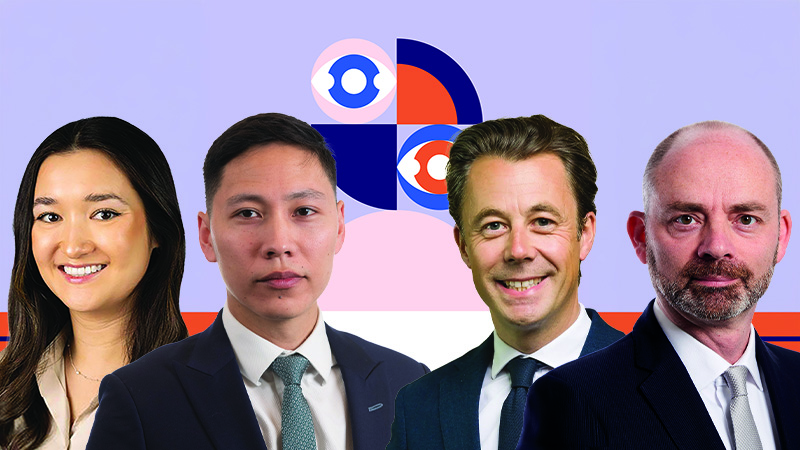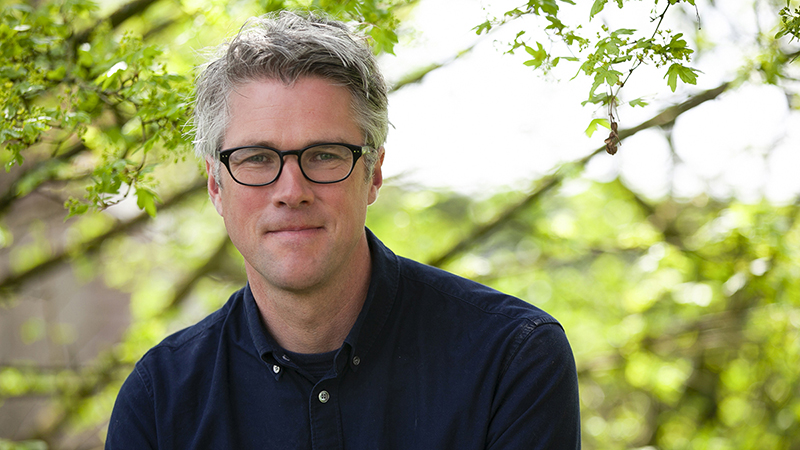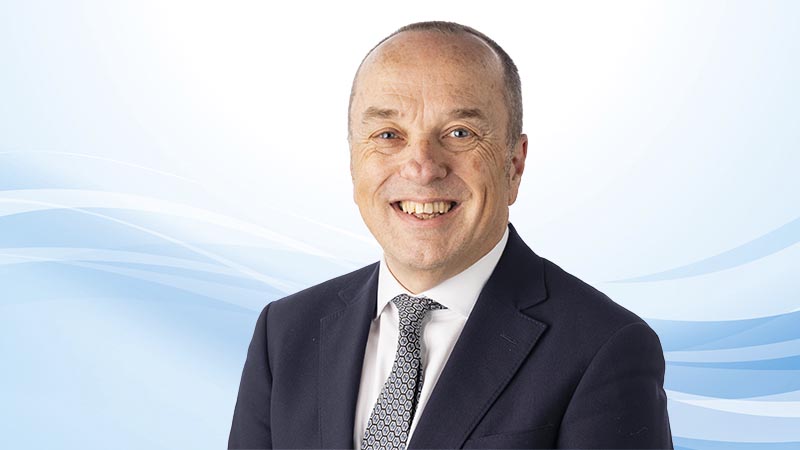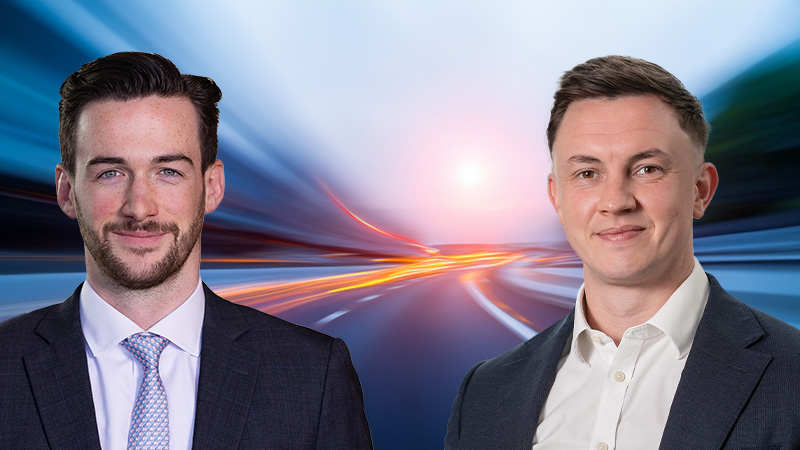





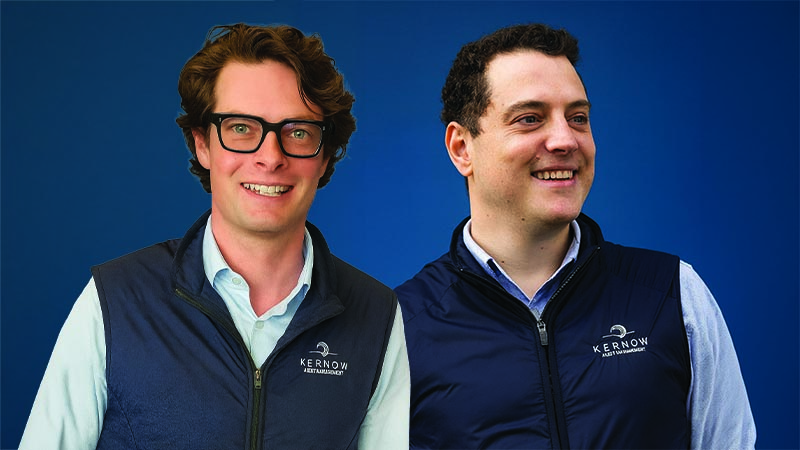
Kernow Asset Management’s Alyx Wood and Ed Hugo first met more than a decade ago, standing in a potato field in Jersey.
They were attending a site visit for Produce Investments, a then-listed company which, according to its website, is “the leading player in the potatoes, daffodils, crop storage and agri-tech sectors”. Hugo attended the site visit in a bid to win the company over as an equity research client. Wood, meanwhile, was the second-largest shareholder in the firm.
“We learned everything there was to know about potatoes, then they got taken out, so all the knowledge we gained was made pretty redundant,” Hugo tells Portfolio Adviser.
But while any spud-related wisdom was declared null and void, the chance meeting sparked a working relationship which would ultimately create one of the Investment Association’s top-performing UK equity funds.
The two kept in touch over the years, in what Hugo describes as a typical sell-side/buy-side relationship. “Teas, coffees and beers every few months or so. I kept trying to sell him stuff and he kept ignoring me.”
Then, over a coffee during the second half of 2019, Wood told Hugo the opportunity set in the UK stockmarket was ripe for picking, and that he was going to spin out from Downing to run his own investment vehicle.
“He asked me if I wanted to come along for the ride and to help run things on the business and investment side,” Hugo says. “I think it was probably before I’d even finished my coffee that I’d made my decision.”
For Wood, meanwhile, after spending years working as a consultant for hedge funds and banks, then running UK equity small-cap portfolios at Downing, he decided he needed to branch out on his own.
“The industry changed a lot – the opportunity set became better. And frankly, I couldn’t find a home to invest the way I wanted to, which is contrarian. So I stubbornly just moved to Cornwall, where my cost base was low, and ran it on my own pretty much straight away.”
When asked how this first felt, Wood replies: “I was instantly bored. It turns out that being in the middle of nowhere and not talking to anybody clever is horrible,” he says.
“I had one person who wanted to give me money so that I could turn my process into a fund – my former co-manager Neil Shillito. He is the reason we exist and I will forever be thankful.
“I then spoke to another fund manager – Nick Barnes, who ran [former $1.5bn (£1.1bn) UK hedge fund] Nevsky Capital very successfully alongside Martin Taylor. He said, ‘you need an accelerator and a brake in a business, and you’re not the brake’.
“I needed somebody who works really hard and is very process driven. Someone exceptional who can keep things going the right way while I am reading and researching companies.”
This is when his conversation with Hugo first took place. Then, as Wood says, “the rest is history”.
Small team, big ambitions
Headquartered in Falmouth, Cornwall, Kernow Asset Management started with £20,000 of Wood and Hugo’s savings. It comprises just two full-time members of the team – CIO and fund manager Wood and Hampstead-based CEO Hugo.
Wood comes to London for one week per month to focus on fund marketing and making corporate connections. “Then Alyx can spend three weeks sitting in a shed, next to the sea, thinking about investments,” Hugo jokes.
The middle and back-office operations are outsourced to an operations team formerly inside a fund backed by US hedge fund tycoon George Soros, which now takes on external clients.
The duo use targeted automation for almost all of their admin tasks, allowing them capacity to focus on investing.
“I think asset management firms can be a lot more slimmed down to concentrate on investing,” Hugo says. “I know that, in the allocator world, they like to see a big team with loads of analysts on the fund and everything else. It makes them feel very happy.
“In reality, a lot of those analysts are on multiple funds at that firm, and what kind of value are they adding?
Wood adds: “I do a bit of art and I use this analogy. Ed runs the art dealership. If you give me 10 more people, my art is not going to get any better.”
Charting a different course
The art in question is the YFS Kernow Equity Navigator fund, the Oeic which currently has $50m (£37.2m) in assets under management. It is a long/short fund, investing solely in UK equities. Since the strategy launched in 2019, it has delivered an accumulative return of 140.2%, more than doubling the capital of investors who bought in from the start. The strategy has been available to UK retail investors as an Oeic since April 2022.
Pitted against the average fund in the IA UK All Companies sector, for comparison purposes, as at time of writing the strategy has outperformed by 83 percentage points since November 2019.
“It’s an onshore UK hedge fund. We could have gone to the Cayman Islands, but a lot of our clients in the early days were wealth managers who wanted more transparency – and we are happy to operate like this because we want to be very transparent,” Hugo explains.
“In terms of net and gross we are typically 75% net and 140% gross, so low leverage. But, this can move around which is why we call it the Navigator fund.” The maximum gross exposure the fund will typically hold is 150%, and it will usually hold 20 positions in its long book and 20 in its short book (although these positions are smaller). However, the short book is more flexible, at one point in the fund’s history falling to zero.
“For the 20 longs, the top 10 is about 90% – so we are punchy up the top end, while the bottom-end positions are much smaller,” Hugo says.
“The biggest short we are running at the moment is 3.5%. We can run them up to 5-6% but, at that level we are looking to cut it back down. Around 2% is an average position.”
Playing the players
Wood describes the fund as contrarian. When asked what contrarian investing means to him, he replies: “We are playing the players, not the game.”
“Contrarianism is used to provoke an analytical response. You take the exact opposite view of what the consensus is, whether that’s a stock price or the reputation of a company,” he explains.
“Markets are priced for perfect certainty. And yet, dice fall as they fall. The contrarian will make money, despite not actually being right. It’s about how the odds move and how prices change. The contrarian gets paid as prices move.”
As such, he says the strategy thrives during periods of change, but may struggle when market conditions become more sedate.
“Essentially, you’re permanently wrong. My hit rate is about 53%, so you look silly or foolish most of the time,” Wood explains. “And, even when you are right, people are still angry at you. So it’s a very uncomfortable strategy, which is why it doesn’t suit big marketing houses particularly well.”
He adds: “The only reason I can pull it off is because I’ve tried everything and it just suits my personality. Outside of work, I like taking the other side just for the heck of it.
“Contrarianism is a really good way of challenging your thought process and what the market thinks. You just spot the obvious things – you don’t have to be really clever. The money’s on the floor, pick it up.”
Future vision
Looking ahead for Kernow Asset Management, the plan is to focus solely on the Navigator strategy.
But while new product launches may not be on the cards, the pair is amenable to hiring a third member of the team, ideally a former spy or investigative journalist, to help them with their extensive background checks and deep shareholder analysis on companies – a factor they say gives the fund its edge over competitors.
More broadly, the firm is at 20% capacity with assets across the strategy standing at £111m. Once the strategy reaches £500m, new investors will be put on a waiting list, while Wood and Hugo focus their attention on existing clients.
“This industry is littered with funds growing too big and then their managers becoming bored, before deciding to invest their own money elsewhere,” Wood says.
Hugo agrees, explaining that neither of them “are in any rush” to gather as many assets as possible. “I’m 43, Alyx is 40. We want to do this for the rest of our lives,” he says. “We are not building this to sell it and flip it onto someone. Our money is in this fund. Our children’s money is in this fund.
“We are almost like a family office with third-party investors alongside us. Hopefully we have a good 20 years to build this up.
“We just want to be the best investors that we can be.”