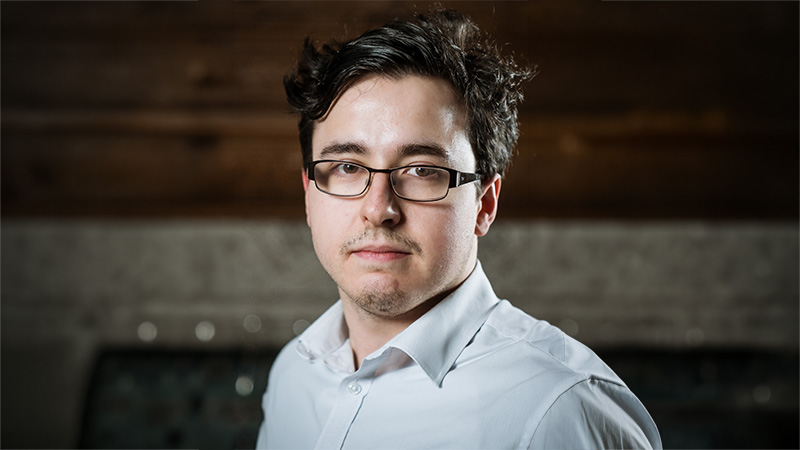






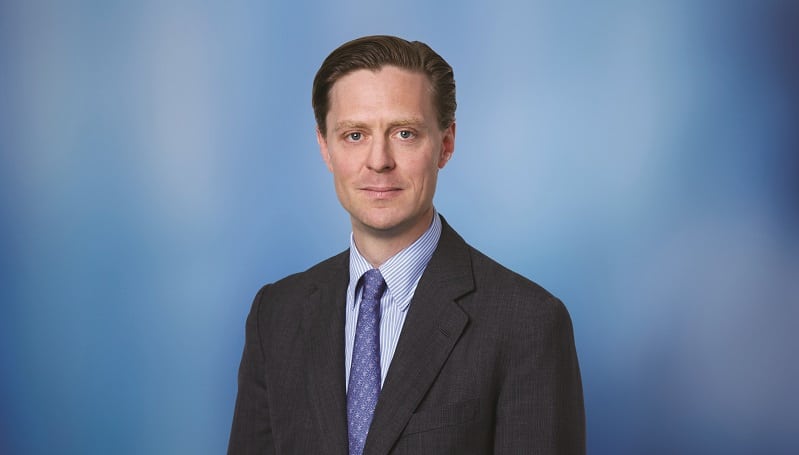
Carlos Hardenberg first met Mark Mobius in January 1999, on the 37th floor of a skyscraper in Singapore. “I was sitting in a little cubicle in the office, which just happened to be where the tech analyst also worked,” he tells Portfolio Adviser.
“He would often stop by and enter an intense discussion with the analyst about varying opportunities. One day, while talking about a company in Israel, he noticed me and dragged me immediately into the conversation.
“He asked me for my opinion and I thought, ‘Oh god, what do I do now?’. I knew exactly who he was, I’d read his book.”
Shortly after this exchange, the veteran emerging and frontier markets manager asked Hardenberg if he minded travelling.
“From there, I was on his jet for almost six months, and I did not return to Singapore.”
Hardenberg moved to Singapore at the age of 26, when he began his first civilian job as a junior researcher for Franklin Templeton Investments covering south east Asia. Prior to this he served in the military, where his time spent in Latin America first piqued his interest in emerging markets.
But it was this chance meeting with Mobius more than 25 years ago which sparked an esteemed career as a portfolio manager for Hardenberg, with the duo working closely together at Franklin Templeton and even co-authoring a book. During his time at the firm, Hardenberg worked as a vice-president and managing director of the Templeton Emerging Markets group, overseeing more than $27bn (£20bn) in assets under management.
He became lead manager of the behemoth £1.8bn Templeton Emerging Markets Investment Trust (Temit) in 2015, after Mobius decided to take a step back and entrust him with the investment company he first launched back in 1989.
“Working and travelling with Mark as a young person was a very intense experience; to be observing a man who was so focused on research and learning about culture was fascinating,” Hardenberg says.
“The fact that he was so open-minded and unbiased in how he approached people and across different countries was a great way to access the space and learn about which attributes are necessary in order to invest in this part of the world.”
A huge aspect, according to the manager, is understanding culture. However, given the duo invested in a wide range of both emerging and frontier markets, that’s not to say their exchanges were without hiccups.
“We were in Tatarstan, which is an ex-Soviet Union province. We landed and were greeted by an official delegation with big Mercedes cars picking us up.
“I typically carried a lot of the luggage and paperwork, and one of the guys helped me to put it all into the trunk. I learned from Mark to always tip anybody who helps us as a gesture of respect. So, I gave this guy $5.
“All was well and when we both hopped into the car Mark asked me what I had passed the gentleman. I told him it was $5 and he said, ‘Carlos, that man was the minister of finance’.”
After both bursting into laughter, Mobius pointed out to Hardenberg that, the fact the minister of finance would accept a $5 tip was an insight into how impoverished the region was.
“There were many funny anecdotes along the way – there always will be when you travel so much together – but also always lessons to learn. Whether it’s meeting an entrepreneur in Indonesia or company management in Nigeria, the contrasts in culture are amazing.”
Founding MCP
Three years after taking over the helm of Temit, Hardenberg founded MCP Emerging Markets, which is the investment manager of the Mobius Investment Trust (MMIT). He co-ran MMIT alongside Mobius until he once again took a step back from managing money in 2023.
Sadly, the emerging and frontier markets pioneer passed away earlier this year, leaving Hardenberg as sole manager of the £126.2m investment company. But that’s not to say Mobius’s legacy doesn’t live on in how the trust is managed.
“I learned a lot from him, in the early years – the focus on the long term, to constantly assess companies from the bottom up, discipline around valuation techniques – this was certainly one element, Hardenberg explains.
“But I think the bigger skill that I learned from Mark was a relentless focus on people. How to decipher whether they were honest, and whether their incentive system aligned with minority shareholder interest, whether they follow principles such as ‘one share, one vote’.
“This was one of his biggest passions – the so-called ‘soft’ factors to investing.”
As such, MMIT holds “almost nothing” in Chinese companies, despite the fact China accounts for more than 20% of the MSCI Emerging Markets index.
“I love many things about China and I think there are plenty of opportunities in China. However, they do not follow the capital market rules as we understand them, and there has been the harsh regulatory involvement against, for example, the education sector, the healthcare sector and the tech sector,” the manager says.
“It can be hard when these markets are performing well – if you don’t participate then, in relative terms, it is difficult to stay ahead.
“But we stick to our process and we stick to our principles; we don’t sacrifice any of our basic factors that define our principles around governance.”
That being said, there are ways to play China indirectly, via much more favourable markets. For instance, the trust invests in Korean medical aesthetic device manufacturer Classys, which offers dermatological treatments that are popular in China and operates the “razor and blade” model, whereby the initial device is purchased, but consumables must be purchased regularly alongside.
Elsewhere, and arguably less glamorously, Hardenberg also likes Taiwanese company Kingslide, which produces rail kits for drawers and units.
“You might think: anyone can do this. What’s so special about this? Then you realise they dominate the rail kit market in data centres, and they secured a huge amount of patents in across almost every data centre around the world – whether it’s built in the desert in Latin America, in Texas or in China.”
Elsewhere the manager is bullish on India on a macro level, which he describes as one of his “absolute favourite regions”. At time of writing (27 July), India accounts for 28% of the trust’s portfolio.
“Most investors view India via the large index names – the banks, the pharma companies, the IT software companies, which are now globally visible. But there are around 5,000 listed small and medium-sized enterprises in India.
“We started the year with a lot less [in India] because we took quite a bit in profits where we had done well, but we have aggressively increased our exposure again.
“I understand the macroeconomic issues in places, but what matters most is a government with clear priorities around creating a transparent, just and accessible economy. It has achieved the highest degree of digitalisation compared to most countries around the world.”
A year of volatility
Making the right decisions on both a bottom-up and top-down basis is particularly important at the moment, according to the manager, when looking at the year ahead.
“Conventional principles are still very much in place. If interest rates in America get tighter, flows are attracted away from emerging markets into US dollar-based assets. If you have a situation where global energy prices stay elevated for longer, this harms the performance of emerging markets the same way it always has,” Hardenberg warns.
“This is why I think one needs to stay careful, and to constantly observe this. I just came back from Vietnam, and Vietnam – while it is now becoming increasingly relevant in electronics exports – totally depends on fertiliser imports and oil and gas imports.
“If prices double, that’s hitting the weakest parts of their economy and it’s hitting their consumers. So, I am expecting this year to be quite volatile.”
And while a common rhetoric for managers is to ‘ignore the macro noise and concentrate on bottom-up stock selection’, Hardenberg says that doing so – particularly in emerging markets – is “ignorant” and “makes no sense”.
“You need to understand the neighbourhood. You need to understand the rules of the capital market and what the main factors are that impact these markets. And, of course, flows play a huge role. There is no 100% hedge. There is no guarantee. All we try to do is invest predominantly in companies which are in charge of their own destiny.”