






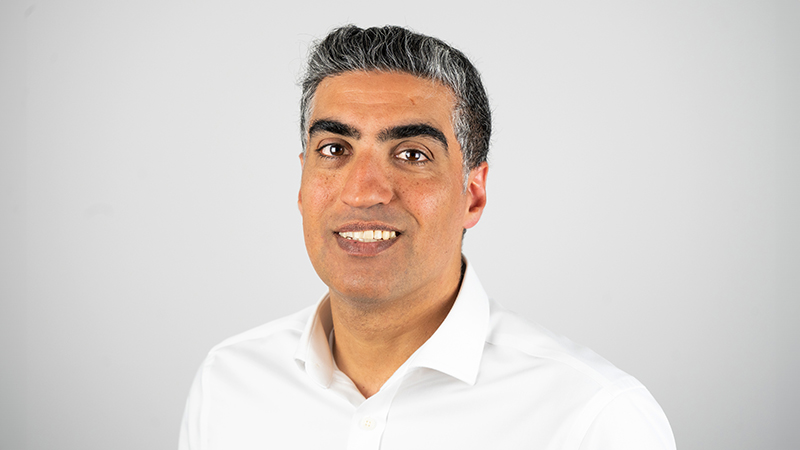

By Raheel Altaf, manager of the Artemis SmartGARP Global Equity fund and SmartGARP Global Emerging Markets Equity fund
In a three-storey bunker in Frankfurt, 300 tonnes of strategic metals and minerals are carefully stacked across three floors and 15,000 square feet. Built as an air raid shelter during WWII, the bunker has six-foot-thick concrete walls, cutting-edge security and is protected by armed guards.
Some of these precious materials are owned by investors. Others by manufacturing companies building up stockpiles to protect their production anticipating the sort of geopolitical trade conflict that flared up once more last week between the US and China. But investors don’t have to buy and hold these materials to benefit.
First, let’s look at the investment case. Rare earths – there are 17 altogether – have become essential in modern manufacturing. They appear in smartphones, cars, wind turbines, satellites and sophisticated modern weaponry. The American F-35 stealth fighter is said to need approximately 920 pounds of rare-earth materials. The US Virginia-class submarine needs ten times that!
The irony is that China, has a near monopoly in the production of many of these materials. It was responsible for production of nearly 70 per cent of the world’s rare earth production last year and holds nearly half of the world’s reserves, according to the US Geological Survey.
It’s not that these materials are as scarce as the title, “rare earths”, suggests. But opening a mine can take years and processing the materials excavated is complex. China overtook the US a long time ago in rare earth production and now has world-beating expertise in processing. It produces nearly all of the manufacture of rare-earth magnets. The result is that it now has a strategic lever in tariff negotiations with the Trump administration.
Other minerals are supply constrained and valuable, too – like lithium, cobalt, nickel and copper. Several emerging market countries are rich in these materials, which are needed for batteries and power infrastructure. Demand for them is only likely to intensify as the world electrifies.
So how can you invest? Let’s start with some of China’s mining champions, which are central to global supply chains.
CMOC – or China Molybdenum as it was previously known – is one of the world’s largest producers of molybdenum, tungsten, niobium and cobalt. Its operations stretch from China to Africa. Molybdenum is used as a steel alloy to increase its strength and resilience in extreme conditions. Niobium helps make lightweight alloys in aircraft and is critical to the manufacturing of superconducting magnets in MRI machines.
CMOC, whose share price has nearly doubled this year, is responsible for a third of global cobalt supply. Its shares are not cheap any longer but not expensive either. The valuation remains supported by strong earnings and cash flow growth.
Western Mining Group is more diversified, spanning copper, lead, zinc and rare earths. Its Yulong copper mine is undergoing an expansion to increase capacity. This should extend the mine’s service life and significantly bolster China’s copper self-sufficiency. Tongling Nonferrous Metals, a key copper smelter, also contributes on this front. These two shares are not so easy to buy through retail investment platforms.
Away from China, in copper, there is the mining conglomerate, Grupo Mexico – the largest mine operator in Mexico, Peru and the third largest in the US. It operates 14 mines and 52 processing plants, produced a million tons of copper in 2023 and has the largest copper reserves in the world. It currently sits on a forward PE ratio of 15.1 and generates 4% a year in dividends.
Investors do not have to rely solely on miners. One approach is to invest in banks in countries that are being enriched by mineral production. A large part of their loan books is likely to be exposed to commodity producers. Banks tend to be on lower valuations than the miners themselves and can generate generous yields to shareholders.
So in Chile, rather than invest in lithium producers, we invest in Banco Santander. Its shares have risen 90% in the past year. They currently trade on a 10.8 forward PE multiple and offer a 6.1% yield.
Pollution and ethics always come into the equation when considering mining. Everyone wants a clean energy world but creating it is a dirty business. Pressure to produce as efficiently and cleanly as possible has forced companies to close some mines, reducing production. This has created downward pressure on capital expenditure, which in turn has contributed to prices rising.
It has also led to many of the bigger players divesting themselves of less efficient mines to improve their overall carbon and pollution footprint. Whether this is actually better for the planet is another matter. The new owners are unlikely to prioritise environmental concerns once operations are handed over.
Historically this was a sector that carried large debt, but the disposals mean that some of the big players now have very strong balance sheets. They have much cleaner operations. They take their shareholders seriously, seeking to distribute free cash flow to investors. And they are usually on attractive valuations, yet with strong growth potential.
That bunker in Frankfurt highlights how important these resources are. In a world under pressure to transition to low-carbon energy production, demand for these materials is only set to grow.