







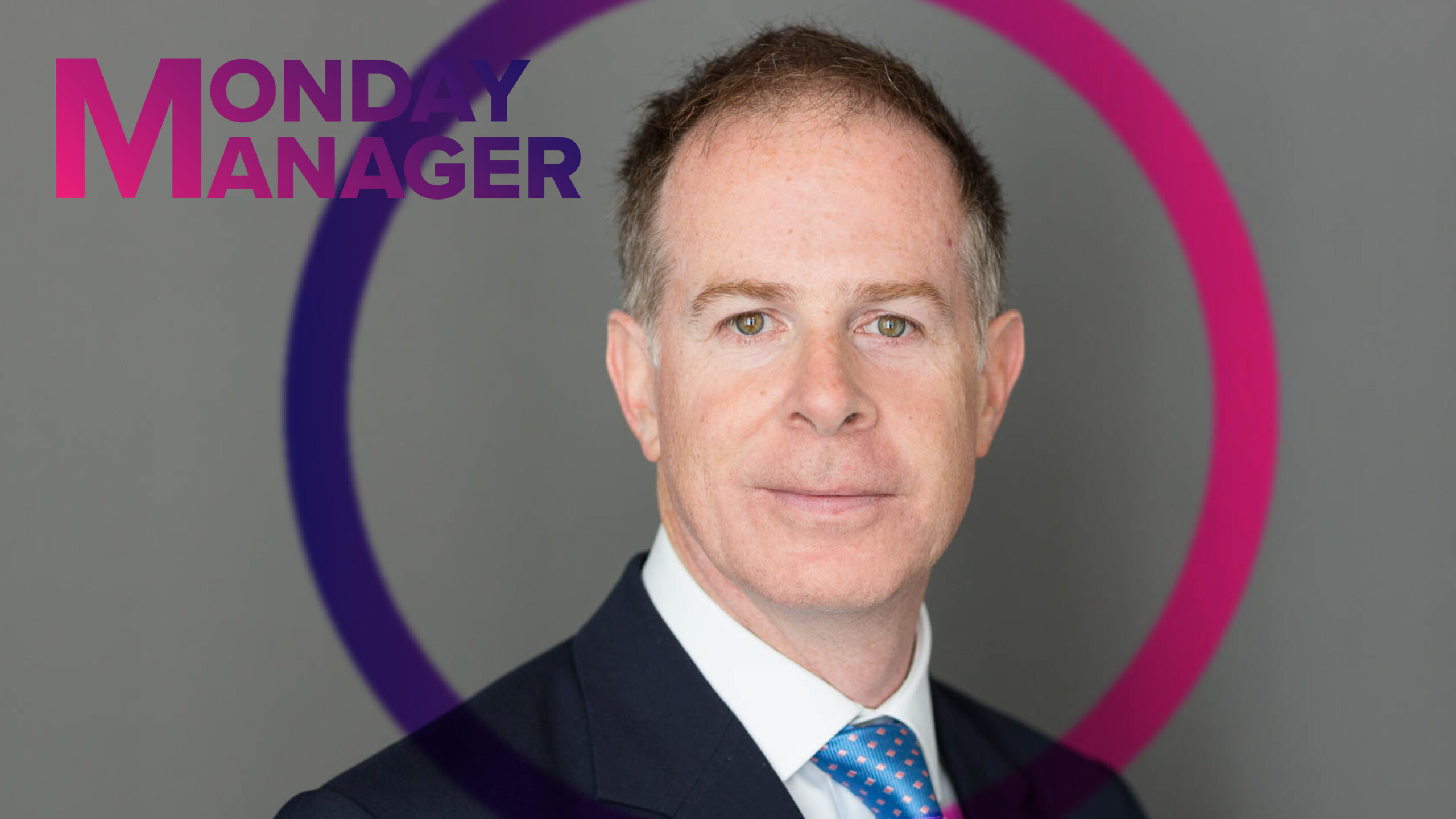

In the latest instalment of Monday Manager, Portfolio Adviser speaks to Edmund Harriss, manager of the Guinness Asian Equity Income fund.
He discusses what initially drew him to a career investing in Asian ‘tigers’, exposing the fund to a cross-section of Asian economic society through financials positioning, and why he learned from the mistake of attempting to ‘buy’ GDP growth.
The Monday Manager series covers fund managers that have worked on their fund for over three years, and where fund assets are over £100m.
How long have you been running the Guinness Asian Equity Income strategy, and what’s your career background? Did you always want to work in fund management?
I’ve been running the strategy since it was launched in 2013, but I’ve managed Asian investments for over 30 years, beginning with China in 1994. I joined Guinness Flight Global Asset Management in 1993, fresh from a postgraduate degree in business at Oxford. Investment management has always interested me, and especially the opportunities present in Asia.
Asia’s dynamism was apparent even in the late 1980s and early 1990s, with its large population, rapid economic growth, expanding middle class, and improving standard of living, which was more than just a flash in the pan. The tiger economies of Korea, Taiwan, Singapore and Malaysia had mobilised their resources: people, capital, administrative and legal processes to create economic powerhouses.
By the 1990s, China had decided to follow the same route. While their paths and levels of success have varied, Asia today represents an emerging markets success story, and my investment journey alongside this phenomenon has, for me, been a fascinating one.
See also: Generation Next with Guinness GI’s Van der Weyden
What makes the Guinness Asian Equity Income fund distinct is its rigorous in-house investment process focused on quality and value, which links a firm’s operating performance to stockmarket returns.
We look for companies with returns on capital consistently above their cost of capital that are likely to sustain those returns, yet are priced as if they won’t. A strong market position, pricing power, effective management, a robust product pipeline, and a resilient, lean, and flexible capital structure are the elements that translate cyclical economic growth into consistent long-term return on capital. These companies are best suited to persist under different market conditions and in an ever-evolving competitive environment.
We place strong emphasis on dividends, as we see them as tangible evidence that business growth is accompanied by rising cashflows that support it, and the business is generating excess cash it is able and willing to share with its investors.
The portfolio has almost 75% exposed to financials, IT and consumer discretionary. Why are those areas seen as opportunities for the fund?
Looking deeper into the financials reveals exposure to wholesale and consumer banking, micro-lending, health, P&C insurance and wealth management. Across these segments, we have a cross- section of the Asian economic society. In IT, our exposure to semiconductor design and manufacturing, electronic hardware, consumer electronics and IT services gives us insight into an area of manufacturing in which Asia has demonstrable and growing global leadership.
In consumer discretionary, through homeware, apparel, consumer durables, retail distribution and manufacturing, we can reflect the lifestyle upgrades which have been achieved and to which much of the population still aspires.
The companies we have selected have long track records of translating these trends into profitable growth and, for the most part, do not require significant capital investment. Those that do, such as those in the chip and hardware manufacturing segments, are so profitable that they can fund their expansion through internally generated cash.
But all of them have a record of paying out a growing stream of dividends over time, funded by their cashflows rather than borrowing. The opportunity for investors in Asia comes through this combination of higher quality, growing dividends, and lower valuations than in developed markets.
See also: Guinness Global Investors launches Global Environment fund
Which other sectors or themes are you favouring in Asian equities?
Healthcare is an area that looks attractive to us. Growing wealth and an ageing population in both the West and North Asia mean there is increasing demand in the sector. At the same time, there is a strong research and development capability in both China and India. While the picture is complicated by governments worldwide seeking to reduce healthcare costs, strong new pharmaceutical product pipelines, and areas such as diagnostic equipment and services are growing investment opportunities.
We all operate as a team of generalist analysts sharing the process of idea generation and analysis rather than having each person siloed into a specialisation. This approach helps to promote diverse perspectives, reduce individual bias, and enhance idea quality through collective scrutiny.
In an industry that is so heavily reliant on knowledge and prediction, read widely and don’t forget history: ‘What has been shall be again; what has been done will be done again. There is no new thing under the sun.’
See also: Guinness Global Investors launches Pan-European Equity Income fund
What has been a career highlight?
Attempting to ‘buy’ GDP growth. Successful long-term investment requires cashflow generation, without which a business cannot survive for long, and on which we can confidently place a value. A structured consideration of the macro-environment and its impact on the components of shareholder returns (profits, dividends, and valuation) tends to deliver better outcomes than basing investments on recent growth and thematic trends.