



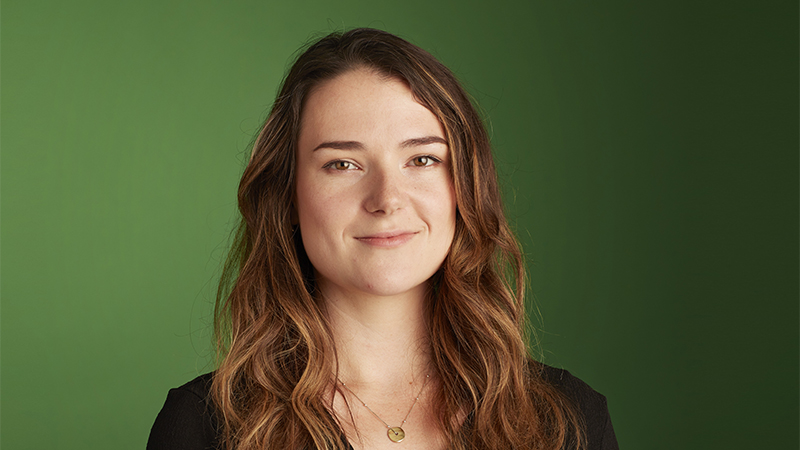

Given investors must have at least one eye on the future, Portfolio Adviser wanted to offer readers an idea of how some of the next generation of investors view the world. In this instalment of Generation Next, Ruffer fund manager Jasmine Yeo discusses the evolving nature of ‘safe havens’, AI exposure without paying a premium price, and the importance of break down barriers for girls and young women considering a career in investing.
Is there a particular asset class grabbing your attention at the moment? Why?
UK assets look appealing despite the prevailing negativity. While shaky public finances are clearly in the spotlight, private sector balance sheets are very healthy – household and corporate debt relative to GDP has fallen by around 50% since 2008. Interest rate cuts could catalyse new borrowing, boosting demand and kick-starting a recovery. Housebuilders look particularly appealing in this context, given their rate sensitivity and attractive valuations.
The other big story of course is that AI is radically reshaping the world as we know it, just as the internet did three decades ago. But as investors learned during the dot.com bubble, first movers are not always the last dancers. Chinese tech shares offer an attractive risk-return profile – a way to profit from what could be the defining technological breakthrough of the century, without paying a premium price.
How do you see sustainable and ESG-oriented investing evolving from here within the asset class you cover?
ESG issues represent both sources of investment value and risk, but currently the industry focus is on risk. I can see a shift to more emphasis on how ESG can help investors to capture opportunity. At Ruffer Investment Company, we focus on integration and engagement, and our approach and tools are continually evolving. By way of example, over the last year we have been focused on adding a quantitative lens to our analysis of top-down equity positions (held to reflect macro views). We have developed an indicator that provides a model-based estimate of how a company’s profits can grow, relative to how it consumes resources. This helps us identify businesses that are growing profits whilst using fewer resources and reducing waste and emissions.
What will be different about the investment sector a decade from now?
A more widely held view that traditional safe havens are no longer reliable forms of portfolio protection. For the last few decades, bonds and the US dollar have played a consistent offsetting role to equities in periods of market stress. 2022 highlighted the threat that inflation poses to the relationship between the two major asset classes (bonds and equities), whilst the sharp correction in April this year (when the US dollar and US Treasuries fell in tandem) was evidence that the role of the US dollar is also being undermined by the actions of the US administration.
This means investors will be forced to look elsewhere for uncorrelated returns, and, in a decade’s time, I expect more esoteric assets (like commodities and alternatives) to play bigger roles in balanced portfolios, especially given the likelihood of ongoing inflation volatility and uncertainty, which contrasts sharply with the benign period post 1980s up to 2020.
What led you into a career in investment?
While at university, I did a few internships at a variety of companies – an FMCG, a bank, and an asset manager. I loved the challenge of interpreting what real world events and newsflow meant for asset prices, but I didn’t enjoy the minute-by-minute nature of the trading floor so the buyside felt like the perfect fit.
Looking further back, I’ve always been interested in how companies are managed, having grown up watching my parents run a local restaurant business. My dad even gave us ‘shares’ when they opened a new venue in 2008 – an interesting time. Asking for regular updates on the journey to school was my first taste of earnings calls with management!
What are your plans for your next holiday?
A fortnight in Mexico. A few days in the capital and Oaxaca, followed by some time at a surf spot on the coast – I had never surfed until this year while on a trip to Tofino (Vancouver Island) to visit my brother. Now I’ve got the bug. I’ve also not visited Mexico before, so I am very excited to explore the cuisine and culture.
The adoption of AI as an investment theme is a widely discussed topic, are you incorporating the technology into your work processes?
To date we have found AI most useful in helping us build tools to digest and analyse large quantities of data – expanding our range of inputs into our investment process.
For example, we have built a tool that uses natural language processing to help with bottom-up analysis on S&P 500 companies.
The tool looks to identify changes in themes on a quarterly basis based on the frequency of mentions in results calls (rather than a pre-defined list). Once identified, the themes are analysed for sentiment. AI-generated summaries are drawn from the text relating to each theme and add qualitative detail.
What piece of advice do you wish you had been given on your first day as an investor?
You can’t and won’t know everything. That took a while to get comfortable with, as a self-diagnosed perfectionist. But it was an essential learning curve. Investing is about the balance of probability and risk/reward, rather than certainty. We all know the future is inherently uncertain, but investors don’t always act that way.
Is there anything that has surprised you about a career in investment since you started?
Unfortunately, the persistent lack of diversity. I had thought things had moved on, but it’s still the case that very few women have senior investment roles. It’s why I spend time working with initiatives like GAIN (Girls Are Investors) and 100 Women in Finance, to encourage and break down the barriers for girls and young women considering a career in investing, and to increase the visibility of female finance professionals. I would encourage anyone working in investment (male or female) to consider mentoring or sponsorship to drive progress here.