






From biotech labs to mine sites and engineering, portfolio managers from IBT, Neuberger, Gresham House Ventures and WS Amati reveal how hands-on industry experience sharpens their investment decisions.
Marek Poszepczynski, portfolio manager at International Biotechnology Trust (IBT)
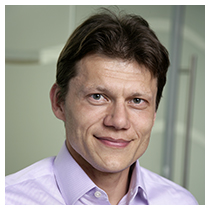
My route into biotech investing began on the other side of the table.
I worked in business development, negotiated licensing deals, supported IPO processes, and co-founded biotech companies.
This practical experience shapes how I assess opportunities today, because drug development is ultimately a craft: a sequence of decisions, trade-offs and risk-management steps that demand specific skill sets.
As an investor, you are not running the experiments yourself, but you are constantly judging whether a team’s plan is scientifically credible, operationally executable and appropriately finance.
Having worked in pharmaceutical business development, I view fund management decisions through the lens of a strategic buyer: interrogating clinical rationale, the competitive landscape, and what a programme would be worth to an acquirer if successful. I look beyond near-term market moves to judge whether a company’s assets, trial design and data package can withstand the scrutiny of potential deal teams.
This experience also gives me an important perspective: just because a company or drug opportunity is good does not always mean it will make a good investment.
A programme can be scientifically compelling but overcapitalised, poorly structured, or trading at valuations which leave little margin for error. Conversely, a company with imperfections can be attractive if the market is overly pessimistic and the valuation leaves room for upside.
As more capital gets invested into companies, pressure on management increases, which can shorten timelines and raise expectations. Investors can respond brutally if milestones slip, making hands-on industry experience particularly valuable in “vetting” management teams. This includes assessing whether teams understand the development and regulatory pathways, whether trial design choices are defensible, and if ownership structures and governance are prepared to handle hard decisions when they arise.
Building and financing biotech businesses provided experience beyond technical fluency, helping me develop the pattern recognition needed to determine whether a programme is being driven by discipline or merely hope.
YT Boon, head of thematic at Neuberger

Having spent close to a decade as a semiconductor chip design engineer in the western ecosystem (ARM in Cambridge, Broadcom, Cadence) and Asian ecosystem (TSMC’s Global Unichip, Huawei’s Hisilicon), I wear a different lens (operators’ lenses) when it comes to evaluating the global technology industry, individual companies and their earnings outlook.
I understand what is technically feasible, where the real engineering bottlenecks are, and when a company’s product roadmap doesn’t add up.
Combine this with my grasp of the equity market (what they are missing), this edge is difficult to replicate from a purely financial background, and it directly informs how we assess competitive moats and size our positions in tech portfolios.
The second key strength is our team in Asia and the US. In addition to our US team, we have a local Asian presence, on the ground across Asia, with established relationships across the semiconductor supply chain — from chip designers and foundries in Taiwan, to memory manufacturers in Korea, to equipment and materials companies in Japan.
That means we are having direct conversations with management teams, engineers, and supply chain contacts that give us real-time insight. So, the combination of deep technical expertise and genuine local presence is really what we believe differentiates our investment approach.
Joe Krancki, investment director at Gresham House Ventures
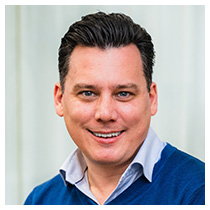
The backgrounds of successful venture capital investors are a diaspora of degrees and career paths.
Mine is rooted in engineering and in driving transformational change across the enterprise.
After completing a graduate degree in industrial engineering, I spent nearly a decade as a management and technology consultant, designing, building and implementing enterprise software that dramatically improved the operations of global companies.
That experience gave me a front-row seat to what real business transformation looks like. From desktop to data centre, I was hands-on with technologies that promised to reshape how organisations worked. Science and theory mattered, but so too did the organisational conditions and realities of execution.
That perspective is especially relevant today as artificial intelligence becomes the next defining technology wave. AI may feel new, but it’s still a wave. The lessons of previous cycles travel well. The winners are rarely those with the loudest narrative. They are the businesses that solve genuine problems, embed deeply into organisational workflows and turn capability into measurable outcomes.
Having lived through earlier transitions, I am wary of pattern-matching dressed up as innovation, or fashionable labels attached to existing products. Instead, I’m drawn to founders who can articulate exactly where their technical edge sits and who have the ambition to create real-world impact at scale.
My engineering background has fundamentally shaped how I approach investing. Engineering taught me to see businesses as systems — interconnected, dynamic and constantly evolving. This systems-thinking lens helps me understand how different elements of an investment opportunity interact, and how value can be created or lost.
Having built and delivered complex technology solutions, I know what “good” truly looks like. I look for teams who deeply understand the problem they are solving, and who build with discipline, clarity and the ambition to drive systemic improvement, not just incremental change.
Georges Lequime, manager of the WS Amati Strategic Metals fund
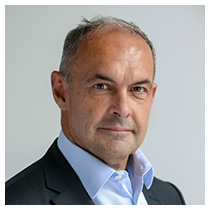
My career began underground. I trained as a mining engineer at Anglo American, working across gold and coal operations in South Africa.
Before I ever analysed a mining company from a desk, I had managed operations, understood the geology first-hand, and earned Mine Manager’s Certificates for both open pit and underground mining.
My co-manager, Mark Smith is a qualified geologist and worked in gold exploration in Africa. That grounding shapes everything about how we approach investing in this sector today.
When most fund managers look at a mining company, they start with the model. We start with the rock. The geological credibility of a deposit, the structural controls that explain and extend the mineralisation, the practical feasibility of getting it out of the ground – these are things you can only truly assess if you’ve done the work yourself.
A site visit isn’t a box-ticking exercise, but a chance to test whether the story stacks up in reality. Can we picture a mine here? Is the drilling targeting the right structures? Is the assay process being handled with the rigour it demands? These are questions we can answer with confidence precisely because we’ve been on the other side of them.
There’s a reason we place so much emphasis on boots on the ground. The most valuable insights come from what you notice when you’re standing on site, not from an investor presentation. Identifying factors like district scale potential and repeatable geology requires a level of technical literacy that goes beyond financial analysis.