



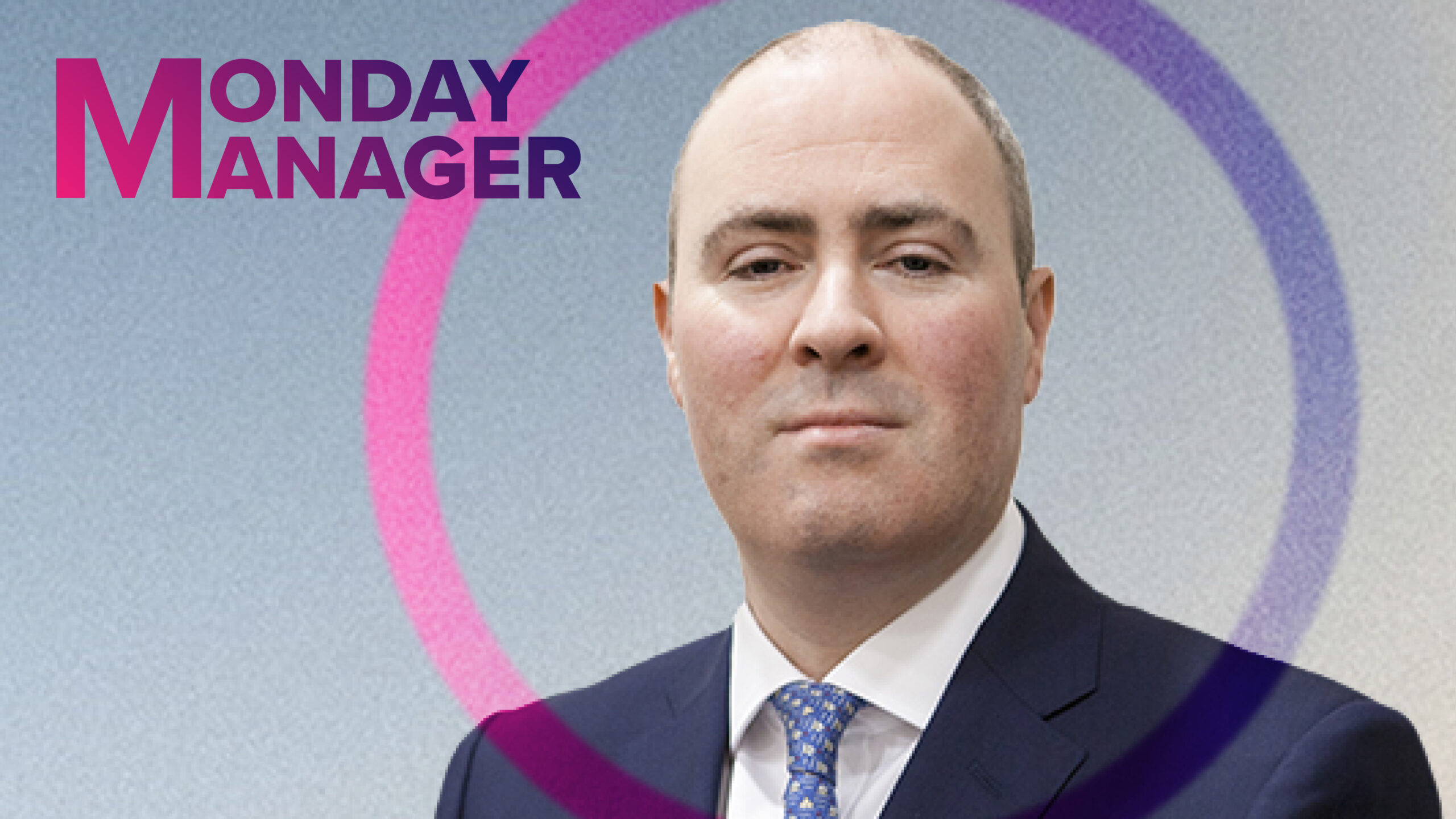

In this week’s slot for our Monday Manager series, Paul Niven, manager of the F&C Investment Trust, shares the changes made in the recent market selloff, narrowing discounts and the future of investment trusts.
How has positioning on the portfolio changed recently? Did you change anything during the market volatility?
We continue to focus on growth assets – listed equities and private equity. Before the market selloff in early April we modestly reduced exposure to the US equity market, expecting a broadening in market returns. Subsequently, we sold some of our dollar exposure, reduced Japanese equities while increasing exposure to emerging market equities. At the stock level, our underlying managers took advantage of some opportunities, including our US value manager buying into Vertiv, (an infrastructure provider which provides cooling solutions for data centres) a stock they had sold which then more than halved in value. It subsequently almost doubled after purchase.
See also: Investment trusts: Time to take the bull by the horns
What’s your biggest concerns about global equity markets right now?
There are always numerous things to worry about and, as usual, relatively high valuations in the US equity market are a cause for concern. Nonetheless, we retain a relatively constructive view and it is important to think about what can go right, as well as what can go wrong. Despite a downgrade to earnings expectations, we will still see positive EPS growth in the US this year, central banks will cut rates further and the application of AI may well, in the longer term, boost economic productivity and corporate profits.
And where are you seeing opportunities?
We manage a diversified range of strategies on our portfolio, seeking opportunities amongst listed companies which have attractive growth, value and quality characteristics, as well as investing selectively into private equity. From a regional perspective, we are allocating more capital to emerging markets. This area has been out of favour for over a decade, is cheap on an absolute and relative basis, and should benefit from a weaker dollar and lower US interest rates. It also provides relatively high exposure to technology stocks, which should continue to deliver attractive growth in earnings.
Has the discount widened or narrowed recently? How do you explain that trend?
We entered 2025 with a discount of around 9%, which was higher than that which we had seen in recent years (excluding a period during Covid). Indeed, we were trading at a premium periodically from 2018-2020. In recent months, our discount has narrowed slightly, closer to 7%. While I believe that this discount is wider than warranted, given the strength of our investment proposition, it is pleasing to see a narrowing trend. At the end of 2024 we had exceeded benchmark over one, three, five, 10 and 20 years and delivered NAV and shareholder returns ahead of peers over all these periods – a result which was unique in our peer group.
See also: Trust Talk with Laura Foll, portfolio manager, Janus Henderson
What is your current level of gearing, and how has that changed over time?
Our current gearing level (with debt at fair value) is just over 5%. This is a little lower than in recent years. We borrowed around £580m of fixed rate debt in recent years at an average all in fixed rate of around 2.4% and including loans out to 2061 at a fixed rate of 1.87%. We have not changed the nominal amount of borrowing much in recent years but, as equity markets have risen, the proportion of gearing has fallen.
How do you decide when to increase or reduce gearing? Are there specific triggers or thresholds?
Gearing will be varied as a function of the opportunity set, in terms of prospective investment returns and the cost of borrowings, which includes a ‘risk free’ component which is broadly related to government bond yields, and a credit component, which reflects market views of risk on the corporate sector. We do not have specific triggers or thresholds but have been fortunate to secure incredibly low costs of funding for our borrowings, over periods which extend out decades from here. This represents a low hurdle rate from which our borrowing may add value – if we can earn a return on investments above our costs of borrowing, that will be accretive to NAV returns.
What’s your perspective on the future of investment trusts?
There is little doubt that the investment trust sector faces challenges at present but I am optimistic. The investment trust structure has proven to be robust and, since our launch in 1868, we have survived numerous recessions, the great depression, two world wars, Covid, and numerous other events of significant stress. Nonetheless, each investment trust must prove its worth through delivery of performance and strength of their investment proposition. I remain extremely confident in the future for F&C Investment Trust. Our ability to borrow, to invest, to set aside revenue reserves to pay dividends in more challenging environments, to lock up capital and take a long-term perspective, as well as having an independent board who look after the best interests of shareholders, provides tremendous benefits.