







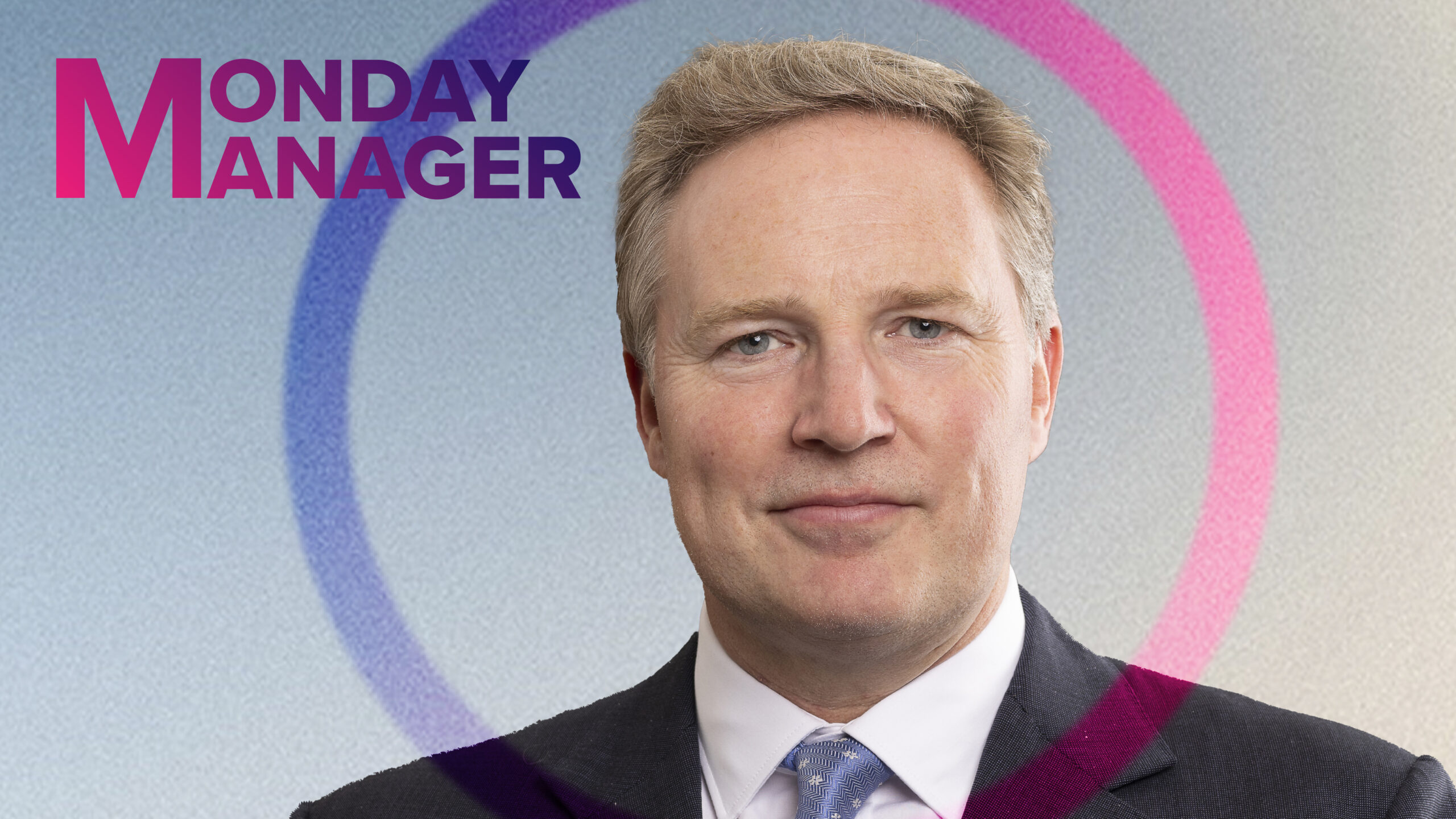

This week, for Portfolio Adviser’s Monday Manager series, Rob Marshall-Lee, founding partner and CIO at Cusana Capital shares reasons to focus on ‘compounders’ in emerging markets, why corporate governance is a critical enabler of compounding, and companies to avoid in the AI space.
The Monday Manager series covers fund managers that have worked on their fund for over three years, and where fund assets are over £100m.
Cusana Capital was established in 2022. Can you tell us about the launch?
Cusana launched its first fund in 2022, with around $100m, from three institutions – all previous clients of the team. They have been incredibly supportive and value our differentiated approach. We now manage around $500m, with a more diverse client base.
What sets the Cusana Emerging Markets Equities fund apart from other EM equities funds?
We focus on compounders rather than mimicking a highly cyclical index, the norm for most emerging markets equity funds.
Emerging markets managers, broadly speaking, find it uncomfortable to deviate from the benchmark too much, even though following the index dramatically increases absolute risk. This is due to the emerging markets index having excess exposure to low-quality cyclical businesses such as mining, oil production, and tech hardware, which not only tend to be volatile, but are proven to do less well when it comes to delivering sustained value generation.
Some active approaches overemphasise downside protection at the expense of capital growth; we think most people invest in emerging markets equities for capital growth, so we prefer a resilient growth portfolio, rather than simply owning defensive sectors. We make every decision to optimise absolute risk vs reward with a five-year view, to focus on compounding. This is unusual in the emerging markets equity peer group where most of the focus is on the hamster wheel of annual performance relative to a benchmark.
See also: Rob Marshall-Lee sets up own firm four months after Odey AM exit
What were the best and worst-performing stocks of 2025? Do you still hold them?
The best was United Integrated had the strongest absolute performance. This company helps TSMC expand semiconductor capacity. CarTrade – a much faster-growing Indian equivalent of Autotrader – was the most positive contributor. We still own both.
Our worst was NewGen Software, which was caught in the deceleration of IT services and in fears around AI software. Sonata Software was the most negative contributor and had similar headwinds. We have since sold both stocks.
Tell us about the top three themes on the portfolio – digitalisation, financial inclusion and online platforms.
Digitalisation: The world continues to move online, company systems are still moving to the cloud, and AI has now added a further layer of digital transformation for both companies and consumers. Common threads include semiconductor supply chains, dominated by the likes of TSMC, Chinese semiconductor equipment companies, even specific IT service providers that companies require to help prepare their databases for AI integration – even if the latter may be contrarian right now.
Financial inclusion: Many EM consumers are unbanked or underbanked, as they were not profitable for traditional banks. Digital-native financial services companies can be far more efficient because their cost base is digital. The best companies can deliver very attractive returns whilst providing low-cost yet high-quality financial products. This is even more powerful in emerging markets than developed markets. NuBank, for example, is like the Revolut of Latin America, boasting more than 130 million customers, with average revenues of $15 per month and an average cost to serve of $1 per month.
Online platforms: The rise of internet ecosystem platforms has transformed industries and stock markets over the last 20 years, as epitomised by Alphabet, Amazon and Meta. Beyond Chinese internet companies such as Tencent, many emerging markets online platforms are still far earlier in their journeys than their Western equivalents. Examples include auto classifieds and online travel agents in India, or trucking and social networks in China. While mindful of AI disruption risk, the data and network effects can be very powerful when combined with market dominance and capital-light, highly scalable business models.
See also: Rob Marshall-Lee’s Cusana Capital enters distribution partnership with Spring Capital
ESG is explicitly integrated into the Cusana investment process at several stages. Why is this important?
As Cusana is a long-term investor, corporate governance is a critical enabler of compounding. It drives capital allocation and alignment of interests. In emerging markets, governance varies widely, so our investment checklist ensures we always consider the lessons learned from 27 years of investing in this space. We are investors in businesses, not stock traders, hence we require companies that are good stewards of our clients’ capital and use it profitably and sustainably for the benefit of their customers and society. We consider the full impact of the business, not just the superficial or easily documented.
What are some recent additions to the portfolio?
Radico Khaitan is the number two spirits company in India; it is growing rapidly and profitably.
United Imaging is a great Chinese growth company, disrupting the global medical industry by providing high-quality, innovative medical equipment at lower cost.
XP is a Brazilian online investment platform. XP is somewhat cyclical but sustains high profitability. We consider it to be significantly undervalued.
See also: EM outlook: Emerging markets at an ‘inflection point’ after strong 2025
What are the challenges and opportunities in EMs right now (from an investment perspective)?
Recent emerging markets leadership has been from commodity stocks and highly cyclical technology hardware stocks, both correlated to the same AI capex narrative. Although we invest in high-quality AI beneficiaries, we do not invest in low-quality companies where we see great risk that profit margins will revert to much lower levels in the future. We find some of the most compelling capital growth in India’s consumer sector.
How do you ensure diversity of thought on your fund management team?
We have a flat structure made up of highly experienced, thoughtful investors, siloed neither by country nor industry sector. We do not start with an index, so we can focus on identifying the best 20-30 investments rather than on waterfront coverage of big benchmark stocks we don’t like.
We know the common characteristics, which are the core pillars of compounding potential. These include (1) superior corporate governance, (2) high future returns on capital, underpinned by wide economic moats, and (3) a long runway for growth, supported by themes. It is then a creative process to find the best stocks with a five-year view.
The lack of focus on benchmark stocks is highly unusual, but also very liberating. The strategy’s AUM is $500m and scalable to a few $bn, so we have greater scope to invest significantly in small and mid-cap companies, which simply isn’t possible for large investment firms or would make little difference in large ETFs. So, we can invest in great stocks earlier in their journey and avoid wasting time on mediocre companies that might make up most of the index.
See also: Fidelity: Why the discount on emerging markets is unjustified