





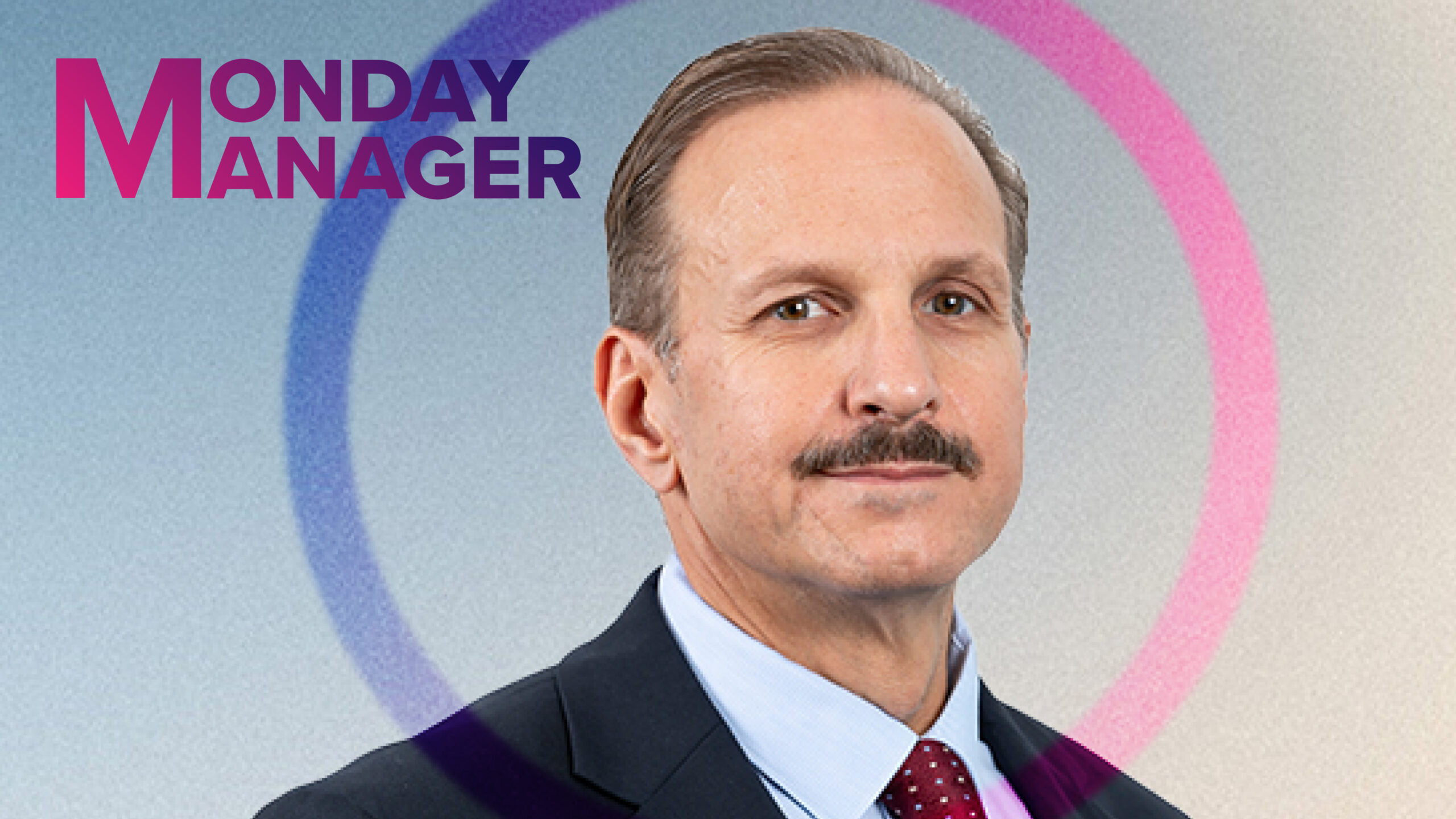

In this week’s Monday Manager, Portfolio Adviser speaks to Mark Burridge, managing partner and fund manager of the £110.97m SVS Baker Steel Gold & Precious Metals fund.
He shares why silver outperformed gold in 2025, how the gold market is more diverse than it’s ever been, and turning mistakes into better decisions.
The Monday Manager series covers fund managers that have worked on their fund for over three years, and where fund assets are over £100m.
When was the SVS Baker Steel Gold & Precious Metals fund launched and why? What is it trying to offer investors?
Baker Steel was appointed as investment manager of the SVS Baker Steel Gold & Precious Metals fund in December 2019. However, the Baker Steel team has run the strategy since 2015 (as a Luxembourg UCITS) and has managed precious metals equity strategies since 2003. The strategy aims to offer UK-based investors an actively managed, value-driven portfolio of gold, silver and platinum group metals mining equities.
At the time we became investment manager of the fund, the precious metals mining sector has turned a corner following the bear market and consolidation of the 2010s and was entering a recovery cycle. Today we see that cycle developing into a new bull market for the precious metals sector, driven by a range of macroeconomic, geopolitical, and industrial demand tailwinds.
See also: Knacke’s money maps: The rise in gold demand is not merely a sentiment trade
Against this positive backdrop, the precious metals mining is a sector where active management can deliver enhanced risk-adjusted returns, relative to a passive vehicle. Our goal is to deliver outperformance of our index through selecting those precious metals miners offering margin expansion, capital discipline, production growth, and shareholder returns.
Alongside the SVS Baker Steel Gold & Precious Metals fund, precious metals equities also play a core role in our second OEIC, the SVS Baker Steel Electrum fund, which invests in a broader range of speciality and industrial metals miners. Our current overweight position in gold and silver miners reflects the benefits we believe precious metals exposure brings to a diversified actively-managed portfolio.
Are gold and precious metals still seen as a safe haven or do you think investors use the asset class differently in today’s environment?
Recent years have seen gold and precious metals prove themselves as safe-haven investments, yet there is much more to the sector than this. Price movements for gold and precious metals reflect a more complex interplay of macroeconomics, geopolitics, physical supply and demand, and evolving market structure.
The gold market today is broader and more diverse than at any point in its history. Demand spans individuals, family offices, institutional investors, and central banks. New participants are also emerging, including cryptocurrency firms and financial institutions, alongside investors reallocating from bonds and mainstream equities.
Looking ahead we consider the ‘safe-haven’ appeal of gold will continue to grow, as volatile geopolitics and uncertain macroeconomic conditions drive demand for gold as a reserve asset and inflation hedge. The deterioration of the US fiscal position also continues to boost gold’s appeal, amid an expanding federal debt burden and persistent inflationary pressures. The potential for lower rates relative to inflation if not outright rate cuts are also supportive of both gold and silver prices.
See also: Gold hits $5,000 as geopolitics defines global markets
Gold and silver were stand-out performing asset classes of 2025. What was the best performing holding of 2025 on the fund and why? Have you maintained the position?
The world’s largest silver miner, Fresnillo, was the top-performing position of 2025. The fund had been overweight silver miners for much of the year, reflecting our team’s view that silver would outperform gold as the precious metal’s rally gained momentum.
Silver remains in a supply deficit and faces strong industrial demand trends. The metal also faces a tight supply outlook. We continue to hold Fresnillo in the fund but have taken profits across our silver positions amid heightened silver price volatility and country risks.
How are you positioned as we have moved into 2026? Have you made any significant changes amid the market movements?
Coming into 2026 we have been focused on managing volatility while maintaining the significant upside potential of the SVS Baker Steel Gold & Precious Metals fund. Commodity markets in general remain volatile amid a mix of heightened geopolitical tension, trade confrontation, and shifting monetary policy conditions. Gold and silver prices have pulled back from their January highs, but momentum remains strong and ongoing geopolitical tension reinforces gold’s appeal as a safe-haven investment.
Against this backdrop miners remain undervalued and under-owned, trading on relatively low multiples despite strong recent performance and robust balance sheets. The mining sector is ripe for active management, with disparities in asset quality, production growth, value and capital discipline, creating a favourable environment for the strategies.
See also: Does the gold price crash signal full reversal or short-term correction?
Tell us about how you are using ESG factors and how this is helping to mitigate risk.
ESG is one of the four pillars of our bottom-up investment research process and provides a vital lens through which we view risk in the mining sector. From environmental factors and safety to community and governmental relations, ESG research and engagement are central to understanding and mitigating risk within the mining sector.
From a portfolio management perspective, our ESG research begins with an initial pre-screen of exclusion factors to shortlist the investable universe. After this, our proprietary ESG scoring model measures 55 ESG metrics to assess company performance and calculate an ESG score. The team then considers these company ESG scores within the investment decision-making process.
Finally, ongoing monitoring of ESG factors takes place, alongside consistent active engagement with companies and voting in line with our ESG policy.
Have you always wanted to be a fund manager investing in precious metals? What led you to this role?
Not at all! When I started my career as a geologist, I never imagined it would lead to running a fund management business. My journey has been shaped by a mix of technical, financial and leadership roles within the mining industry. Over time, I realised that my knowledge of the industry from the ground up gave me a unique perspective on the investment side, and that naturally led me to Baker Steel.
What’s been a career highlight?
There have been several. From working in the field solving complex technical problems, working with talented teams across jurisdictions, to completing challenging transactions, and more recently seeing Baker Steel manage record AUM on behalf of our clients – it’s hard to pick just one. Each stage has been rewarding in different ways, and together they’ve made the journey incredibly fulfilling.
See also: Gold’s safe haven effect in market crises ‘fading’, claims study
And a mistake you have learned from?
I’ve made a few along the way, but my focus has always been to not make the same mistake twice. Every setback has been a learning opportunity, and I try to turn lessons into better decisions moving forward.
What’s your one piece of advice for gold investors in 2026?
Gold has firmly reasserted itself as a core financial asset and deserves a place in most portfolios. At the same time, other metals are becoming strategically important again, and selective exposure to mining equities can offer attractive upside for investors with the right risk tolerance. A specialist, actively-managed approach allows investors to capture the best opportunities, navigate sector risks, and focus on companies with the strongest fundamentals and growth potential throughout the cycle.