

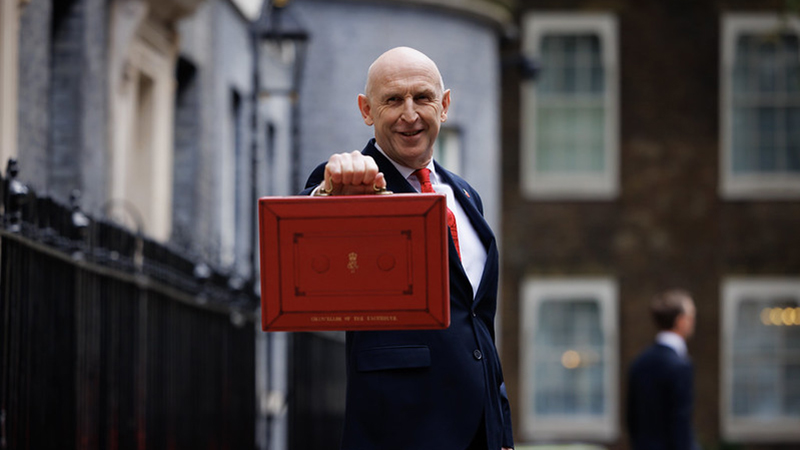









Chancellor John Healey has boosted spending on AI-related projects in today’s Budget.
Basing his investment on a recent OECD estimate that AI could add between 0.4 and 1.3 percentage points to annual UK productivity growth over the next decade, Healey has made several investments to enhance AI development.
The Budget offers investment in British AI firms through a “first of its kind sovereign AI unit”. This will include £60m for the Sovereign AI fund from 2027-28 to invest directly in promising UK AI companies, a £60m AI Pathfinder fund, and £30m to pilot local partnerships. Healey also signalled “investment” in AI within the civil service, with a similar focus on “NHS productivity and AI”.
To encourage innovation and adoption, Healey followed these announcements with an “AI challenge prize” and funding for AI-related “learning”. He also allocated £20m for AI chip development.
Healey also provides some £500m for AI “security”, subdivided into £120m for the AI Security Institute, £165m for a new National AI Biosecurity Initiative, £154m to strengthen cyber defences, and £40m to establish a National Agentic Security Unit to “investigate and respond to rogue agentic incidents”.
The chancellor noted the importance of “sovereign AI”, with particular emphasis on storing NHS data on “British soil”. To that end, Healey has established a “British datacentre covenant”, placing local community investment obligations on data centre projects, but also permitting “on-site power generation” and facilitating “grid connections”.
See also: Autumn Budget 2026: Treasury’s fiscal headroom falls by £8.6bn