









More than three-fifths of asset managers (63%) are concerned about data management within their businesses, as investment in artificial intelligence and digitisation has accelerated, according to a report from Alpha Financial Markets Consultancy (FMC).
While over half of asset managers view AI as important, just 9% of firms are at the stage where AI can be used to predict certain outcomes, the report found.
Alpha FMC’s Asset and Wealth Management 2026 Outlook was based on quantitative research conducted by global leadership teams in the asset and wealth management sector, with qualitative discussions with senior leadership teams and C-suite executives throughout the year.
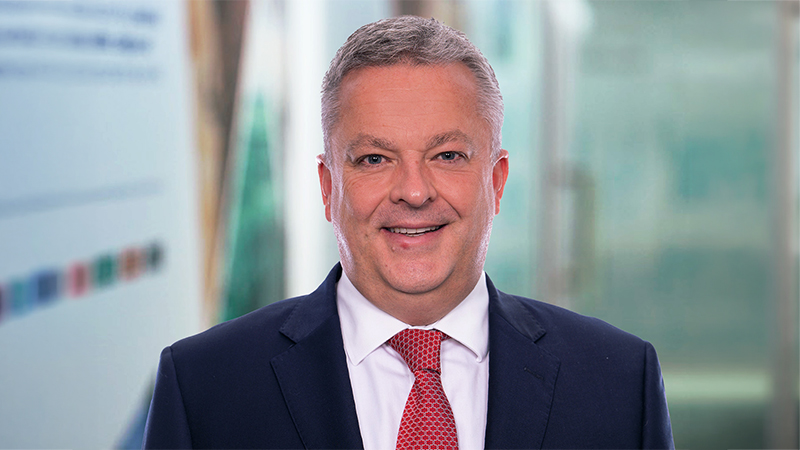
Joe Morant, global head of asset and wealth management at Alpha FMC, said over the past few years, senior leadership teams have poured into AI, data platforms and private markets. Now, shareholders and clients are increasingly “demanding improvements,” he said.
“In the coming financial year, the focus will shift firmly to execution – ensuring these investments deliver tangible, measurable value while strengthening operating resilience and maintaining regulatory confidence is key,” he added.
See also: Can deregulation finally spark hopes for UK competitiveness?
Roughly 90% of asset owners are either already using AI in operations or are exploring use cases, according to recent research from Alpha FMC.
“The priority is no longer proof of concept but value realisation, supported by stronger governance, model controls and secure integration with core data platforms,” the report said.
Alpha’s Morant added: “AI is being embraced across research, portfolio analytics, sales intelligence, advisor workflows and finance operations.”
See also: AI in financial services needs behavioural foundations
The survey found that for all senior roles in asset management firms, AI was identified as a core area of focus and investment, but the emphasis differed depending on position. For example, CIOs were considering how to embed AI in portfolio construction, while heads of sales were expecting to use it to guide client interactions.
Public and private markets
Another key theme among senior executives was the growing convergence of private and public capabilities.
As private and public markets have become more sophisticated, it has become a challenge for data platforms and existing infrastructure, which were not designed to facilitate this.
For example, 40% of asset owners cite integration of private and public markets operations as a key challenge, according to the research. As a result, many senior leaders are considering a more holistic approach for the year ahead.
Managers are expanding their use of alternatives, while asset owners are favouring “total portfolio approaches” linking their risks, liquidity and exposure across private and public asset classes.
“Firms that successfully integrate public and private market capabilities will gain agility without increasing fragility,” the report said.
Optimisation and regulaiton
Another big theme across the industry was the need to simplify operations, the report found. “Persistent fee pressure and cost constraints are driving structural simplification rather than incremental cost cutting.”
More than half (51%) of asset management firms are prioritising cost optimisation, according to Alpha FMC’s discussions with COOs. But it remains a priority for wealth managers and asset owners as well, who are aiming to improve third-party oversight and client services.
“Operational resilience is increasingly viewed as a competitive advantage, enabling growth while protecting margins and regulatory confidence,” the report said
Finally, the fourth core theme the report pulled out was the importance of regulation and governance.
Regulatory expectations can differ depending on location, particularly when AI and evolving frameworks in Europe require increased scrutiny, according to the report. This places firms under pressure to balance between global regulations and more local frameworks.
“Risk and compliance functions are embedding earlier in product and technology design, strengthening AI governance, cyber resilience and regulatory automation,” the report said.
Meanwhile, sustainability teams need to demonstrate commercial value and ensure investment behaviour and client messaging are more tightly aligned.
“Strong governance and disciplined oversight are essential to sustain innovation and maintain trust.”
See also: Alpha FMC: Regulation, AI and private markets to shape asset & wealth management growth