



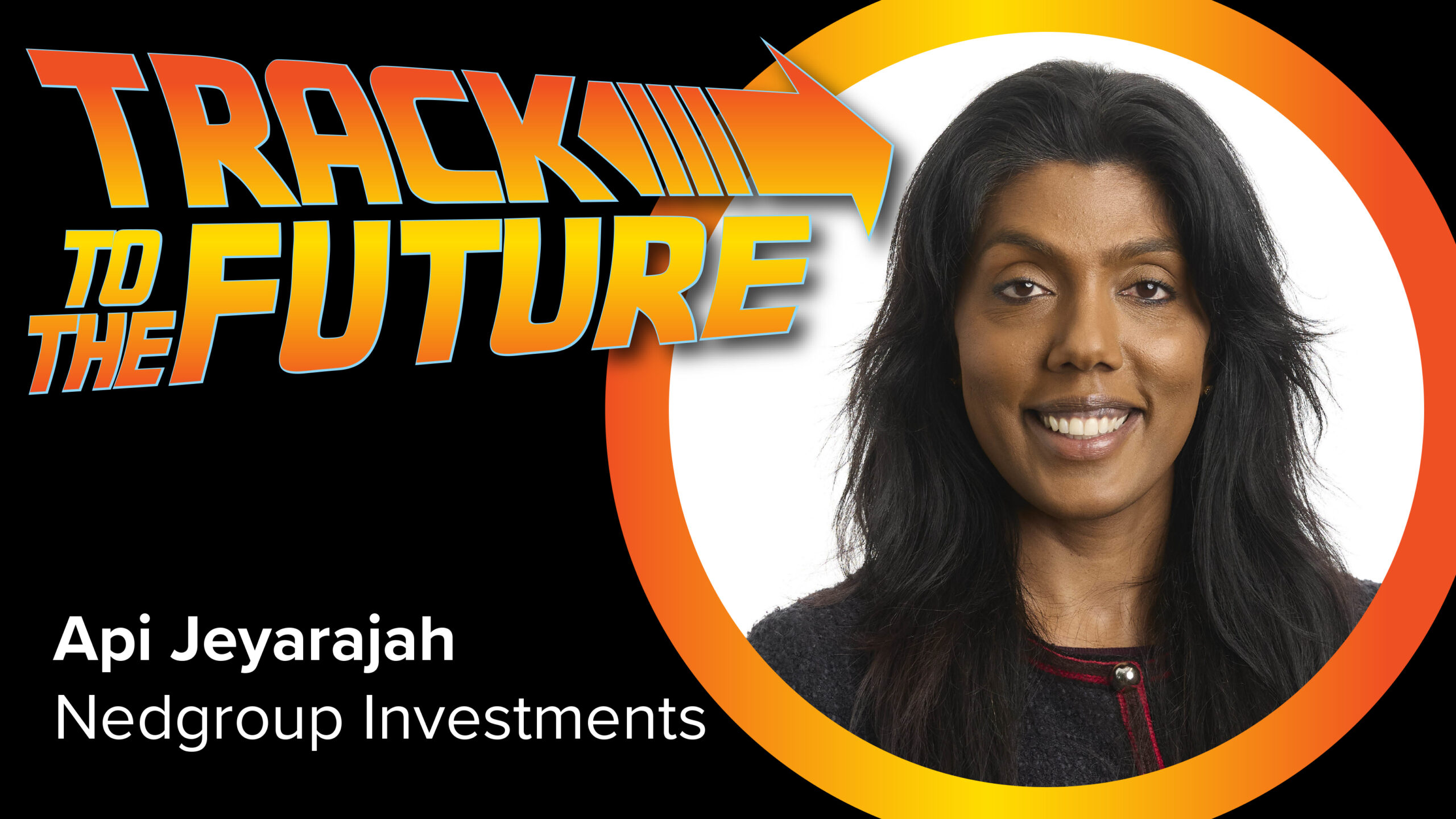

In the latest in our regular series, Track to the Future, fund group distribution bosses share their thinking on asset classes, strategies and working with clients over the next 12 months.
Here, Api Jeyarajah, chief commercial officer at Nedgroup Investments, discusses why there is no such thing as a free lunch when it comes to private markets and why sustainability is embedded, not bolted on.
Which particular asset classes and strategies do you anticipate your intermediary clients focusing on in 2025/26?
The return of volatility in the market is challenging the status quo for investors, for example:
- Previously defensive cash positions or passive fixed income is moving into active fixed income. Strategies that can flex across rates, credit and currency are in demand given the macro backdrop.
- In equities, the historically strong bias for growth orientated strategies, whether through active or passive solutions is being reviewed in favour of long-term durability.
- Existing multi-asset solutions are being reviewed against client objectives to assess whether they can continue to meet outcomes in this changing market environment.
Should end-investors be thinking beyond equity and bond investments? Towards what?
Against a more volatile market backdrop, investors need to review how their portfolios are built and how they’re being managed. The key question is whether these approaches will still deliver the outcomes clients are aiming for. This will only grow in importance as we see the impact of the great wealth transfer and the increasing role of technology in shaping investment decisions.
See also: Nedgroup’s Roberts and Ralph: Can investors find stability in Europe?
To what extent do private assets and markets fit into your thinking? What are the current pros and cons for investors?
Private markets can add illiquidity premia, diversification and access to growth themes, but they’re not a free lunch. Liquidity, fees, manager selection and vintage risk all matter. The pros and cons are dependent on the investor objectives and time horizons. For example, Global REITS are an interesting alternative which can provide access to the property asset class in a liquid format.
Given client and regulatory pressure on charges, how is your business delivering value for money to intermediaries and end-clients?
We have grown organically over the past 20 years by employing a client centric approach, and our client retention over the long term reflects our strong alignment mindset and our partnership approach.
As we consciously expand our footprint in the UK, we take account of the intent and spirit behind the regulation while at the product development stage. An example of this was the launch of our first fixed income boutique in January 2024, Palomar, and its launch product, the Nedgroup Global Strategic Bond fund.
We aligned the objective with the desired client outcome – what client issue are we setting out to solve? Then we ensured we communicated very transparently what the fund would and would not do and what part it can play in a portfolio. We will continue to do this as we serve more clients in the UK. We take our role as careful custodians of client capital seriously, ensuring every strategy is scrutinised for its role and fit.
How much of your distribution is currently oriented towards climate change, net zero, biodiversity, and other segments of sustainable investing? How do you see this approach to investing evolving?
For us, sustainability is embedded, not bolted on. With the oversight of our parent company, Nedbank who is known as the “Green Bank” in South Africa, we have access to world-leading research, policy development and processes that govern ESG. As an asset manager, every manager conversation covers ESG integration and stewardship, and we publish proxy voting for transparency. UK clients tell us they want authenticity over labels, so we prioritise credible reporting and clear escalation pathways in stewardship.
See also: Skeate exits Ninety One for Nedgroup
Looking ahead, we’ll be undertaking deeper work on nature and transition risk, always framed by client outcomes and aligned with UK SDR and anti-greenwashing rules.
How are you now balancing face-to-face and virtual distribution? In a similar vein, how are you balancing working from home and in the office?
For me it’s always face-to-face. Face-to-face is for building trust; the virtual meeting is useful for speed, and ongoing conversions, particularly in this hybrid world. Our UK coverage combines regional presence with digital reach, ensuring we’re present where clients are. The format is ultimately personalised and client-led
Looking a little further ahead, in what ways do you see the asset management sector evolving over the next few years?
Three shifts stand out for UK intermediaries:
- Return of market volatility means the return of active managers, showcasing their ability to navigate the markets to find alpha generation opportunities that are aligned to their investment objective.
- Boutique plus platform. Investors want alpha generation with the governance, data and operational strength of a global platform. That’s exactly the model we’ve built at Nedgroup Investments International.
- Tech-enabled personalisation. AI will accelerate research and client service, but the winners will blend technology with human judgement to deliver faster, more tailored solutions, without compromising suitability or compliance.
What do you do outside of work?
I am really enjoying Padel at the moment. I am a curious person and enjoy trying/learning new things from restaurants, expanding the mind with different books, sailing and hiking different mountains. Highly recommend Chris Voss’s book Never Split the Difference.
The most extraordinary thing you’ve seen in your life
Power of the mind and body. Following a number of years of health challenges, applying myself to recovery has changed my approach to life and in turn, leadership. It has been wonderful to see how this has had a positive impact on the team and how they bring themselves to work, and their drive for success in all aspects of work and life. This is particularly important when growing in an entrepreneurial environment, and bringing teams together with different skillsets.