






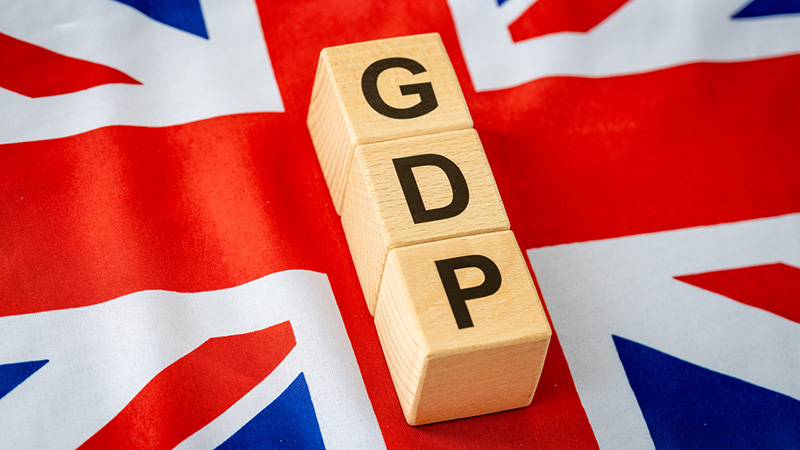

As geopolitical tensions in the Middle East continue to bite, the International Monetary Fund (IMF) has downgraded UK growth projections to just 0.8% in 2026, from a previous estimate of 1.3%.
This is the sharpest cut among advanced economies, with the next closest being Japan (cut from 1.2% to 0.7%).
Susannah Streeter, chief investment strategist at the Wealth Club, said: “The UK is stuck in a stagflation scenario, and risks of a recession are rising fast.”
The UK will be “battered” by a combination of high oil prices (currently hovering around $96 per barrel), high energy prices and tighter consumer spending. On top of this, the economy was already flatlining before the Middle East erupted, Streeter noted.
See also: ‘Fragile’ UK GDP data spells ‘uncomfortable trade-off’ for Bank of England
“Now there is little means of resuscitation available given that interest rates look set to ramp up to curb inflation,” the analyst continued.
While the hope for fresh peace talks, as well as a potential closer relationship with Europe, is providing a bright spot, high uncertainty lingers, Streeter said.
Lindsay James, investment strategist at Quilter, added: “The IMF has delivered a severe reality check to Rachel Reeves and the rest of the UK government, with economic growth forecasts slashed heavily.
“The conflict in the Middle East has effectively blown a hole open in the economic plan the Labour government was embarking on,” James continued.
The conflict has thrown a wrench into the government’s hopes that this would be a year of stabilisation after the Budget, with potential for interest rate cuts meaning growth will be “hard to come by”, she noted.
If the conflict does not drag on, the IMF predicted the UK will recover with 1.3% GDP in 2027, James conceded. However, with UK inflation also expected to remain high, further revisions down could be possible, she added.
“None of this, of course, is helped by the fact that the longer the conflict goes on, the greater potential there is for an economic recession.
“Even with any resolution, things are unlikely to go back to normal, and we should now get familiar with elevated oil and gas prices for the foreseeable future,” James concluded.
See also: Investors wrong footed again as US-Iran deadlock sends oil soaring