





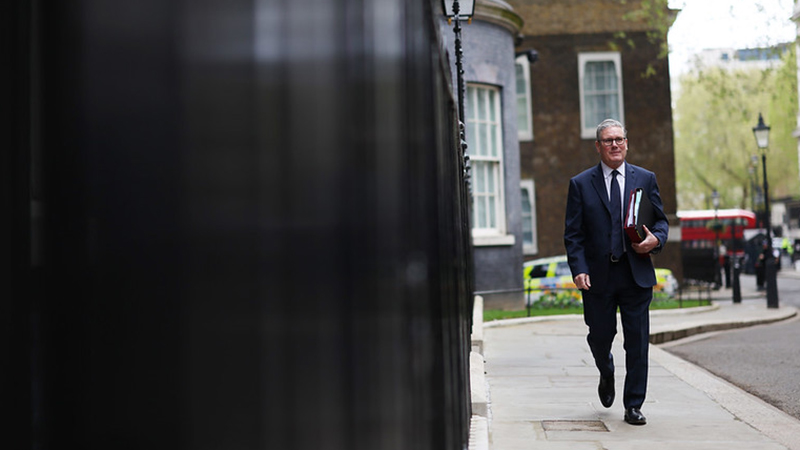

After just two years in power, Sir Keir Starmer has stepped down as leader of the Labour Party and subsequently prime minister, leaving the door open for a leadership contest in the upcoming weeks.
The FTSE All Share and FTSE 100 are roughly flat in early trading, while the 10-year gilt yield has slightly edged up slightly but is generally stable, due to the move being widely expected.
Oliver Faizallah, head of fixed income research at Raymond James, said: “The lack of move comes as no surprise; the move was widely anticipated, with prediction markets assigning a near certainty of a leadership change last week.”
From here, the long end of the gilt curve will remain choppy, but this will be mostly due to foreign holders of gilts who find the carousel of PM’s unsettling, Faizallah said.
Jason Borbora-Sheen, manager of the Ninety One Diversified Income fund, agreed Starmer’s resignation was “not a surprise”, given it had been priced in polling markets for weeks now.
“The question now turns to whether there will be a leadership contest or if Andy Burnham will take the leadership uncontested.
“Beyond this, it is whether the fiscal credentials of a likely new chancellor and the PM are believed by the gilt market, which will be tested as their policy preferences become clear.”
For this reason, his team currently favours short-dated UK gilts over the uncertainty and greater sensitivity of later maturities.
Meanwhile, sterling took a hit according to Chris Beauchamp, chief UK market analyst at IG, who noted the strong possibility that Burnham was the sole candidate caused the pound to shoot up to $1.32, which is its lowest level versus the dollar since November 2025.
Prem Raja, head of trading floor at Currencies 4 You, added: “For the pound, the key issue is not necessarily who becomes the next prime minister, but whether the change in leadership increases the likelihood of a general election or significant policy shifts over the coming year.
“Until investors have greater certainty, sterling could remain under pressure and experience increased volatility. “
Richard Carter, head of fixed interest rates at Quilter Cheviot, added: “Markets are wary of Burnham’s previous policy positions so they would prefer to see ideas for governing fleshed out via a leadership contest, keeping surprises to a minimum.
On top of this, there are “difficult decisions” about welfare and defence spending, as well as last week’s borrowing figures showing that the new prime minister will have a messy inheritance, Carter said.
“For now, given the economic team Burnham has been putting in place, alongside the fact he does not appear to be seeking a new mandate, we are probably going to see more of a continuation of the current direction from the government.”
“With the UK still at a yield premium to developed market peers, investors and markets will want to see a credible economic plan that can help ignite growth and put the public finances back onto surer footing,” he said.
See also: UK jobs market ‘stagnant at best’ despite unemployment edging down
John Wyn-Evans, head of market analysis at Rathbones, noted that while Burnham would likely shift to the left, there are constraints on how far it could go, due to a tight fiscal position.
“In that context, investors appear reassured by signs that Burnham is mindful of those constraints.
“Gilt yields and sterling have moved largely in line with global trends rather than reacting sharply to domestic politics, underlining the extent to which international factors continue to dominate market direction.”
Lale Akoner, global market strategist at Etoro, agreed about the lack of visibility on a Burnham-led government’s policies.
“Any move to increase borrowing for investment would need to be carefully communicated to avoid unsettling gilt markets, which remain highly sensitive to fiscal credibility after the turmoil of 2022.”
Markets may lack clarity until the next Budget in November, meaning until then sterling is likely to remain vulnerable to “speculation over spending”, according to eToro’s Akoner.
David Coombs, multi-asset manager at Rathbones Asset Management, said the market will be closely watching who becomes part of Burnham’s team moving forward, with a key focus on the chancellor.
“It is worth remembering that Burnham was part of Tony Blair’s team and we probably need to take his recent statements which are more in keeping with a left-wing agenda in the context of trying to gain support from the unions and party members.
“At this stage I remain cautiously optimistic that Burnham will not repeat the sort of mistake former Prime Minister Liz Truss made, surprising the markets with a radical agenda.”