


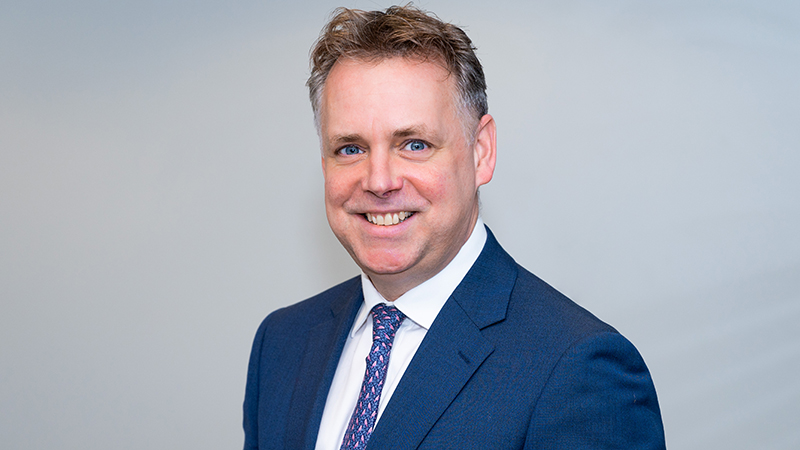








Sarang Kulkarni, lead portfolio manager on the Vanguard Global Credit Bond fund, discusses being selective when valuations are stretched and the importance of doing your research and being patient.
The Monday Manager series covers fund managers that have worked on their fund for over three years, and where fund assets are over £100m.
Can you explain the fund’s approach to investment and what it is trying to achieve for investors?
At its core, this fund is about delivering dependable performance. We want investors to feel confident about the role it plays in their portfolio.
As such, our investment approach is to focus on generating alpha via bottom-up security selection, rather than making big macro bets. Most of our efforts go into understanding individual issuers and picking up the opportunities where we find them. The fund preserves its core nature of being a high quality, mid-duration fund allowing clients to forecast the returns with some certainty.
This means the portfolio is driven less by big market moves and more by the fundamentals of our holdings. We think this is the right way to generate alpha over the long run, the markets generally focus more on macro headlines, leaving alpha on the table.
Credit markets showed resilience throughout 2025. What’s your outlook for the asset class throughout the rest of the year, amid geopolitical uncertainty?
Our base case is for the uncertainty to resolve within the next couple of quarters with a somewhat limited impact on GDP and inflation. In this scenario, we can still expect 4-5% total returns from global credit over the next 12 months.
However, we are also prepared if it plays out in a tougher scenario. In that case it’s worth remembering that higher starting yields offer a good cushion. If anything, recent market volatility has only made credit more attractive; global credit now offers over 5% yield on a USD hedged basis.
From a fundamental perspective, we still think corporates are in a good spot. Many companies have managed to pass on higher costs and have yet to utilise all the levers they have at their disposal (such as cost cutting, adjusting dividends etcetera), so they still have flexibility. The lessons learned from the Covid crisis and the war in Ukraine in terms of diversifying supply chains will serve companies well.
Which areas of the global credit market are you most excited about right now, and why?
Given valuations remain stretched, we are being selective. We’re spending time on companies that are clearly committed to managing their balance sheets and showing financial responsibility.
We also prefer companies with hard assets, and some inflation protection built in. Utilities are a good example, as regulation and long-term contracts often provide a degree of protection and support cashflows.
Reits are another area where we’re starting to see opportunities. Historically, they’ve coped reasonably well with inflation shocks, and we’re now seeing valuations that are becoming more interesting. Logistics‑focused Reits stand out, and we’ve added to specific names after recent spread widening.
Financials tend to do well when interest rates are rising, and we see good opportunities in the insurance sector.
Which areas are you avoiding and why? Has this changed over time?
We’re still cautious around sectors where supply‑chain risks linger, with autos being a good example. That said, we’re not dogmatic — where valuations already reflect a lot of bad news, we’re prepared to be selective. Stellantis is a case in point.
More broadly, European autos have seen subdued growth for a couple of years now, which is why the sector has been underweight for us for some time.
Building materials is another area we’re watching carefully. Supply‑chain disruption and persistently higher energy prices could start to feed through into weaker demand, which would make life harder for the sector. However, AI investment and post war reconstruction could provide tailwinds to the sector.
Structurally, we’ve kept an overweight to financials relative to non‑financials. Bank balance sheets look robust, REIT quality has improved, and insurance tends to offer more defensive, less cyclical characteristics.
Do you have any thoughts on the private credit sector at the moment, given it is such a contentious topic?
Private credit is often talked about as if it’s one thing, but in reality, it’s a very broad and varied space.
You can access it directly through lending, or indirectly through structures like BDCs, their owners, or insurers. Our preference has been insurance companies. They tend to have diversified business models and relatively limited direct exposure to private credit, yet many have sold off on the back of wider concerns around the sector.
How did you end up specialising in global credit?
I started out managing sterling credit, and over the past 20 years it’s been fascinating to watch how global credit has evolved, particularly with the growth of bank capital instruments, corporate hybrids and emerging markets.
As the asset class became far more important in both retail and institutional portfolios, the long-term benefits of income, capital gains, liquidity and diversification have driven the strong growth in public markets as well as private. I ha’s been exciting to expand my focus from the UK to being more global and be part of that evolution.
What is the best advice you’ve received about investing?
Do your research and be patient. Markets have a habit of reacting first and asking questions later. They can very quickly price in extreme scenarios that don’t always come to pass. While they are generally efficient, market tantrums generally always present good opportunities.