





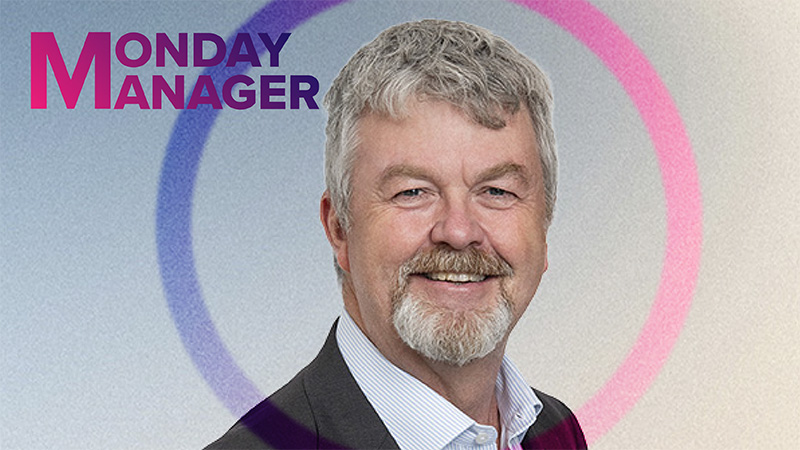

Dr David Walsh, head of investments at RQI Investors, discusses active quantitative investing, opportunities in global markets, and the lessons that have informed his investment approach.
The Monday Manager series covers fund managers who have worked on their fund for over three years and where fund assets are over £100m.
Can you explain the portfolio’s approach to investment and what it is trying to achieve for investors? What does ‘active quant’ mean to RQI?
For us, active quant is taking good investment ideas and applying them systematically – and this is the approach we take with the RQI Global fund.
Among other things this means:
- Only taking risk where we expect to get compensated for it, and diversifying away as much stock specific risk as is reasonable
- Building models and a portfolio that gets optimal exposure to our insights
- Understanding how much the cost of implementation really matters
Moreover, the fund’s value-tilted, contrarian strategy aims to reduce key-person risk, offer strong diversification beyond traditional index investing, and capture the value cycle while avoiding the pitfalls of value investing.
Often quant investing is seen as a ‘black box’ because the process is perceived as being hard to interpret, returns difficult to attribute, and reports heavy with jargon. While protection of our IP is critically important, this ‘black box’ problem has historically deterred many investors.
At RQI we try to dispel this black box concept. While many quant models are indeed justifiably complex and exploit ideas which require advanced training in technical areas, the underlying insight should still have an economic rationale which is clear and with outcomes that are attributable. We work hard to build modelling and attribution tools to allow this.
Which areas of the market are you most excited about and which areas are you avoiding?
As quants, our strategies tilt towards ideas for generating alpha while controlling for risk. We don’t specifically think of market segments that we ‘prefer’ or ‘avoid’.
That said, our resulting portfolios reflect these insights and show how certain sectors or regions are viewed in aggregate. The fund is currently underweight in technology (especially related to AI), which continues to look expensive and is challenged to deliver on its capex pipeline and any realistic ROIC.
We are underweight in North America for this and broader valuation reasons. Europe looks relatively more attractive, and energy – while highly volatile – also looks like good value in the long term.
What are the benefits of a quant-based, highly-diversified approach over concentrated stock selection?
As investment stockpicking skill improves, investment managers might be less concerned about risk and hold fewer stocks. However, the skill of stockpicking is generally a very scarce resource, and hard to disentangle from higher themes like style returns or macroeconomic effects. For example, the best stockpicker in a growth universe may have their skill completely swamped by a market rotation away from the growth style.
Quant investing cuts through this by carefully measuring our stock selection skill (including, for example, our ability to predict future returns and behaviours) and building a diversified portfolio to capture that skill. All while taking risk and the cost of implementation (trading) into account. The result is the delivery of those stock selection insights and the resulting returns – all with greater consistency and better risk management.
In a quant value strategy, our skill arises in two ways – construction of diversified long-term value exposure and then enforcing rotation away (as much as possible) from value traps.
How positive are you in terms of prospects for value stocks, compared with previous years?
We are very positive. In an environment of lower growth and higher inflation, ‘value’ as a style looks attractive. Discipline in avoiding value traps in an economically slower environment is critical, which we believe is captured by a diversified (quant) value process, tilted towards better quality names within the value universe.
The central bank policy response to higher inflation and lower growth is important. In terms of monetary policy, if interest rates are lowered to stimulate growth, the risk is increased inflation. If interest rates are raised to curb inflation, growth could be slowed even further.
In these cases, either the longer-term costs of capital are increased, or earnings growth is hindered; both depress growth stock opportunities and favour value. Fiscal policy responses (eg, changes in tax or government spending) are harder to assess.
What are some of the key themes affecting value managers over the long term, and how are you positioned for these?
A central theme is avoiding ‘junk’ or those cheaper companies which are low quality or lack growth potential. In other words, avoiding ‘value traps’ and to do this, quality of businesses and stability of earnings will be key for the long term in the value universe.
This also manifests in stocks which are good value but show good potential growth. By this we don’t mean expensive, high quality/growth stocks, we mean undervalued stocks that are better managed, are more stable and exhibit better growth prospects.
What is the best piece of investment advice you have been given?
An important thing that I have learned along the way is to be clear in your insights, capture them efficiently, understand risks you are taking and study the market carefully. Measure what you can. Avoid biased self-attribution.
And in terms of helping to frame the current environment, there are two simple statements I have heard which strongly resonate:
- The most dangerous words in the market are: ‘This time is different’
- ‘In a gold rush, don’t mine for gold, sell shovels’