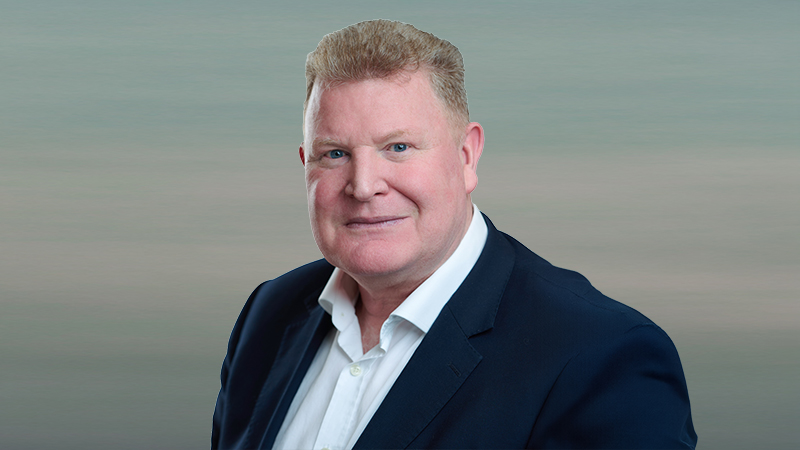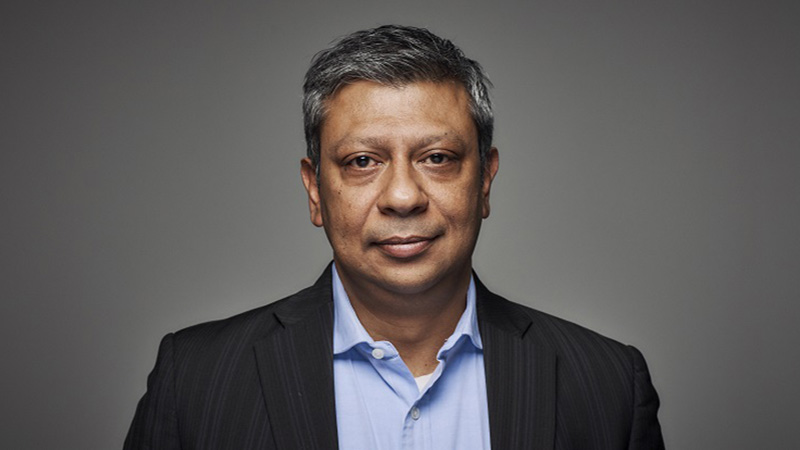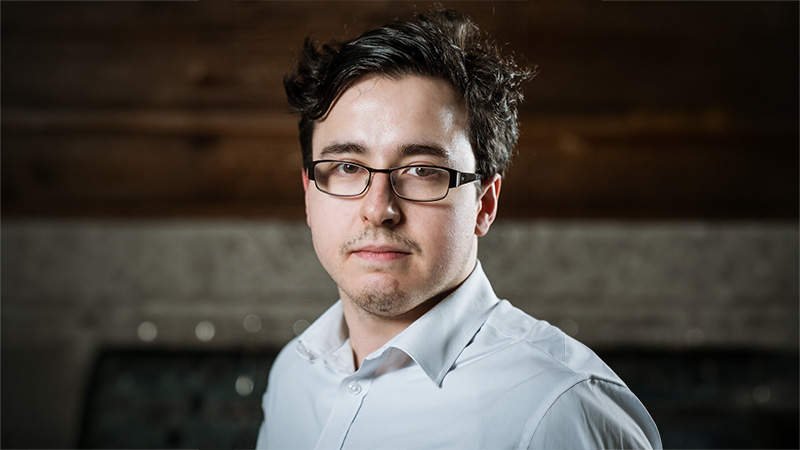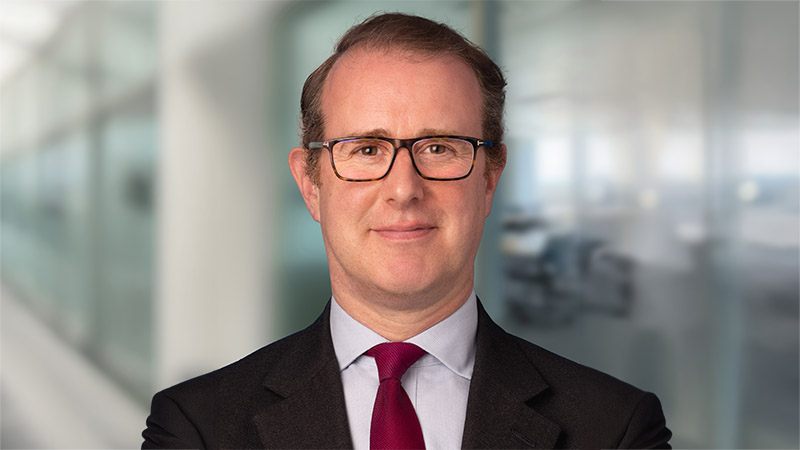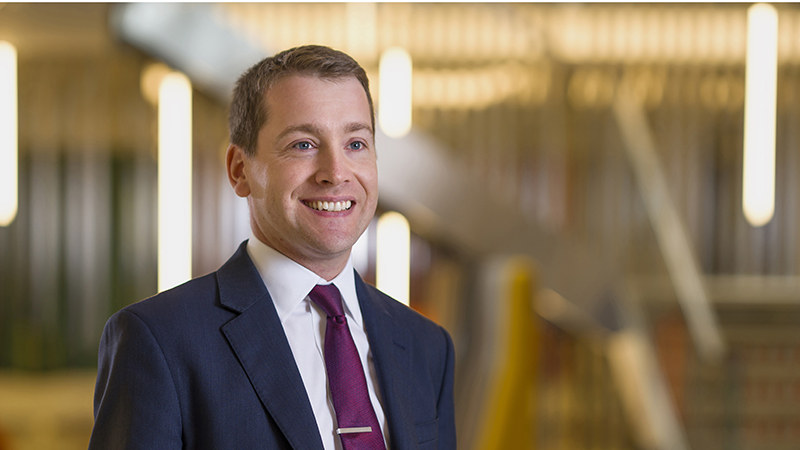




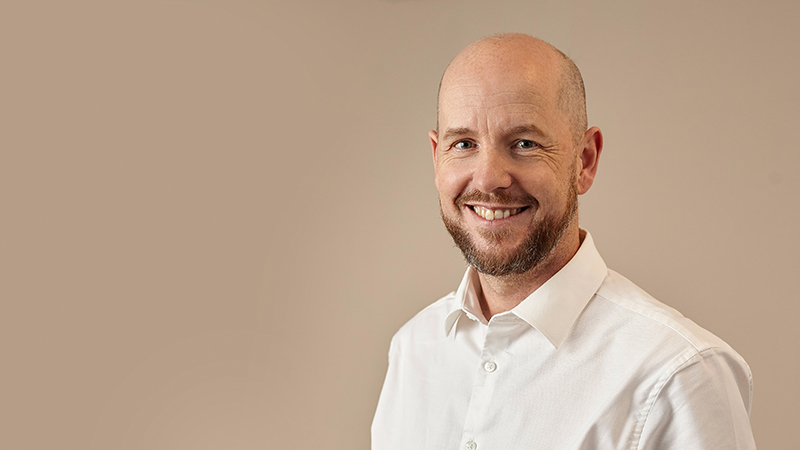
“Did I want to work in investing? Absolutely not. I happened into it,” TrinityBridge’s Matt Stanesby tells Portfolio Adviser. “I’m not sure I ever knew what I wanted to do. I knew that I really liked maths.”
Now the managing director and head of collectives at TrinityBridge, the engineering and mathematics graduate originally “flirted with the idea of being an RAF pilot”. However, his eyesight wasn’t good enough.
“I like logic. I don’t like pure maths – the airy-fairy stuff. For me, the›re needed to be a definitive answer. I was doing some work for Rolls-Royce as part of my thesis on aeronautics. That probably would have been the natural cause of events.”
However, as a result of Nottingham University’s ‘milk round’, Stanesby ended up interviewing for Mercer to become an actuary.
After moving across into the world of investment consultancy at the firm, he embarked on what has become a 37-year career in the sector, having spent more than 28 years at what is now called TrinityBridge.
Originally, Stanesby was an investment consultant at Aon, before it was purchased in 2007 by Close Brothers as its asset management arm. “We were a small team,” he says. “We were lifted up out of Aon on the Friday, and we turned up on the Monday in the Close Brothers’ offices, which were literally from one side of Liverpool Street to the other.”
Close Brothers Asset Management was then bought by Oaktree Capital Management last year, and shortly thereafter was renamed TrinityBridge.
Stanesby has been managing director at the firm ever since, as well as its head of collectives.
“There has been no real change for me on the fund selection front,” he says. “We’re a pretty small team. There are four of us on the active side, one on passives. We carry on doing what we’re doing. The hope is that [Oaktree Capital] can bring us a bit more scale.”
Fund manager meetings
In total, the team of four fund selectors – three of who live in London, one who resides in Bristol – conduct an average of 300 fund manager meetings per week.
“Ultimately, we spend a lot of time meeting managers, to try to really get under the skin of what the manager does. What drives them, what motivates them, all of that good stuff. Which I don’t think is very easy over [Microsoft] Teams,” he says.
“It is impossible over email. It is difficult with investment specialists, although they are fine as an introduction. That said, it depends who you’re talking to. If a US-based manager only comes over twice per year, I can either see an investment specialist or I can arrange a video call.
“There is definitely more use of video calls now than there has been previously. But I also understand the role of investment specialists [at fund manager meetings] because I get it – it’s pretty critical that the portfolio managers are actually managing the money.”
From a fund selector’s perspective, however, Stanesby values the importance of having a good relationship with the fund managers themselves, so that, in the case of a performance “wobble” (“and there is always a wobble”), he can remain comfortable that everything remains on track and according to plan.
Fund selection process
“I guess it’s much more qualitative-heavy”, he says. When asked whether this correlated with his need for a definitive answer while studying maths at university, Stanesby replies: “I know, I am an enigma.
“That being said, when I am in a fund manager meeting, I like to try to dissect what they are doing so I can really understand it. Sometimes, on the fund management side, they will come out of the office and say, ‘well that was an interesting meeting’.
“Despite what some people think, I am not doing it deliberately. If I don’t understand something, I really do want them to explain it to me so that I fully understand – that is the engineer in me.”
On the flipside, Stanesby says his co-portfolio manager, James Davies, operates differently and adopts a less mathematical approach.
“We’ll come out of a meeting, and either me or James will look at the other and say, ‘I bet you liked that fund, didn’t you? Because I know I hated it’.
“But when we are building a portfolio we both have to like the fund in order for it to earn a place.”
The team adopts a four-pillar approach to investing, centred around people, philosophy, process and performance. They focus mostly on the first ›three, given that performance is an outcome rather than a guide to future returns. More, Stanesby uses performance as a marker to check whether a fund’s behaviour is consistent with the manager’s stated philosophy and process.
Red flags and tough times
Red flags for Stanesby, when meeting a manager, include “people who don’t engage” and “people who are super smooth”.
“I don’t mind quirky,” he says. “Sometimes, these managers are not great presenters, but I am happy to sit there and talk about process. What I do mind is talking to a fund manager who is promising things which are too good to be true.
“But owning a fund is different from researching a fund. We have a core list of 120 funds that we are keeping track of. But it’s not until you actually own a fund that you live the ups and downs.”
For Stanesby and the team, the key is that a fund is performing as expected, rather than outperforming irrespective of market conditions (unless that is what it states on the tin).
“It’s been a tough time for active managers,” he says. “But in January of this year, I felt as though there was a broadening of the market. I kept saying, ‘active [investing] is going to work’.
“Then, the [US-Iran] war breaks out, and I’m not expecting the US to do well, but – go figure – it does.
“That was probably a flight to quality, towards dollar strength and where the market is large and liquid. At the same time, we have this AI narrative, then the problem becomes that [fund managers] are investing in half a dozen stocks.
“This is an almost impossible environment for an active manager, unless you just get lucky.”
While Stanesby himself specialises in active management, the team uses both active and passive vehicles across their portfolios.
“We run funds rather than MPS, so we can invest anywhere,” he explains. “We can support new launches. We can buy, and do buy, passives. We can buy investment trusts and we can buy unitised funds.
“Roughly 80% of what we buy is active, but there is a space for passives. Question number one for the fund manager is: ‘can you beat the passive equivalent in a sensible timeframe of three-to-five years? If the answer is ‘no’, we don’t need to do any more work on that fund.”
Dovetailing funds
Another key consideration for the team is to remain diversified in terms of style. While they will express a view as to whether, for example, value or growth will fare better in any given market, they express this as a ‘tilt’ rather than an all-out fund rotation.
“If I have three UK managers, they’re not three growth managers. I might have a small-cap manager, a value and a growth manager,” Stanesby says.
“I don’t think we make any heroic asset allocation calls. This is an evolutionary process. If I like the US, I might add 2-5%. I am not going to double my exposure.
“If I think about the last year, for example, we have moved to be more value-leaning in Europe and the UK, and we have started to do this a little more in the US. I could sit here and worry that the US market is expensive, or I could find fund managers outside of the US growth silo and tilt in that direction.”
In terms of fixed income, Stanesby prefers to hold a selection of flexible bond funds, rather than make targeted calls on quality, currency or duration.
“Flexible bond funds have been a great place to be. They’re very difficult to research because, by definition, they’re all different,” he explains.
“So again, I’m not going to try to be too clever. We essentially own four [flexible bond funds]. They’re all different from each other, and if three of the four are working, I’m a happy man.
Cost considerations
While Stanesby mostly uses active funds, there are several ways the team minimises costs across the portfolio, keeping their all-in fees for investors below 1%.
For instance, they are often successful in negotiating fees. They are also able to buy relatively new funds in which they receive a founder’s fee, and use ETFs and investment trusts where they achieve the same performance credentials but offer lower costs than their Oeic equivalents.
That being said, Stanesby says he becomes “a bit upset” by the industry’s “obsession with cost”. “It’s the wrong thing to be focusing on, I think you should focus on value,” he concludes.
“I don’t know if it’s because we don’t have enough time in the day, so we just focus on cost. But I would rather own a fund that’s going to give me 10% a year and I pay 1% than own a fund that gives me 3% a year and I pay 0.5%.
“It seems obvious to me, because it’s maths. But then, I love maths. I feel as though we’ve gone down a rabbit hole where it is all about being cheap.”
He adds: “We should think about value. We’ve tried to be as sensible as we can be, to get our fees down, but we’re still having to pay for active management. And I would still say, that I am happy to pay for the service I am getting.”
Biography
Matt Stanesby joined Close Brothers in 2007 and heads up the manager research team, which is responsible for the research, selection and monitoring of fund managers. He is also a portfolio manager for the managed and tactical select range of multi-asset funds. Stanesby started his career in the actuarial and investment consulting world, and worked within the life insurance, pensions and investment teams at Mercer and Aon.