





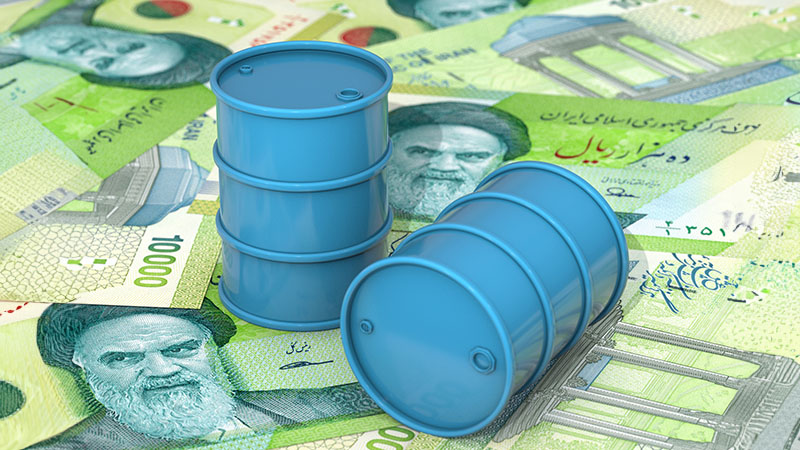




Investors are scrambling to reposition after the price of a barrel of oil surged past $100 due to the Iran-US-Israel war escalating further over the weekend.
Prices on Brent and WTI rose over 20% in a matter of hours after Israel bombed Iranian oil facilities and supply routes through the Strait of Hormuz ground to a virtual halt.
The initial move in the oil price a week ago from the mid 60s to around $80 when the war began had held relatively steady as investors banked on a contained and short conflict. Equity markets had largely looked past it.
Direct attacks on oil production infrastructure and indications the war could become protracted have changed the picture though.
Iran’s installation of Ali Khameini’s son, Motjaba, as leader also suggests there is no intention on its side to back down.
Investors have taken fright now, well aware that oil prices above $100 are highly inflationary, and not compatible with rate cuts or a healthy economy.
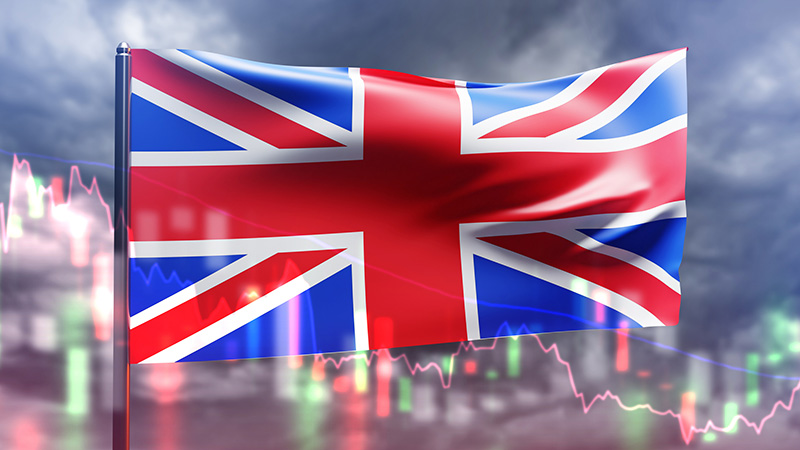
The FTSE 100 fell over 2% on Monday morning, before recovering some ground to sit 1.3% down at 10,151 points.
Futures prices point to similar falls in US markets when trading gets under way for the week, while Asian markets are faring even worse.
See also: IA: Investors back low-cost global and North America strategies in January
Susannah Streeter, chief investment strategist, Wealth Club said: “Panic has hit equity markets after oil prices rocketed as fears materialised about a big squeeze in global supplies.
“London’s FTSE 100 has opened sharply lower, after steep falls in Asia, with the Nikkei plummeting 5% and South Korea’s Kospi almost 6% lower, adding to deep losses last week.
“The oil market is clearly under distress as the key Strait of Hormuz, through which a quarter of crude supplies are usually transported, is impassable, facilities have come under attack, and big producers have cut production.
“The worsening situation in the Middle East has the potential to bring a toxic combination of shocks to economies. Inflation is set to rise sharply, given the spike in energy prices, which may lead central banks to keep interest rates higher for longer.”
Derren Nathan, head of equity research, Hargreaves Lansdown, added: “Save for the Vix, which measures volatility in the US market, investors in global stockmarkets are staring at red screens this morning after a weekend of intense hostilities in the Middle East.
“By virtue of their time zone, Asian markets were the first to take a step down in reaction to Monday morning’s oil price spike which at one point had climbed over 20%.
“Donald Trump’s been clear around his intention to drive regime change in Iran, and also that the succession of Ali Khamenei by his son Motjaba would be unacceptable.
“Motjaba Khameini’s appointment yesterday as the country’s supreme leader will do little to reassure markets that an end to the violence is in sight.”
“Oversupply in the global oil market has been a dominant theme in recent months, but a 70% production cut at Iraq’s three main oilfields, and a sharp fall in output from Kuwait could be followed by similar moves in the UAE and Saudia Arabia as storage reaches capacity.
“Until the Strait of Hormuz can be securely re-opened producers will be reticent to turn the taps back on, and even if that decision is made, there can be a significant lag until oil and gas wells return to full flow.”
See also: Calastone: Equity funds experience ninth month of consecutive outflows
Dan Coatsworth, head of markets at AJ Bell, said: “Tipping over the $100 a barrel level has major implications from a psychological and economical perspective.
“It significantly raises the chances of a sharp jump in inflation and interest rates shifting to a completely different path than the market had priced in only two weeks ago.
“Markets are now pointing towards a situation where UK interest rates could remain level for the rest of the year and potentially go up in 2027. That is radically different from recent expectations of more cuts this year.”