


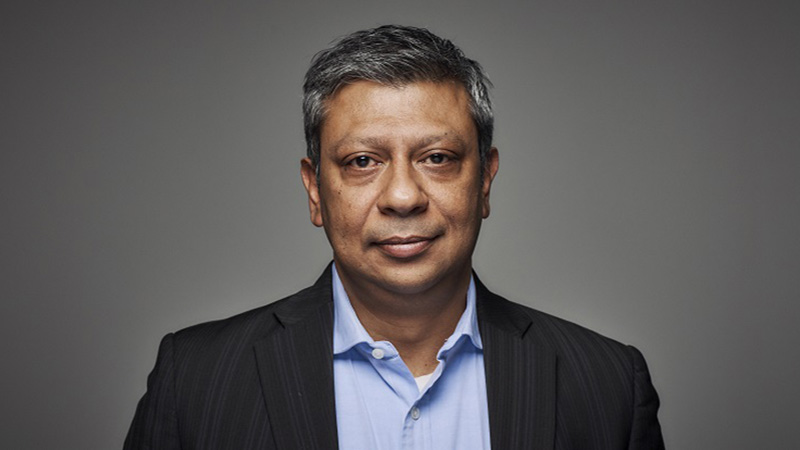
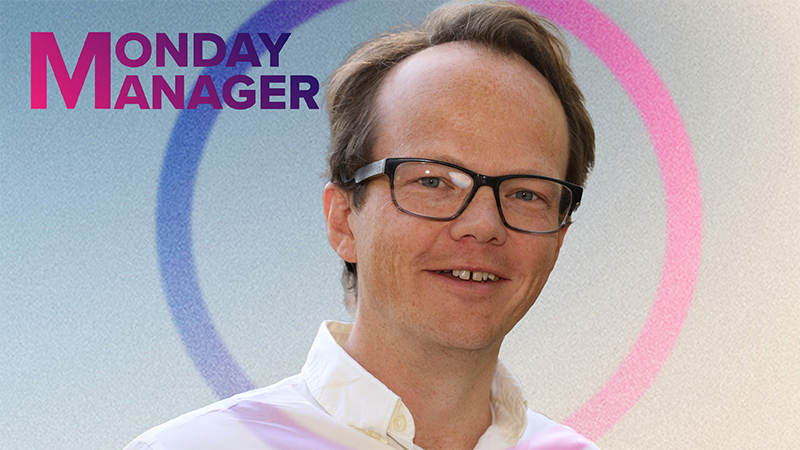



This week, for Portfolio Adviser’s Monday Manager series, Matthew Beddall, chief executive officer at Havelock London, discusses a leaking roof, investing in robust companies and why the very best fund managers need to “think for themselves”.
The Monday Manager series covers fund managers that have worked on their fund for over three years, and where fund assets are over £100m.
Havelock was launched in 2017. What have been the challenges of running a boutique fund firm since then? And highlights?
The challenge of launching and running a boutique firm is you have to wear many hats; which included arranging buckets under a leaking roof in our first office! We are, however, free of the bureaucracy of larger firms, and as we have grown we have outsource as much we can. Having limited resources forces you to think more carefully about how you use them, and this is especially true of our own time.
Although I can’t pretend that we have removed all distractions, the highlights for me are being able to spend most of my time thinking about investing and importantly having the freedom to do what I think is right for the long term.
Give us an overview of the WS Havelock Global Select fund. What is it trying to achieve and where does it sit in investment portfolios?
The fund is a benchmark-agnostic diversified value investing fund – what a mouthful! For us this doesn’t mean we are, necessarily, trying to buy the very “cheapest” companies, but that we think a good business only makes for a good investment at the right price. The freedom that our mandate gives us means that we are often investing in under-research mid-cap companies, and look to the longer term health of the business as opposed to an unhealthy focus on short-term earnings.
We want to own a portfolio of companies that will be robust in a range of scenarios, evidenced by the fund having made positive returns in every full calendar year that it has run. Our clients typically own the fund as a compliment to either active funds investing in more well-known companies or to passive funds that provide them with pure “beta” exposure.
How does the fund differ from other global equity funds in the peer group?
For a start, there are very few value investing funds in our global equity peer group. It has been a tough decade for value investors, and this is a long enough period that many value-managers have been either sacked or forced to invest in the more fashionable “growth” parts of the market.
See also: Richard de Lisle: What I have learned from 45 years of investing in US equities
When we look at global funds we typically see very similar top 10 holdings, with it being de-rigueur to own some of the magnificent seven companies. We haven’t ever invested in any of these companies, and would argue that our approach means we offer something genuinely different. We realised early on that as a small boutique we could never succeed by offering a “me-too” product and used our freedom from relative performance pressures to our advantage.
What was the best performing position of 2025? Do you still hold this?
Our best performing holding in 2025 was the gold mining company, Newmont. I have a long standing concern that large government debt’s have historically been brought back under control by inflationary policies, and as a result we own a number of investments with claims on scarce real assets.
Since the time of the Roman emperors (and almost certainly before) it has proven much easier to balance the books by slowly debasing your currency than by taxing your citizens. Prior to last year gold mining companies had generally seen their share prices lag a rising gold price, which meant that they looked cheap relative to a realistic estimate of their future cashflows.
This combination of looking both cheap relative to cashflows and owning a scarce resources, meant that it was a top 10 holding. We still own shares in the company, albeit we reduced the size of the holding, as the narrative in markets shifted to reflect our own views.
What was the worst performing position of 2025? Do you still hold this?
Our worst performing holding in 2025 was the underwear retailer, Victoria’s Secret. This, however, followed from it having been the top performing holding in 2024, and so we were giving back prior gains. The company had been pursuing a new marketing strategy that saw it lose popularity with its customers.
When we originally invested the company was a turnaround situation, under a new CEO with an impressive track record. We felt the investment case was underpinned by the value of the brand, and there was a realistic chance of the new CEO’s plan bearing fruit.
What started to become clear was that the company’s shares were subject to a high level of speculative activity, with an explosion in options trading that we suspect was driven by a combination of hedge funds and retail investors. We decided to sell the holding, in part because of a more cautious view on the success of the turnaround and in part because of the extent to which the share price was being driven by forces that we didn’t fully understand.
See also: Aviva Investors’ Saldanha: ‘Focus on what is in your control’
In the current market landscape, how is the fund positioned?
We do not attempt to make macro forecasts, and instead want to own a portfolio that will be robust in a wide range of scenarios. I am clearly concerned about events in Iran, which appear to further increase the probability that we see higher long-term inflation.
The fund is divided into three buckets, the first of which are scarce-asset holdings, such as Newmont, the second of which are “core” under-researched high quality businesses, and the third of which are special-situations. We went into 2026 owning several energy related businesses, which have been something of a shock absorber relative to our other holdings this year. We have also made several investments into niche software businesses this year, off the back of large falls in their share prices.
Our belief is these price falls have not correctly distinguished between those companies that are at risk of AI disruption, and those that are well insulated. I believe that this is a case of short-term market price moves presenting opportunities to invest in quality companies at attractive prices.
Are there any areas that you can share where you are researching but not yet invested?
An area of interest for me is the online marketplaces such as Autotrader and Rightmove, as they have seen their share prices fall because of a perceived threat of disruption from AI. My reading on these companies suggests they might not be so easily displaced, and like our recent software company investments, I can see it could be an area that could further strengthen our core holdings.
What’s your top tips for young fund managers starting their careers?
I think in the age of AI and a veritable firehouse of information in financial markets, thinking has become a rarefied skill. The very best fund managers look beyond the ends of their noses, and think for themselves. My advice would be to think carefully about how you spend your time, read widely, and allow yourself time to think.
Thinking allows you to ask better questions, and develop original insights that are away from the mainstream. Put differently, if you think like everyone else then don’t expect your performance to be anything other than average!