










The Federal Reserve has cut interest rates for the first time this year, but investment commentators have flagged continued concerns around the US economy and fears of stagflation creeping in.
The US central bank voted for a quarter point reduction in the Fed funds rate to a new range of between 4% to 4.25% on Wednesday (17 September) – the lowest level since last November – following months of pressure from president Donald Trump to cut rates.
But the pressure on the Fed to stimulate economic growth through rate cuts could have far-reaching implications.
“The immediate aim is clear: stimulate economic growth, boost equity markets, and lower financing costs for US firms,” commented Rob Agnew, head of Isio private office. “All else being equal, this should provide an uplift to asset valuations, which is positive for private capital and equity exposures. While markets expected a 25 basis points cut, the Fed’s dovish forward guidance could deliver a short-term boost.
“However, this strategy carries significant risks. Inflation is the obvious concern, but if growth fails to materialise – perhaps due to tariffs or trade wars slowing global growth – we could face stagflation, which is notoriously difficult to manage, as history in the 1970s shows.”
See also: UK Inflation picture ‘increasingly ugly’ as food prices surge
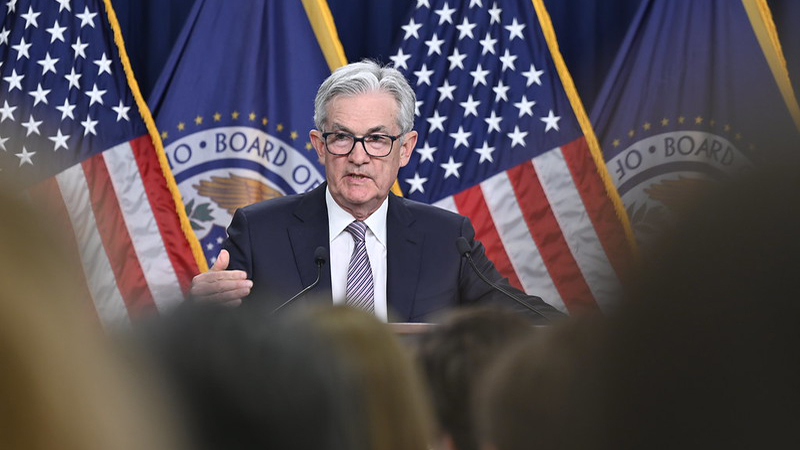
Fed chair Jerome Powell (pictured) also flagged continued inflation concerns at the press conference. He said while job gains have slowed and the downside risks to unemployment have risen, at the same time inflation has picked up.
“It is also possible that the inflationary effects could instead be more persistent, and that is a risk to be assessed and managed,” he said. “Our obligation is to ensure that a one-time increase in the price level does not become an ongoing inflation problem.”
Agnew also highlighted reducing base rates doesn’t automatically lower interest rates across the curve. “Inflation expectations and market risk perceptions could offset the cuts, meaning the benefits for corporate America – cheaper debt issuance – and for consumers, such as lower mortgage costs, may not materialise.
David Rees, head of global economics at Schroders, also flagged inflation concerns: “The Fed’s decision to press ahead with interest rate cuts at a time when the solid economy is close to full employment raises the risk of higher inflation becoming ingrained.”
He also predicted further rate cuts but added they might not go as far as the market has forecast. “We now think that the Fed will deliver another two 0.25% cuts by the end of 2025. But rates are unlikely to fall further from there, as solid growth drives a rebound in labour market activity and causes inflation to rise. As such, we continue to believe that market expectations of rates going below 3% are too aggressive.”
See also: Schroders’ David Rees: ‘US fiscal dynamics are dreadful’
The rate cut for September is unlikely to result in any let-up in pressure from Trump, and this is amid legal cases around the Committee’s members and independence.
“While the Fed has finally given in and cut rates for the first time since December, taking rates to the lowest level since late 2022, Trump will not yet be satisfied, commented Lindsay James, investment strategist at Quilter. “He has repeatedly called for far deeper cuts, and that pressure is unlikely to let up. He has made no secret of his want for a more compliant central bank, and today’s cut may just add fuel to that fire.
“While he has made his views clear, the Committee still remains majority independent. Governor Kugler’s hurriedly appointed replacement, Stephen Miran, is effectively on a four-month secondment from his role as a White House economic adviser and was the only member of the committee to vote for a larger 0.5% rate cut.
“Alongside Governors Bowman and Waller, appointed by the president in his first term, the three Trump appointees remain the minority on the 12 strong committee. However, should Governor Cook lose her legal case and subsequently her job, this independence may yet be called into question.
“Nonetheless, the monetary policy committee continues to stress its data-driven approach for now, and the prospect of resurgent inflation remains a risk. Core PCE inflation – the measure targeted by the Fed – has risen from 2.6% in April to 2.9% in July. Lower interest rates could serve to further stoke this, as could the still unclear impact from tariffs. Markets are currently pricing in another one to two quarter point cuts by year end, but only time will tell.”