







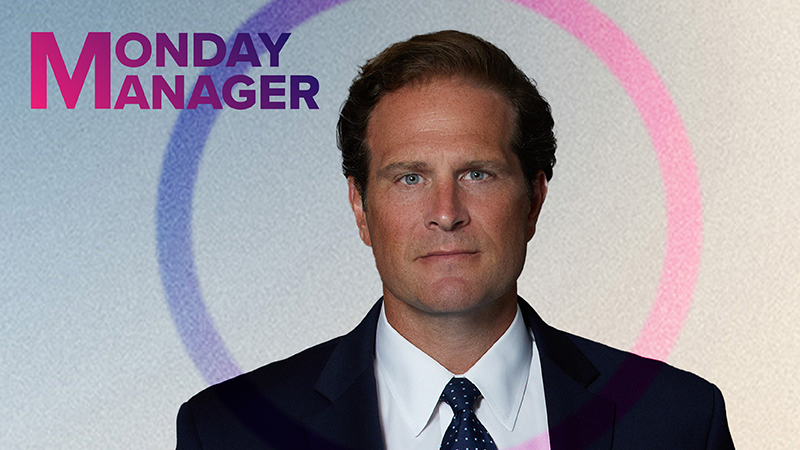

In this week’s Monday Manager, Cohen & Steers fund manager Vince Childers discusses the opportunity set in real assets and why investors may consider allocating to the sector as the world moves into an ‘era of scarcity’ characterised by periodic supply shocks and stagflationary threats.
See also: The Monday Manager series
You co-manage the Cohen & Steers Diversified Real Assets fund. What is the fund trying to achieve for investors?
Our message – and the portfolio’s design – is pretty straightforward. We’ve built what’s intended to be a long-term, strategic allocation solution for real assets investing. There are three major dimensions we’re focused on: first, inflation sensitivity. Our design should have a high probability of delivering above-average returns when inflation is surprising to the upside.
Second, we’ve built the portfolio to deliver diversification benefits to core stocks and bonds on average, over time regardless of whether inflation is a problem. And, finally, we think the strategy should live in an attractive place on the risk-return spectrum so that the long-term investor, experiencing multiple market and investment cycles, won’t face too much demand on their risk tolerance and can actually stay invested for the long haul.
See also: Cohen & Steers launches Short Duration Preferred Income fund
Real assets is a broad asset class – can you outline some of the areas the fund allocates to, and as a multi-strategy, what’s the allocation split between different types of real assets?
I typically think of the real assets universe as being comprised of a whole host of securities, industries, and sectors globally that can fit our research criteria for the asset class. But boiling it down, these investments can be grouped into what we call the core four real assets: global real estate, commodities, global listed infrastructure, and natural resource equities.
Our approach is slightly bar-belled, giving larger weights to real estate and commodities – the two real asset categories that tend to diversify each other best – and then kind of fill out the middle with resource equities and infrastructure.
Where are the best opportunities in real assets at the moment, in terms of asset types and geography?
Right now, we are focused squarely on relative value opportunities. At a high level, this has us overweight infrastructure and resource equities. We’re tactically most underweight commodities and are taking a bit of defensive posture given concerns about slowing growth and rising supply, especially in areas like crude oil.
More recently, given a long stretch of underperformance, REITs and global real estate more broadly has started to screen more attractive, so we’ve started reducing a long-held underweight. As for geography, I wouldn’t characterise us as having a strong tilt at the moment. The bulk of what we do really is bottom-up, fundamental analysis more than it is taking bigger macro views.
Considering the current path of interest rates, along with concerns over reflation in the coming years, what role can real assets play in portfolios?
When we look over a longer, secular horizon, let’s say the next five to 10 years, our base case is that we’re facing an environment that we’ve characterised as the ‘Era of Scarcity’. What we have in mind is something that’s more or less the opposite of the pre-Covid decade, where instead of a backdrop marred by periodic supply shocks and stagflationary threats, we had persistent disinflationary surprises.
Combining protectionist, anti-globalisation sentiment with what we see as a commodity underinvestment cycle in the rearview mirror, that’s a recipe for negative supply shocks, wage-price pressures and inflation risk. The potential fuel on the fire is that we may be entering a period of fiscal dominance – and it’s been a long, long time since we’ve lived in a world not defined by monetary policy independence.
Real assets have a well-established record of performing well in precisely these kinds of conditions. I think we got a taste of this in the first half of 2022, when the most recent inflation shock was peaking. It’s not crazy to think there’s more where that came from in the years ahead.
See also: Fund manager profile: Cohen & Steers’ Jason Yablon on the reit move
What characteristics do you look for when making a new investment?
As I said earlier, in our DNA we’re bottom-up, fundamental investors. And, in large part, I think that’s been the source of our success. We have a diverse set of portfolio managers and analysts driving our firm and this strategy, but I think it’s fair to say that everyone, in their respective spaces, keeps price – and value – front of mind.
Even in my seat, where I’m the one making more top-down allocation calls across the real assets, I’m anchoring my approach in value considerations, everything else is a matter of degrees difference from that anchor. We’re not afraid to be patient, to let themes play out. Do the research, build the conviction. Ultimately, do the hard work. And keep doing it.
What is the best piece of advice you have been given in your career?
My response to this one only makes more and more sense the older I get. It came to me through my own dad, but it’s also a piece of Warren Buffett’s advice: the most important decision you can make is who you choose to make your life partner. It’s not an additive decision, it’s multiplicative. Exponential. Career advice, sure. But it’s really life advice. It’s hard to achieve liftoff if you choose the wrong person – so choose well!
See also: Cohen & Steers’ Rosenlicht: Investors must look beyond alternative energy to smooth returns