




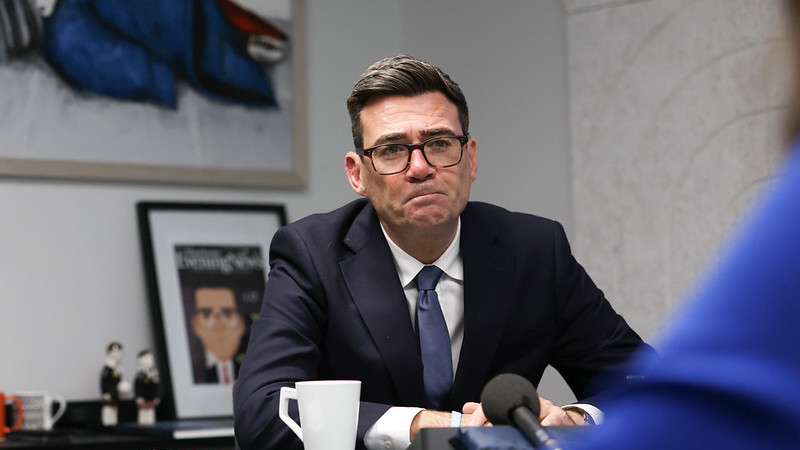




The investment industry has reacted to Prime Minister Andy Burnham’s plan to end the triple lock on the state pension with a mixture of pragmatic acceptance of the need for reform, and concern over the implications.
Burnham made the announcement as the centrepiece of his conference speech yesterday (29 September), and while not a total surprise, it was not something that was widely known in advance.
The issue has been kicked down the road by multiple prime ministers and chancellors over many years, but the condition of the public finances and Burnham’s own desire to see social care better funded has forced his hand.
For those in the investment and financial advice industries it raises a number of questions on how the needs of clients could change in the future.
Charlotte Kennedy, chartered financial planner at Rathbones, said: “The announcement highlights one of the biggest retirement challenges facing the UK: how to balance the cost of supporting an ageing population with the need to provide pension security for future retirees.
“Few would dispute the need for social care reform, but many will be asking what this means for the future value of the state pension. For future generations, the expectation is increasingly that individuals will need to take greater responsibility for funding both retirement and later-life care themselves.”
David Brooks, head of policy at consultancy Broadstone, said: “It is important to note that this will not challenge the principle of a rising state pension which will continue to increase every year.
“The prime minister has committed to raise the state pension by a minimum of 2.5% or the rate of inflation, annually, while also retaining a mechanism that would mean it also keeps pace with earnings.
“Significantly, this looks like a move towards a smoothed earnings link, rather than an annual ratchet, meaning that the state pension would remain anchored to its value relative to average earnings, helping to prevent one-off spikes from permanently compounding outsized hikes.
“It’s worth remembering what the state pension was designed to achieve; a foundation of retirement income and protection against poverty in later life. It was never intended to be the sole answer to retirement provision with the UK system built on a partnership between the state pension and private saving through workplace and personal pensions.”
See also: L&G appoints MD for European asset management business
Kate Smith, head of pensions at Aegon, added: “We welcome the prime minister’s decision to adjust the state pension triple lock, with a double lock from 2030.
“Aegon has long called for a serious conversation about how the state pension can remain affordable, sustainable, and fair across generations, so we’re pleased to see the prime minister leading the way and giving certainty for future state pension increases.
“Increases in earnings will still have a role to play, so pensioners are able to share in the relative prosperity and won’t lose out if UK earnings significantly outperform price increases.
“However, it’s unclear how this will work in practice. It could possibly involve an element of smoothing of earnings increases over a few years relative to the increases in prices and the 2.5% increase. We await the detail.”
See also: Fidelity launches OEIC version of Absolute Return Global Equity strategy
Rachel Vahey, head of public policy at AJ Bell, welcomed the move but noted the mismatch between Burnham’s aspiration and the fiscal reality.
“Burnham’s vision is laudable,” she said. “For too long governments have been side-stepping the thorny question of the future of social care and, importantly, who will foot that enormous bill.
“But the idea that scrapping the triple lock will bankroll social care on its own is simply fantasy.
“The triple lock has materially boosted the value of the state pension. Spending on the state pension is now £16bn per year higher than it would have been in the absence of the triple lock,” she continued. “But that increase has been built up over 15 years.
“Those spending increases are now baked into the state pension. Moving away from the triple lock is not about reversing those increases.”