






The most important thing to consider when investing is the people that are running the business, according to fund managers at Church House Investment Management.
The team has backed this theory with the Human Capital fund, a global equity strategy launched in May 2024 that targets decentralised, founder-influenced holding companies the managers said are overlooked in traditional equity allocations.
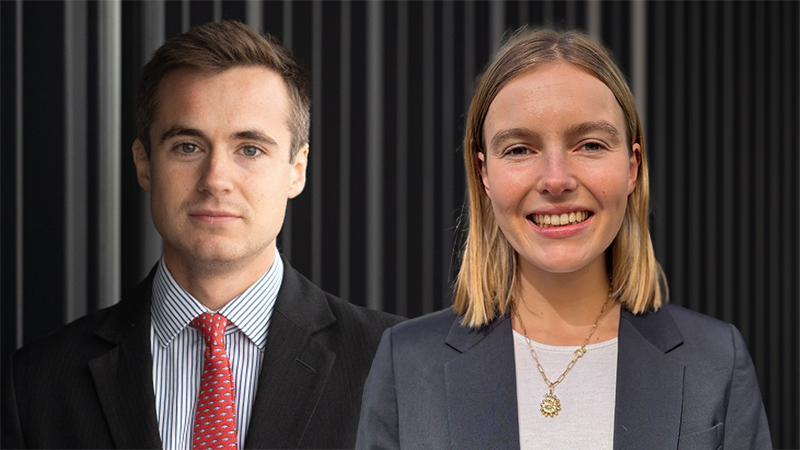
Speaking to Portfolio Adviser, fund manager and deputy CIO Fred Mahon, CFA, said the approach is built on the idea long-term compounding is most reliably found in businesses where leadership is stable, aligned and deeply embedded.
“The most important thing in investment isn’t your EPS figures or your AI strategy,” he said. “Those are outputs. What matters is who the people are, how hungry they are and whether their incentives are genuinely aligned with shareholders.”
See also: Track to the Future – with Church House’s Sam Liddle
Three key pillars
The portfolio currently holds 26 listed companies globally. Each holding, Mahon said, fits into three thematic criteria: entrepreneurial leadership, decentralised operating structures, and cash generation that supports ongoing acquisitions.
“We’re looking for management teams where success for the individual and success for the business are one and the same,” he said. “In many of these companies, the CEO has been there for their entire career.”
He added the decentralised structure found across the portfolio is a counterpoint to the traditional corporate hierarchy.
“All our companies act like mini Berkshire Hathaways,” he said referring the conglomerate led by highly regarded investor Warren Buffett. “The central teams are small and see themselves as a cost base, while value is created at the underlying businesses.”
Mahon said the acquisition component follows naturally from this model: “If you run a lean, decentralised group, you tend to generate cash. That cash can then be deployed into new businesses that extend the growth runway.”
Another commonality, he noted, is ownership: “In many cases the founders or founding families still hold meaningful stakes. That allows management to think long term in a way that is harder for large-cap corporates dominated by index funds.”
See also: Church House announces senior appointments
Top holding
German software holding company Chapters Group has grown into the fund’s largest position following strong performance over the past year.
Investment analyst Rose Taylor, who recently attended the company’s AGM, said Chapters operates a collection of mission-critical software businesses across Germany and Europe.
“They run systems used for fire safety alerts and public transport timetabling,” she said. “They’re involved in a lot of day-to-day infrastructure that people don’t notice but rely on.”
Taylor highlighted the role of the firm’s young CEO: “He’s about 34, very energetic and very involved. The team is small but clearly engaged.”
Mahon said the position remains a long-term holding: “We trim when valuations look stretched, but in this case the share price and business performance have moved together, so the multiple hasn’t expanded significantly.”
Private exposure
Several positions are based in Sweden, where Mahon said the decentralised ownership culture is well established. One example is Lifco, a family-controlled holding company that owns businesses in both dental distribution and demolition robotics.
“Lifco has compounded at 34% per year since listing without issuing equity,” he said. “Dentistry provides steady earnings while demolition is cyclical and high margin. The family ownership allows management to move capital between the two depending on the cycle.”
Although the fund consists entirely of listed equities, Mahon said investors effectively gain exposure to a wide base of privately held companies.
“Each listed holding owns a collection of private subsidiaries – anywhere from 10 to over 100,” he said. “So while investors are buying public shares, the underlying exposure includes hundreds of smaller private businesses, but with daily liquidity.”
Active share
Mahon said the fund sits within the global mid-cap growth universe and is highly differentiated from mainstream equity allocations.
“It’s a 99.9% active share portfolio,” he said. “We don’t hold the magnificent seven, and most of our top positions aren’t widely owned by other global funds.”
Taylor added: “The ownership structures mean we are investing in people who intend to stay and build for the long term, rather than managers who move frequently between roles.”
The strategy currently manages around £9m, with Mahon noting expected inflows in the near term.
“We have commitments that would increase the fund size by about 50%,” he said. “Early adopters have mainly been family offices and long-term investors.”