





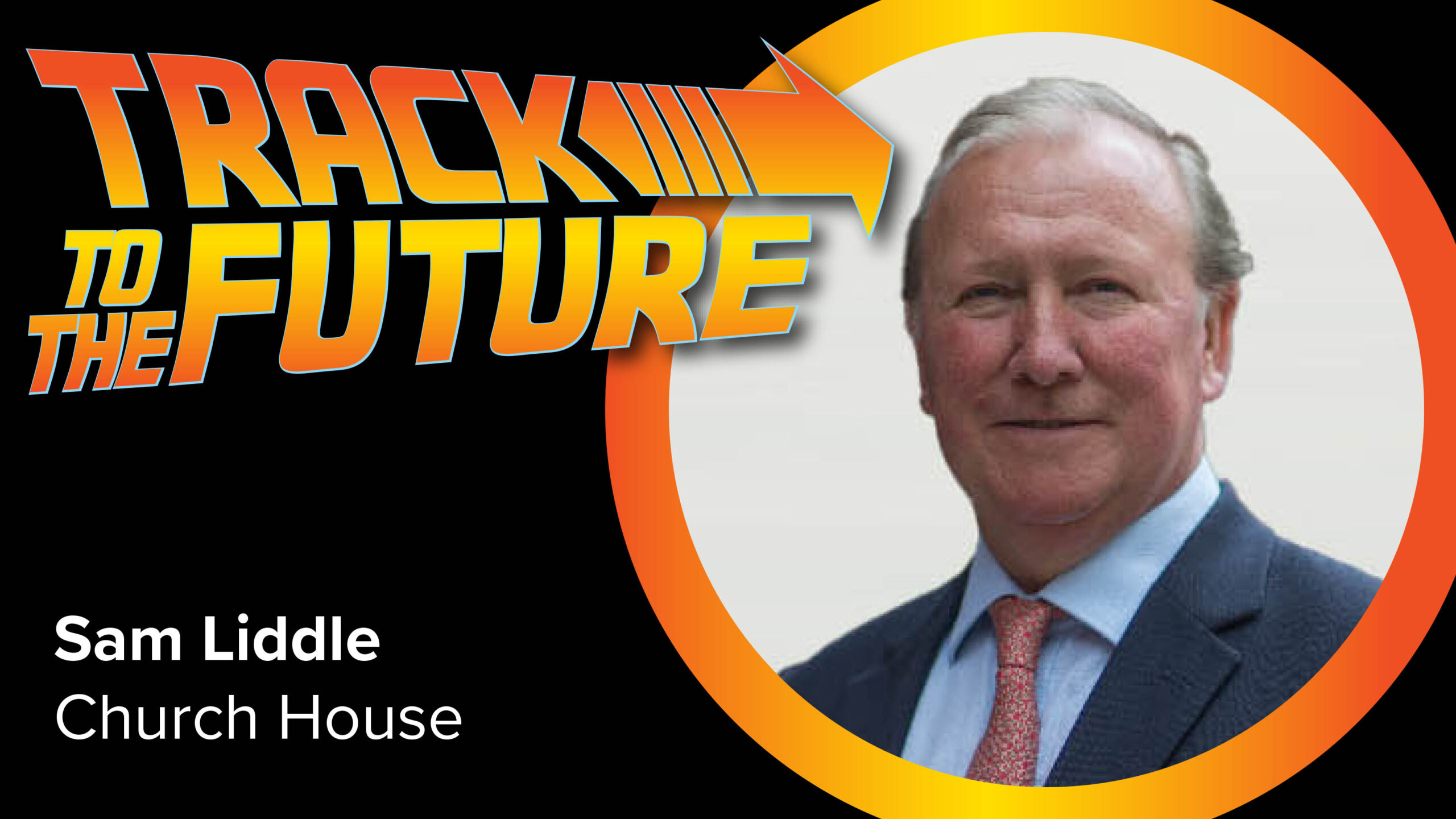

In the latest in our regular series, Track to the Future, fund group distribution bosses share their thinking on asset classes, strategies and working with clients over the next 12 months.
Here, Sam Liddle, sales director at Church House Investments, discusses locking in quality income streams and the importance of having a classic car in the garage and a well-stocked cellar!
Which particular asset classes and strategies do you anticipate your intermediary clients focusing this year and into next?
We hope and believe that like us, our clients will maintain a strong focus on investment grade sterling corporate bonds. With yields remaining attractive relative to recent years and credit fundamentals still broadly solid, these assets offer a compelling balance between income generation and capital preservation.
Portfolio managers are increasingly looking for ways to lock in quality income streams amid expectations of lower interest rate volatility and a gradual shift in monetary policy. Within this context, investment grade sterling corporate bonds are seen as a core allocation, particularly for portfolios seeking diversification away from equities while maintaining exposure to credit markets.
We’re also seeing growing interest in active duration management and credit selection strategies with advisers prioritising higher-quality issuers and selectively extending duration to capture potential gains as rates ease.
The Church House Investment Grade Fixed Interest fund, managed for the past 20 years by Jerry Wharton has a long record of providing investors with a balance of income generation, capital stability, and portfolio diversification through a portfolio of high-quality credits and active management of duration.
In equities, stock concentration risk in the S&P 500 index and hence in global equity indices suggests the focus will shift to strategies that offer exposure to high-quality compounder businesses capable of delivering sustainable growth through disciplined capital allocation and long-term value creation.
We expect strong interest in the type of companies that make up our Human Capital fund, which targets decentralised, highly acquisitive companies led by proven management teams with a demonstrated ability to reinvest cash flows effectively. These businesses tend to compound earnings over time while maintaining operational agility and resilience across market cycles.
With 100% active share against global equity indices, the strategy represents a truly active, high-conviction approach, offering differentiated exposure beyond benchmark-heavy portfolios. As intermediaries seek to capture genuine alpha in a more selective equity environment, we see this type of active global compounder strategy as increasingly central to long-term allocation decisions.
See also: Church House announces senior appointments
Should end-investors – and, by association, asset managers – be thinking beyond equity and bond investments? Towards what?
Absolutely! Investors should have a classic car in the garage and a well-stocked cellar! Research shows that classic cars in the UK have delivered strong price growth in the region of 185% over the last decade. The growth hasn’t just been in high-end models; more affordable classic cars (under £15,000) have also more than doubled in value. So why not own a classic, although maybe not a Ferrari, (they’re driven by men in tight white jeans with cappuccino stains on their moustaches) but an Aston Martin – one and a half tons of badly assembled metal hurtling down a motorway at 150mph is an enjoyable experience especially while it increases in value.
Although the past couple of years have been tougher with price declines in major fine wine segments, over 25 years, fine wine as an asset class has delivered compound annual growth rates of 10-12%.
Fine wine tends to have low correlation with equities and bonds, showing less volatility because of lower speculation and the fact that many bottles are held long-term, not traded frequently.
The best returns are derived from top-quality, investment grade wines from well-known chateaux, good vintages, and with good provenance, held over long periods.
And of course, if times get tough, investors can turn their illiquid asset into an enjoyable liquid asset.
To what extent do private assets and markets fit into your thinking? What are the current pros and cons for investors?
The pros: potential for higher returns, diversification benefits, access to unique opportunities particularly early-stage innovation, and the cons: illiquidity, high minimum investments, complex valuations (not marked-to-market) are well-known.
In the UK, the dearth of IPOs and the reduction in the size of our AIM and Smaller Companies indices is driving the demand for easier access to private assets, particularly private equity from regulated, daily dealing funds.
The Church House Human Capital fund invests in a focused portfolio of globally listed holding companies that are highly acquisitive and operate a decentralised business model. Often the acquisitions are of early stage, unlisted companies so the holding companies provide financial backing in the manner of a private equity fund but with a longer-term growth strategy.
The management of the acquired businesses retain control – as one director put it, it’s like selling your car one day and being given the keys back the next.
By investing in these holding companies, we are effectively providing access to portfolios of unlisted, or private assets through a daily dealing investment fund.
Given client and regulatory pressure on charges, how is your business delivering value for money to intermediaries and end-clients?
The core business activity of Church House Investments is discretionary management of private client, trust, charity, and pension fund portfolios. The range of seven funds that we offer were launched to be the building blocks of our own client portfolios, not to populate IA sectors, and some of our funds are still not open to external investors.
The connection with our clients invested in our funds through our discretionary services keeps our fund managers focussed on the fact that the money they manage belongs to real people and they want to see it rise in value.
Intermediaries investing in the Church House funds benefit from this strong focus on delivering value for our clients, rather than being another asset-gathering, marketing-driven fund group.
See also: Covered: Something’s brewing in UK equities
How much of your distribution is currently oriented towards climate change, net zero, biodiversity and other segments of sustainable investing? How do you see this approach to investing evolving?
We don’t manage Article 9 funds but we are signatories to The Stewardship Code and our fund managers do consider carefully the ESG issues of every investment they make.
In fact, the CH Tenax Multi-Asset Strategy fund and the CH UK Equity Growth fund have the best ESG rating available from Morningstar, and the CH Investment Grade Fixed Interest Fund has the second highest rating.
This doesn’t make them ESG funds so we don’t market them as such, but it does show the consideration given by our fund managers to these factors.
How are you now balancing face-to-face and virtual distribution? In a similar vein, how are you balancing working from home and in the office?
As a company, we all much prefer to meet our clients face-to-face. I know there’s plenty of data available online to fund buyers and some may not feel the need to form a relationship with individual fund managers or fund groups, but I spent many years managing funds of funds and feel strongly that those relationships were invaluable for gaining insights into the fund manager’s thinking and style of management.
More importantly, this is still a people business and in the same way that intermediaries must know their client, so must we know them, and they know us.
Virtual distribution has its place but we prefer to use it to trigger interest or provide support, while always offering face-to-face fund manager meetings to all existing and potential investors in our funds.
See also: Church House hires client director
What do you do outside of work?
I seem to remember this was one of those trick questions in interviews; if you said too much, the potential employer might worry that they would never see you, and if you said too little, they might think you’re boring.
I’m sport-mad and always have been, although these days more as a spectator. I was introduced to fly fishing many moons ago as a good thing to do in the years between playing cricket and death.
Cricket ended with two broken toes and a consoling arm around my shoulder from a teammate who said, “I think Father Time is ushering you to the pavilion for tea and cakes,” since when fishing has become my passion.
Time on the river is now happily interspersed with time with my grandchildren; catch and release being appropriate to them as well.
What is the most extraordinary thing you have seen in your life?
I’m probably supposed to say something about the birth of my children but really, Chelsea winning the Champions League in 2012 tops everything!
Looking a little further ahead, in what ways do you see the asset management sector evolving over the next few years?
I really haven’t a clue, but it worries me that the range of products and services offered by the regulated industry has become boring; ‘me too’ DFMs and MPSs, with an emphasis on risk ratings tend to foster mediocrity and must seem deadly dull to a younger generation of investors.
It’ll never happen but what I’d like to see is a return of the stockbroker (probably called Reggie and sporting a stiff collar and red braces) who, over a good lunch with plenty of deep red could tell you to, “tuck a few of these away; they’re a certain 10-bagger!”