






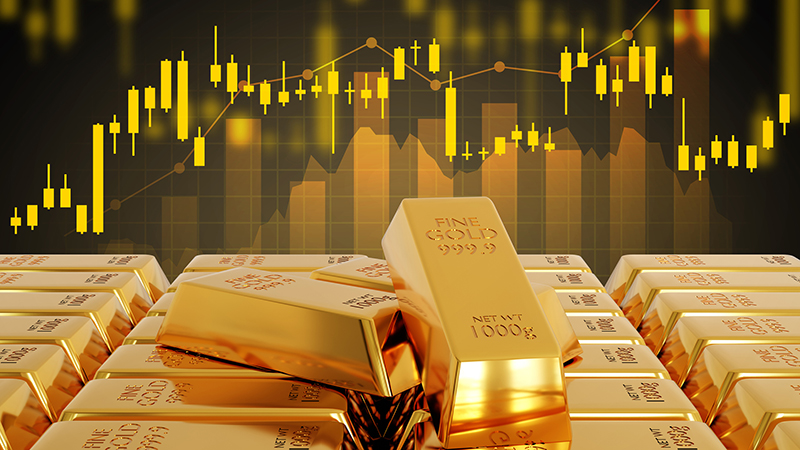

Gold no longer “ticks the boxes” as a safe haven asset, according to AJ Bell and other market experts, who have started to pivot away from precious metals despite extraordinary performances.
The yellow metal dominated markets in 2025, benefiting from concerns over geopolitical tensions and a weaker dollar. As a result, gold and silver ended the year at all-time highs ($4,500 per ounce and $71 per ounce, respectively).
Precious metals got off to a strong start in 2026 as well, with the gold spot peaking at more than $5,500 per ounce last month as tensions rose over US president Trump’s ambitions to take Greenland and demand for silver in electrical equipment increased. As a result, precious metal funds still dominated the list of the best-performing portfolios in January.
However, for some commentators, cracks in the narrative have started to appear.
See also: Best and worst-performing IA funds in January
Why precious metals do not ‘tick the boxes‘
Indeed, AJ Bell are avoiding direct exposure to precious metals in its portfolios according to Ian Aylward, head of investment partnerships at the firm.
“[It] doesn’t tick the boxes of a typical ‘safe haven’ asset from our perspective,” due to several structural weaknesses, Aylward said.
For example, it has been inconsistent for a defensive asset, he said. During periods such as Covid-19 as well as during the 2008 global financial crisis, gold sold off with risk assets as investors tried to raise cash.
“This behaviour shows gold may act as a second‑phase crisis hedge rather than a reliable first‑line risk reducer, weakening its defensive appeal.”
On top of this, traditional relationships between gold and other assets have started to become untethered, the AJ Bell expert said.
Gold usually has an inverse relationship with real yields, which are the yield on bonds after inflation. As bond returns rise, the “opportunity cost” of moving out of bonds into gold increases.
But despite London Stock Exchange Group (LSEG) Refinitiv data showing that real yields on US bonds have risen by more than 2% since 2021, the price of gold shot up by more than $2,000, as shown in the chart below.
Aylward said: “The current divergence is stark and suggests that the price is stretched and vulnerable to correction.”
Additionally, it’s much more volatile than its safe-haven reputation suggests. According to data from LSEG Refinitiv, the yellow metal has an annualised volatility of 17%, more than double US treasuries (6%) and higher than US equities (15%), Aylward said.
“This limits its reliability for drawdown protection in diversified portfolios. Other precious metals, such as silver, can often be even more volatile than gold,” he said.
Indeed, investors experienced some of this volatility last week. Following Kevin Warsh’s nomination as Federal Reserve chair, gold slid by 11%, while silver fell by 36%.
See also: The hawk-turned-dove: Trump nominates Warsh as Fed chair
As Nitesh Shah, head of commodities and macroeconomic research at WisdomTree, said: “These are price swings that would typically be expected over the course of a year — not within a single trading day”.
He added that based on Bloomberg data, these are the highest one-day declines in gold and silver since at least 1994.
“The extreme price moves that we saw on 30th January, after the portfolios had been repositioned, are not an indicator of a healthy investment market,” added Stuart Clark, portfolio manager on the Quilter WealthSelect Managed Portfolio range.
Despite the allocation to precious metals performing well in recent years, Quilter has opted to rebalance its portfolio. Profits have been pulled from gold and silver and added to their US equity funds, such as Quilter US Equity Growth fund, iShares North American Index fund and iShares US Equity ESG Screened and Optimised Index.
For José Torres, senior economist at Interactive Brokers, gold and silver could continue to slide, even after the recent decline.
The precious metal rally was initially founded on fundamentals and “relatively accommodative” buying from central banks, as well as a driving theme of “Sell America”, which led to a “ferocious rally.”
“Since then, however, the red-hot advance has become more speculative, and prices have climbed especially fast without much justification, potentially setting the stage for a painful disappointment for those who bought at the top,” Torres said.
With the return of the “buy America” sentiment, gold and silver are “likely to decline further” from here, he concluded.