








Experts from Natixis Investment Management and its subsidiaries have been unable to agree on whether recent dollar strength can be sustained long-term, Portfolio Adviser has found.
The dollar has risen in recent weeks as conflict in Iran sent shockwaves through financial markets, with the euro and pound sliding to $1.13 and $1.33, respectively, versus the dollar.
This is a reversal of fortunes compared with 2025, when the dollar declined amid concerns about excessive government spending, fiscal policy and government debt. However, following the news today (23 March) that US president Donald Trump is having productive talks with Iran on a ceasefire, volatility in the US currency may increase from here.
See also: Oil spikes, equities slide and ‘flight to safety’ sends dollar up as war returns to the Middle East
For François Collet, CIO at DNCA Investments (a subsidiary of Natixis IM), the recent dollar strength may not last.
“I think de-dollarisation could come back as a topic, and I wouldn’t be surprised to see the dollar lower before the end of the year,” he said during a panel at the recent Natixis Thought Leadership Summit.
The dollar still has major headwinds which are limiting its ability to sustain a long-term rally, according to Collet. For example, he highlighted the twin deficit of trade and fiscal debt as one of the structural headwinds for the currency this year.
On top of this, “I look at relative valuations, and I think USD looks expensive in a lot of ways, particularly versus Asian peers.”
These currencies have been struggling recently, owing to being commodity importers, he conceded. However, Collet argued it will be difficult for central banks to hike rates this year, which could ultimately push the dollar lower compared to other currencies.
“I don’t think it’s true that there’s no alternative to the dollar,” he said. “Gold is an alternative.”
He argued this has been seen in the past few years, with central banks increasing their reserves of gold significantly and pivoting away from US treasuries in the process.
According to data from the World Gold Council, central banks bought roughly 863.3 tonnes of the yellow metal last year. This builds on the 1,000 tonnes purchased by central banks in each of 2022, 2023 and 2024.
“People won’t pay for oil in gold clearly, but as a store of value, I think it can clearly reappreciate from here.”
“For these reasons, I’d say I’m more bearish on the dollar this year.”
He is not the only expert to argue the rise of gold and the fall of the dollar could have further to run.
Nikos Tzabouras, senior market analyst at multi-asset trading platform Tradu, said: “Macroeconomic headwinds, geopolitical tensions and ballooning deficits remain powerful drivers of gold demand, while continuing to fuel de-dollarisation and currency debasement trends.”
See also: Schroders: Is gold the new dollar?
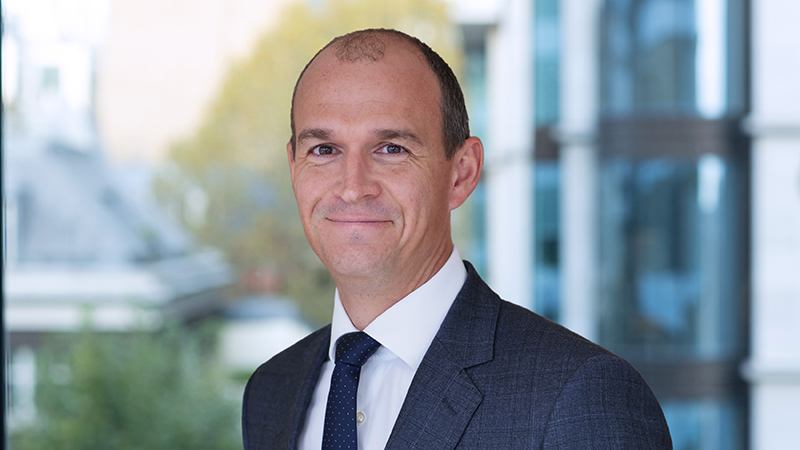
But Mabrouk Chetouane, head of global market strategy at Natixis IM, disagreed with Collet at the recent Natixis summit.
Chetouane expressed doubts about the rally in gold, which he said was fine as a store of value but “isn’t enough” as a portfolio diversifier and cannot be used for global trade.
On top of this, he noted twin deficits are an “old story”, but despite existing for years, the dollar has never “structurally depreciated” to any real extent.
He predicted the dollar settling at a level of around 1.15/1.17 compared with the euro is a “decent range” for the rest of the year, and investors who believed it could go to below 1.20 had the wrong idea.
“If you’re expecting a substantial depreciation, I think that’s totally wrong,” he argued. “There is no real alternative to the dollar.”
See also: Downside risks loom for the US dollar
“You just need to go back to basics. If I have money, cryptocurrency, gold, the yen, or so on, what’s the best way to trade with someone, even during a conflict? It’s in dollars,” he said.
On top of this, the dollar is enjoying several tailwinds this year, particularly in a period where macro circumstances have become increasingly polarised, he added.
“If you think about the gap in time between conflicts in today’s world, it’s crazy how short it has become. We’re in a market with much more conflict; we’ve had Russia–Ukraine, US-Iran, what’s next? China–Taiwan?”
This, he explained, was more like the market environment of the 1970’s when the world was divided into “two blocs” and volatility was much more frequent as a result.
In these periods of increased volatility, the dollar’s “political premium” becomes more apparent, as investors lose their risk appetite and return to traditional safe-haven assets, Chetouane said.
However, he noted that there was one “very important” risk to the dollar this year: the upcoming US mid-term elections.
“If you look at current probabilities, Trump is about to lose the two chambers, and if this takes place, you cannot predict the reactions of the currency.”
This could result in further concerns about the US economy and the currency, prompting a much greater decline in the dollar, he conceded.