

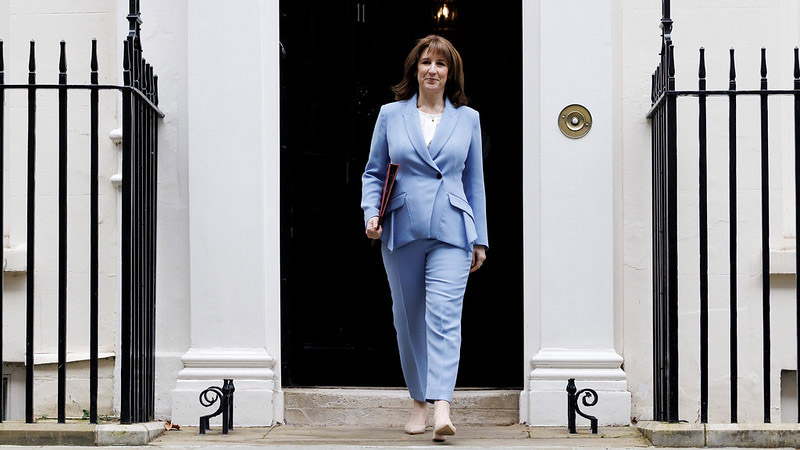







Chancellor Rachel Reeves told the House of Commons the UK economy is forecast to grow by just 1.1% this year in her Spring Statement.
The OBR has determined ‘near-term cyclical weakness’ now means real GDP growth will slow from 1.4% last year, before averaging a tepid 1.6% a year between 2027 and 2030.
On the positive side, the Bank of England should have more scope to support the economy through rate cuts as inflation is now forecast to fall to its 2% target in ‘late 2026’, thanks to a loosening labour market and falling energy and food prices.
Reeves also told her colleagues her fiscal headroom relative to the government’s balanced budget rule has increased by £2bn to £23.6bn.
As had been heavily briefed out by the Treasury in advance, changes to taxation or other major announcements were conspicuous by their absence from Reeves’ speech.
The chancellor used much of the time to talk up her government’s handling of the economy and criticise the Conservatives’ record.
There was little discussion of the possible implications of the war in the Middle East on energy costs and inflation. Virtually all of the work the OBR has done would have been completed before Saturday morning’s bombings began.
Grant Slade, economist at Morningstar, said: “As anticipated, the UK chancellor made no major changes to tax or spending policies in her Spring Statement.
“The downgrade to the near-term growth outlook is an unsurprising move, given the economy slowed in the fourth quarter of 2025 with the OBR’s 2026 growth outlook now aligning more closely with consensus growth expectations for the economy in 2026 of about 1%.”
Dan Kemp, CEO of Portfolio Thinking, said: “With the FTSE under severe pressure and gilts vulnerable to stagflation fears this morning, the Spring Statement is largely political theatre.
“Investors shouldn’t mistake fiscal tinkering for a fundamental market shift; the OBR’s projections are point estimates for a complex adaptive system and should not be mistaken for certainties.
“The fundamental case for UK equities remains anchored in their significant valuation discount to global peers, a margin of safety far more durable than Rachel Reeves’ fiscal headroom.”
Susannah Streeter, chief investment strategist at Wealth Club, added: “The chancellor was trying to project a ‘keep calm and carry on’ message, but market turmoil continued during her speech, with UK borrowing costs having shot up and London’s FTSE 100 deep in the red, staying around 2.6% lower.
“Although there was a nod to the current turbulence, the forecasts don’t take into account the rapidly developing situation in the Middle East. So even though Rachel Reeves championed forecasts of a further fall in inflation, there’s a clear and present danger of the price spiral taking off again due to escalating conflict with Iran.”
Andrew Zanelli, head of technical engagement at Aberdeen Adviser, said: “It’s a case of no news is good news today. Advisers and their clients will breathe a sigh of relief that the much anticipated ‘boring budget’ turned out to be just that as they continue to work through what last year’s Autumn Budget means for them.
“With pensions being brought into the IHT scope from April 2027 against a backdrop of an IHT nil rate band frozen since 2009, rising property values and IHT receipts, we’re hearing in our meetings with advisers they are getting significant numbers of new client enquiries, especially on IHT planning as many people begin to realise they’ll be impacted.
Anna Macdonald, investment manager at Aubrey Capital Management, added: “My view is that Reeves was hoping to deliver a ‘nothing to see here’ kind of statement, as she has promised to hold just one fiscal event per year now, which will be the Budget.
“Strong tax revenues and sufficient headroom from the November Budget, have meant that borrowing costs had been trending down recently, but given the escalation in the Middle East, yields are ticking up.
“Energy prices could impact inflation in the coming weeks and months which will limit the opportunities for further rate cuts, which would boost the UK economy.”