








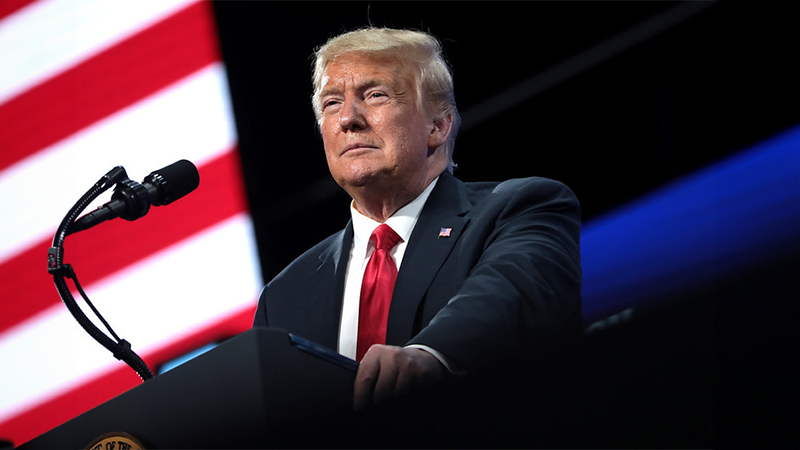

Stockmarkets have dipped following US president Donald Trump’s announcement of tariffs on Western European nations over the weekend.
Trump said the tariff threat is aimed at countries opposed to his plan to take over Greenland, which includes the UK.
The US president also said he would impose 10% tariffs on Denmark, Norway, Sweden, France, Germany, the Netherlands, and Finland, by 1 February, rising to 25% by 1 June.
By 11:45am, the FTSE 100 was down 0.55%, while the DAX fell 1.37% since this morning’s open.
S&P 500 futures are also down 1.15%.
“Once again it feels like the world, and thus financial markets, are beholden to the thought process of Donald Trump,” said Amisha Chohan, head of equity research at Quilter Cheviot.
“His decision on what to do about Greenland, and more importantly the reaction from European allies, will decide how markets react. For now, he has slapped modest tariffs on those supposed allies with the threat that a trade war could escalate from here.”
She added: “Ultimately, volatility is part and parcel of investing and of financial markets. Riding any potential dips is the best strategy anyone can do during such periods, alongside topping up their pots if they have the financial means and ensuring they are not overexposed to one area of the market that is likely to be hit hard by Donald Trump’s actions.”
See also: UK economy returns to growth despite November Budget jitters
Trump’s announcement comes ahead of the US Supreme Court’s ruling on the legality of his tariffs policy, which is expected tomorrow.
“For markets, the potential news that Trump’s tariffs are not admissible would bring another fresh source of volatility and uncertainty,” said Joshua Mahony, chief markets analyst at Scope Markets.
Defence names such as BAE Systems and Rheinmetall are up in early trading, with Europe increasingly at risk of a withdrawal of US military support.
“Even in the case of a positive resolution to this crisis, Europe will know that the US military partnership is no longer something that can be relied upon to stand the test of time,” added Mahony. “For a continent struggling to deal with debt, the potential ramp-up in defence spending in Europe adds further fuel to the fire for those concerned around fiscal sustainability and potential currency devaluation.
“However, for those prominent defence stocks in Europe, there could be a new source of demand coming from the likes of Canada and other allies that no longer view the US as a reliable partner.”