




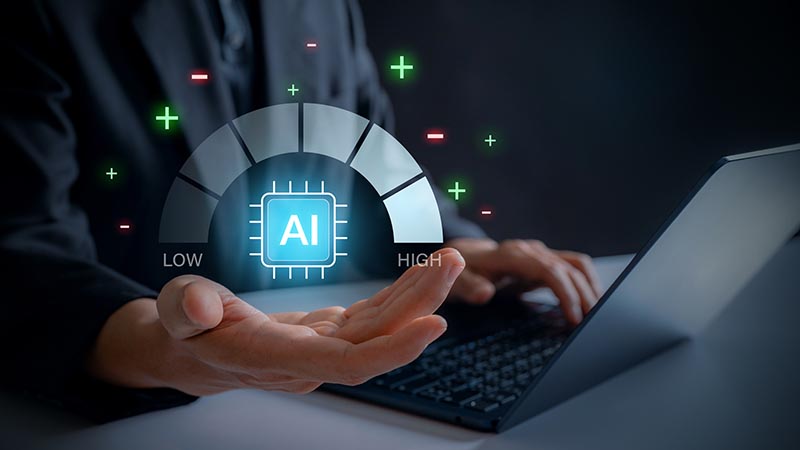

Investment in AI has become a top priority for asset managers and private capital CEOs, but there is still a gap between investment and impact, according to KPMG research.
The KPMG Global Private Capital and Asset Management CEO Outlook surveyed 1,400 CEOs across financial advisory businesses, wealth management, private capital, alternatives and other financial institutions to identify their biggest upcoming priorities.
Roughly 83% of respondents viewed AI as a top investment priority for the next three years, an uptick of 17% compared to 2025’s version of the survey.
However, just three per cent said it was fundamentally transforming operations currently. Around half of the respondents said the current impact of Agentic AI on their operations was “moderate and limited to targeted use cases.”
Additionally, while most CEOs (71%) expect a return on their AI investment within one to three years, 17% believed it could take longer.
David Neuenhaus, global sector head of private capital and asset management, KPMG International, said: “Firms now need to move from targeted applications to AI that can deliver at scale, with measurable impact on how the business operates and grows.
“That can ultimately determine whether today’s investment translates into lasting value.”
See also: Rathbones: UK fund selectors eyeing up emerging markets
However, firms identified concerns as AI investment started to scale. One was workforce skills, with more than 60% of CEOs identifying the skill gap as one of the major challenges for the next few years.
Another was cybersecurity, with 40% of CEOs identifying data readiness and quality as a major challenge, while 63% increased their focus on internal data control.
A further 82% of respondents believed cybercrime would be one of the biggest threats to company prosperity in the next three years. Close to half regarded cybersecurity as very or mostly challenging to further AI implementation.
That said, 35% said improved threat detection and security was among the top benefits of AI implementation.
Gavin Geminder, global private capital leader, KPMG International, added: “As firms move faster on AI, cyber resilience becomes fundamental to how quickly and confidently they can innovate.
The firms that treat cyber as an enabler of growth, rather than simply a risk to manage, will be better positioned to scale AI and capture its value.”
See also:Asset managers to expand AI use for decision-making and data collection