
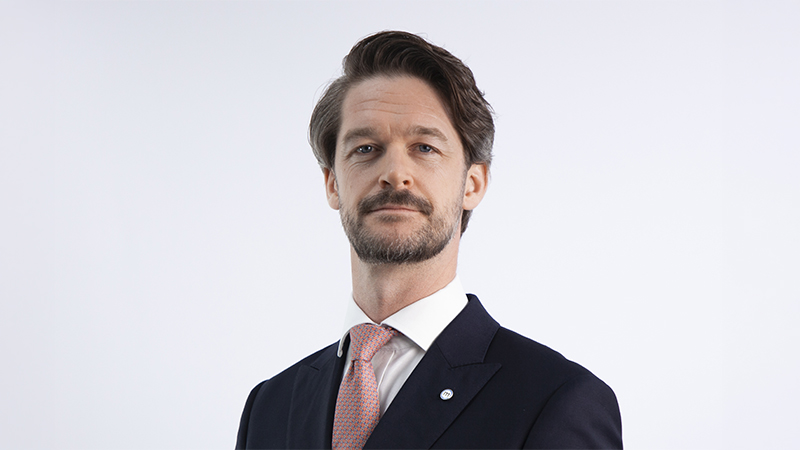







When Selina Tyler joined Jupiter as head of UK seven months ago, she arrived with almost two decades of experience working with UK clients and found a firm, she says, whose identity, heritage and ambitions aligned closely with her own.
Having worked in distribution roles at Federated Hermes, Mirabaud Asset Management and Lombard Odier Investment Management, Tyler felt moving to Jupiter would work with her experience dealing with UK clients, but also complement Jupiter’s ambition of deepening its relevance in the domestic market and outside of London’s discretionary firms.
“The first thing about Jupiter, where I felt there was huge alignment with me personally, is the heritage it has in the UK,” she says. “For my entire career, I’ve focused on working with UK clients, and I’ve been able to see some of the changes and how the dynamics and the landscape are changing.
“Understanding those little nuances of the UK is always interesting. Being able to actually apply some of that knowledge and experience to a house that is equally obsessed with the UK market is a privilege, to be honest with you.”
Jupiter celebrated its 40th anniversary this year and is a brand that is very well known in the UK retail market.
“The DNA of that business was built around the UK retail,” Tyler explains. “And the product suite is very aligned to the UK retail market”
She is referring to the high conviction equity and bond products as well as the multi-asset Jupiter Merlin portfolios – in total Jupiter has around £47bn in client assets held within its funds.
Regional footprint
As many asset managers have focused almost exclusively on discretionary fund buyers, Tyler says she saw opportunity in Jupiter’s broader footprint: “There aren’t as many asset managers that can boast such alignment… with the broader retail market. That was quite exciting to me – yes, there are challenges in all parts of the market, but there’s some quite exciting opportunities.”
She spent her first few months in the role assessing structures and processes internally but also thinking about how this resonates externally, particularly in such a pertinent year for the group, and also in a fast-evolving investment landscape.
“We want to make sure that we understand what the different client segments need from asset managers, and we’ve been doing a lot of internal and external analysis.”
As mentioned, one early area of focus for Tyler has been rebuilding and reinforcing Jupiter’s regional presence outside London – something consistently valued by fund selectors in Bristol, the Midlands, Scotland and the North.
“People value that in-person visit outside of London – that’s definitely something we are strengthening,” she says. “We are reinforcing our regional push in terms of presence, boots on the ground, in-person meetings… We want to make sure that people know that we’re available to be there.”
As well as the face-to-face meetings, Tyler says they are using data to ensure they have a more targeted approach to the sales process.
“We want to make sure we’re adding value to these clients when we’re actually speaking to them and are being much more targeted in how we approach our audience… We don’t want to just be sending any bits of information to every single person.”
Since Tyler joined, new data tools have been onboarded, which she says helps link up client needs and the firm’s diverse investment capabilities.
“Being someone that has come into the business with a fresh set of eyes means I have been able to remind the business where our strengths are,” she says. “For example, what do the different client segments need from asset managers like Jupiter? No asset manager can be all things to everyone… I think it’s probably a good opportunity for the business to get that fresh opinion.”
See also: Jupiter’s Hilary Blandy: Fixed income has changed dramatically since the pandemic
Shifting investor landscape
There are many external factors shaping where Jupiter needs to be in the future in order to remain a key part of the competitive landscape. Tyler notes consolidation, technology, and shifting investor preferences as all transforming every segment of UK distribution.
“The consolidation is changing everything in all market segments,” she says. “You can look at that as a threat or an opportunity. Ultimately, though, businesses will have to adapt to that.”
Jupiter has played its own part in consolidation, having announced the acquisition of CCLA Investment Management earlier this year – it is due to complete in 2026. This was well received by the market due to the broadening out of distribution avenues and aligned cultures of each firm. CCLA provides responsible investment solutions to charities, churches and local authorities.
“Internally and externally, the news around the CCLA acquisition was really, really positive,” she notes. “It was very complimentary from a client perspective. We have virtually zero crossover in terms of client coverage. And CCLA’s areas of expertise, particularly around responsible investing… that’s been phenomenal to learn more about,” she says.
It’s for this reason that, unlike many asset manager acquisitions that see drawn out rebrands and the acquired name disappear, CCLA will be keeping its brand.
“Very much so,” Tyler confirms. “I think part of CCLA’s strength is its brand… [the team] have exactly the same kind of position for their core audiences, and that’s something that attracted Jupiter.”
Building trust and partnerships
Jupiter is also looking at how it can be a part of the wealth transfer and generation of next investors – younger investors have different approaches to financial planning and priorities.
“With Jupiter’s brand and reach we want to see where we can work with partners and capture some of the opportunities that come from the wealth transfer that is clearly happening.”
“There’s lots of different dynamics. There’s a lot of values-driven investment decisions… but we also need to consider access – how different cohorts of investors are behaving and how they want to access different investment solutions.
“We need to be really aware of those dynamics,” she says. “That building of trust between the industry and the users of our industry… all those elements will need to be considered at all times.”
Product suite
Another trend that Tyler highlights in the market is the investor hunt for diversification and less correlation with mainstream asset classes.
She points to a number of Jupiter strategies that are popular with investors for this reason – including the Global Equity Absolute Return (GEAR), Strategic Absolute Return Bond and Gold and Silver strategies. Having these sit alongside the high-conviction regional equity approaches has put them in a good position for renewed appetite for active management, she adds.
“That alternative or diversification play is much more front of mind when you look at the end of the US exceptionalism… we’re certainly seeing that for the more fundamental regional equities funds,” she says.
See also: Jupiter onboards GAM European equity team
Jupiter also branched out into ETFs for the first time this year launching its first active ETF – the Jupiter Global Government Bond Active UCITS ETF run by Vikram Aggarwal – which Tyler says is part of a broader evolution for the firm.
“We absolutely see ETFs as something longer term that we want to be able to offer clients,” she says. “We should consider it a wrapper, rather than a different strategy.
“I think it’s great to have that optionality the business.”
It sounds like Tyler has had a busy start to her Jupiter career and has got stuck in terms of refining the UK distribution strategy by reinforcing its regional presence and ensuring engagement with clients is back by data.
She wants to ensure Jupiter remains relevant, valued and accessible across all UK client segments – and is working hard on that with her colleagues and clients.
Quickfire Q&A
What is the best piece of advice you have ever been given?
Listen to the client. This industry is full of brilliant, smart, interesting people, and being able to gather different external viewpoints is a powerful thing for asset management firms who are open to listening to their client needs and feedback.
What would be your “top tip” to Portfolio Adviser readers to help them run a better business?
Focus on creating the right culture. Good corporate culture is a competitive advantage. Bad corporate culture is a business risk.
What advice would you give to someone starting out in investment today?
Network, network, network. I didn’t realise how powerful this was until I reflected on what a fantastic network I have had the good fortune of building over the years. A network I’m very grateful for.
What single issue should most concern professional investors at present?
Diversification.
Does anything about your job keep you awake at night?
My children do a good enough job of keeping me up at night!
What most excited you about your job?
The evolving dynamics we see in the UK marketplace. With this comes challenges, but also great opportunities to work more creatively with our clients to deliver the best outcomes possible.
If you were head of the FCA, what would be your priority?
To help the industry build trust and understanding with our end clients.