






By Darius McDermott, managing director of FundCalibre
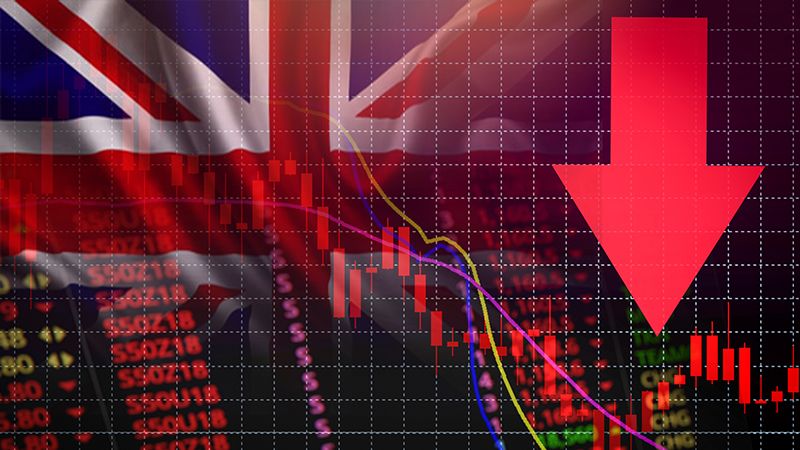
If anything has characterised the 12 months since ‘Liberation Day’, it has been unpredictability. Investors have had to wrestle with tariffs, AI, geopolitical uncertainty, and now war, plus an energy crisis. At each stage, this has favoured different sectors, different investment styles and different regions. It has been a strong argument for diversification, not least to help investors sleep at night as markets bounce around.
One sector gives investors more diversification bang for their buck: global equity income. In 2022, the sector showed its credentials, with the average fund dropping just 1.2%, compared with a fall of 7.8% in the MSCI World index*. It has pulled off the same trick during the recent market turmoil, with the average fund up 1.3%, compared with a fall of 0.84% in the index, over the past three months*.
Diversification is an important ballast for investor portfolios today. Market watchers have been fretting for some time about the focus of major indices, such as the MSCI World or S&P 500, on a handful of large US technology companies. The recent bout of volatility has done little to shift this reality. As at 31 March, the S&P 500’s weighting in the top 10 holdings was 36.5%**. With the exception of Berkshire Hathaway, these are all tech or tech-related names.
The problems for these technology giants have been well-documented. Some are expensive, and it is a crowded trade, supported by passive flows. AI remains an unproven technology and it is not clear that they will reap the full benefits of their vast capital spending programmes – around $680bn for 2026***. Some are now facing lawsuits over their use of damaging algorithms and failure to protect children using their platforms.
The non-technology opportunity
What has been less well-explored is the opportunities on the other side. Equity income funds struggle to invest in low-dividend technology companies, so are naturally looking elsewhere. Diversifying outside the US and outside technology brings a range of better valued, high growth options, says Ben Peters, manager of the Evenlode Global Equity Income fund: “For other companies the market is showing something more like indifference. With a couple of exceptions, the market is not finding a great deal of excitement in the consumer goods or health care sectors.”
See also: McDermott: ‘I’d rather miss two days of a rally than not defend’
Since the start of the Iranian crisis, these two areas have sold off. The healthcare sector has been the weakest in the market over the past month, down around 1%****, and yet is not an obvious casualty of higher energy prices or inflation. Peters says: “In accessing these seeming bargains, we have been swimming with one of the currents underlying the market. Buying when prices are low has meant foregoing the rapid share price rises that have left the market level high.” He says that many of the companies within these two sectors have shown continued strong fundamental performance in terms of revenue, profit and cashflow.
Most importantly, these companies offer a margin for safety not evident in some of the other, highly priced areas of the market. There is, he says, a widening gap between a portfolio priced for pessimism and a market priced for optimism: “History suggests that gaps of this nature tend to close – often meaningfully – in symmetry with their forceful creation by a momentum-driven market.”
A shifting market environment
There is not only a valuation and risk argument for diversification, there is also the necessity of adapting to a changing market environment. Nick Clay, manager on the TM Redwheel Global Equity Income fund, points out that as volatility becomes increasingly the norm, rather than the exception, consistency should count far more than it used to.
He says, in this type of market, “downside capture becomes of greater importance than upside capture”. This is a more normal environment, and yet investors have been lulled into a false sense of security by the recent period of lower volatility. “It has shaped investors’ behaviour to focus on upside capture almost exclusively…A return to more normal market conditions requires a change in approach.”
See also: Square Mile’s fund selector: IA Global Equity Income
His view is that high valuations become particularly dangerous in this type of environment. He says: “The valuation of an equity stock simply reflects expectations for the future. If it is high, then expectations are high and confident. Such expectations are vulnerable to disappointment, leaving the stock less able to suffer volatility that will inevitably occur on the way to an outcome that may or may not be the one predicted. By contrast, a reasonable or even cheap valuation offers a margin of safety because it assumes that little will go right.”
Both the Redwheel and Evenlode funds have significantly lower US-weightings than the benchmark – around 40% below a typical global index in both cases^. Their sector allocation is also vastly different. For the Redwheel fund, the highest weighting is in consumer staples and consumer discretionary companies, which between them make up over 30% of the portfolio^. For Evenlode, it’s industrials that are the largest sector^. Both funds have high weights in the unloved healthcare sector^.
Dividend protection
Then there is the protective effect of dividends themselves. While volatility persists, a 3-4% dividend is a natural cushion. Here, Murray International stands out. Managers Samantha Fitzpatrick and Martin Connaghan prioritise income growth. The trust has now notched up 21 years of consecutive dividend growth, making it one of the AIC’s Dividend Heroes.
This approach naturally makes it a very different proposition to a standard global equity fund. Like the Redwheel and Evenlode funds, it has a low weighting in the US – 33% – and relatively high weights in Asia ex Japan and Latin America^. It was these latter two areas that contributed most to the trust’s strong performance in 2025, with its Latin America holdings up 36% over the year^^.
The team makes diversification a focus for the portfolio, with a breadth of sectors and countries. Connaghan says: “We have a preference for diversifying across the globe, including Latin America, Asia and Europe. Whether that is driven by relative value, or relative quality or relative yield, or all three, we want to make use of the global remit.
“Markets started the year in fine fettle, but the conflict in the Middle East has changed that. It presents a lot of unknowns from here…including inflation, interest rates and global growth. The outlook is tough. We’ve been focusing on the know-ables, focusing on the businesses themselves.”
He says looking at a longer-term horizon, finding companies that can grow their dividends helps keep the noise in perspective.
Ultimately, this is the real selling point of a dividend strategy in a market like this. A focus on dividends can help keep a fund manager focused on the right areas – cashflow, profitability, asset cover – rather than hope. Dividends are a ‘known’ in an environment of uncertainty. Global equity income funds are the diversification superpower in investors’ portfolios.
*FE Analytics, total returns in pounds sterling, discrete calendar year 2022
**S&P Global, 31 March 2026
***The Motley Fool, 12 February 2026
****FE Analytics, total returns in pounds sterling, 11 March 2026 to 12 April 2026
^fund factsheet, February 2026
^^aberdeen, online presentation, 9 April 2026