









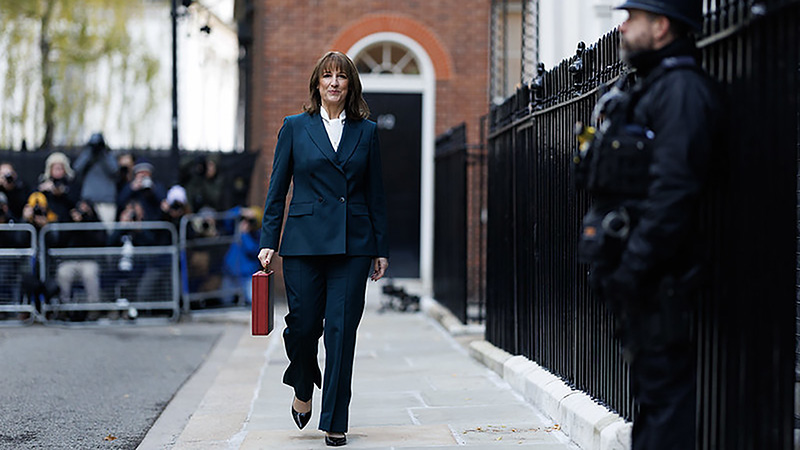
Chancellor Rachel Reeves announced a range of tax-raising measures in the Budget, from extending fiscal drag to increasing the basic and higher rates of dividend tax.
The changes are expected to raise £26.1bn, adding to the £40bn in last Autumn’s budget, according to the Office for Budget Responsibility.
Here are the key takeaways from the Budget:
Inflation set to nudge higher as OBR report published early in error
The chancellor’s opening statements were overshadowed by an early leak of the OBR’s report, which included many of the key points of the Budget.
In terms of the OBR’s economic forecasts, next year’s inflation projection has been adjusted to 2.5% from 2.1%, but the OBR maintains its 2% estimate for 2027 and the following two years.
Meanwhile, growth forecasts have been adjusted lower with the OBR reportedly saying UK gross domestic product (GDP) is expected to grow by 1.5% on average – 0.3 percentage points slower than was projected in March. In September, GDP was reported as “sluggish” with activity falling 0.1% from August’s level.
Cash ISAs capped at £12k from 2027
The maximum annual contribution to a cash ISA has been capped at £12k.
Chancellor Rachel Reeves said the overall ISA limit is unchanged at £20k, but the additional £8k must be invested.
The measure will not kick in until April 2027, meaning next year’s contributions will not be impacted. People aged 65 and over will be exempt and retain the full £20k.
Dividend tax increases 2%
Chancellor Rachel Reeves has hiked tax rates on dividends, property and savings income by two percentage points in today’s Budget.
The basic rate of dividend income has risen from 8.75% to 10.75%, while the higher rate has moved to 33.75% to 35.75%. The measures, which kick in in April 2026, are expected to raise £2.1bn.
Reeves also unveiled a mansion tax in her speech to the House of Commons.
From 2028, properties valued at over £2m will pay a £2,500 annual charge in addition to existing council tax charges. This will rise to £7,500 on properties valued at over £5m.
‘Fundraising drought’ fears as VCT tax relief cut
The government has cut income tax relief on venture capital trusts (VCTs) from 30% to 20%.
The move is intended to raise tax revenue for the government coffers but there is a risk it could be highly counterproductive.
The VCT and EIS company investment limit has also been increased to £10m and £20m for ‘Knowledge Intensive Companies’ (KICs). The lifetime company investment limit has been upped to £24m and £40m for KICs.
Investment industry participants have given the news of the relief cut an ice-cold reception, expressing fears that it will choke off funding for the UK’s burgeoning small companies.
Stamp duty holiday for new London listings
A stamp duty holiday for new listings on the London Stock Exchange was also announced in an attempt to boost the appeal of UK capital markets.
Under the new policy, investors will be exempt from the 0.5% tax on purchasing shares of newly listed UK companies for up to three years after floating. London has been losing out to New York for IPOs in recent years.
Income tax threshold freeze extended
The government has frozen income tax thresholds for a further three years.
The extension means thresholds, previously frozen until 2028, will now remain the same until the end of the 2030/31 financial year.
Known as fiscal drag, the measure is expected to raise an additional £8bn for the government by the end of 2030.
‘Crucial’ salary sacrifice to pensions limited to £2,000
Reeves has also announced a tax raid on salary sacrifice into pensions as part of the Budget.
Tax-free contributions will be capped at £2,000 in a move which the investment industry feared would come to pass.
A majority of large companies use salary sacrifice as a way to increase the pensions they can offer their staff in a tax efficient way.